Category: Formula 1

  • Apuntes sobre la temporada 2025 de Fórmula 1

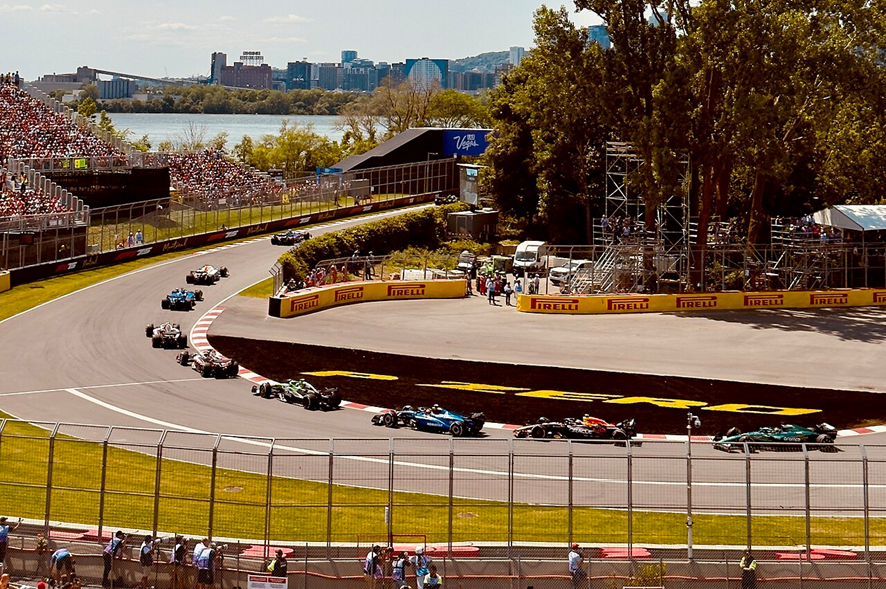
    La salida del Gran Premio de Canadá de 2025 de Fórmula 1.

    By Bassfish22 – Own work, CC BY-SA 4.0, https://commons.wikimedia.org/w/index.php?curid=174733600

    Buenos días,

    Aquí les dejo pequeñas piezas que hice, en su momento, sobre algunos eventos de la temporada 2025 de Fórmula 1

    Verstappen gana y presenta candidatura al título
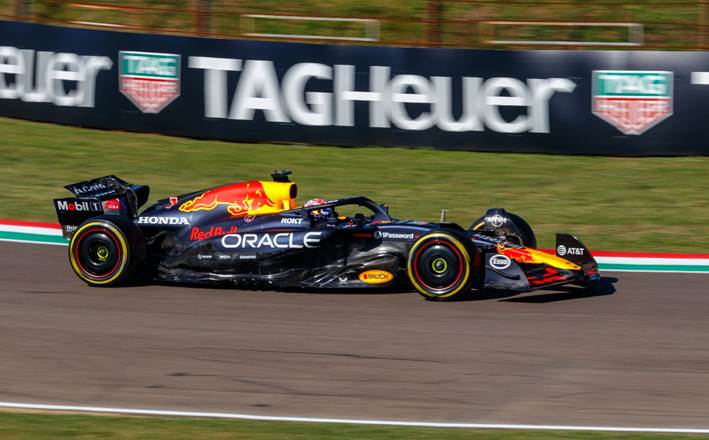
    Max Verstappen pilotando su Red Bull durante el Gran Premio de la Emilia-Romaña de Fórmula 1 de 2025.

    “FIA F1 Imola 2025 No. 1 Verstappen (2)” by Jen_ross83 is licensed under CC BY 4.0. To view a copy of this license, visit https://creativecommons.org/licenses/by/4.0/?ref=openverse.

    Tras su victoria en Austin, el neerlandés se queda a 40 puntos del liderato de Piastri.

    Enrique Calvo Carmona

    19/10/2025

    Max Verstappen (Red Bull) ha vencido esta noche en el Circuito de Las Américas y se convierte en el ganador del Gran Premio de Estados Unidos de 2025. Su mayor alegría, no obstante, son los quince puntos que le recorta en el mundial a Oscar Piastri (McLaren), quinto. Lando Norris, segundo en carrera y en el campeonato, también se acerca al australiano al sumar ocho puntos más que su compañero.

    Charles Leclerc (Ferrari), que completa el podio en tercera posición, se queda matemáticamente fuera de la lucha por el título. Un título al que ya solo pueden optar “Super Max”, los McLaren, y George Russell (Mercedes). No obstante, este último, que solamente ha podido quedar sexto en carrera, tiene pocas opciones de ser campeón: está a ya 94 puntos del líder quedando en juego 141.

    El camino hacia la gloria de la F1 está entre tres
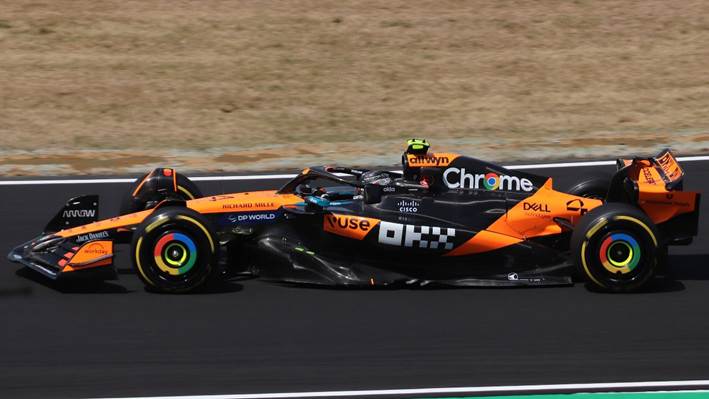
    El británico Lando Norris pilotando su McLaren MCL39.

    By Liauzh – Own work, CC BY-SA 4.0, https://commons.wikimedia.org/w/index.php?curid=163282655

    Sólo Norris, Piastri, y Verstappen tienen opciones de título en el desenlace del año

    14/11/2025

    Enrique Calvo Carmona

    Lando Norris (McLaren) es el gran favorito para ganar el campeonato mundial de pilotos de Fórmula 1 tras su victoria en São Paulo, pero Oscar Piastri (McLaren) y Max Verstappen (Red Bull) le intentarán frenar. El británico aventaja a su compañero por 24 puntos y al neerlandés por 49. A falta de tres rondas para el final, Norris lleva siete victorias: las mismas que Piastri. Verstappen, con cinco, sigue en la lucha por el título.

    El actual líder empezó la temporada con victoria en Australia, mientras que Piastri sólo pudo sumar dos puntos. Con una gran racha, no obstante, este contraatacó, e incluso llegó a liderar por 34 puntos tras el cero de su compañero en Zandvoort. Verstappen también emergió como un posible candidato al ganar tres veces tras el parón veraniego (Monza, Bakú, y Austin), pero sus resultados en las últimas semanas se han estancado.

    Aunque no puede ganar el título Norris la semana que viene en Las Vegas, tiene posibilidades antes de la última carrera en Abu Dabi. Una victoria en carrera larga vale 25 puntos, pero a día de hoy necesitaría un punto más por un posible desempate: en caso de igualdad de puntos, prevalece quien gana más Grandes Premios. Por lo tanto, si tras la penúltima ronda en Qatar tiene 26 puntos de ventaja, será campeón sí o sí.

    La desigualdad entre los circuitos de la Fórmula 1: uno da más puntos que otro
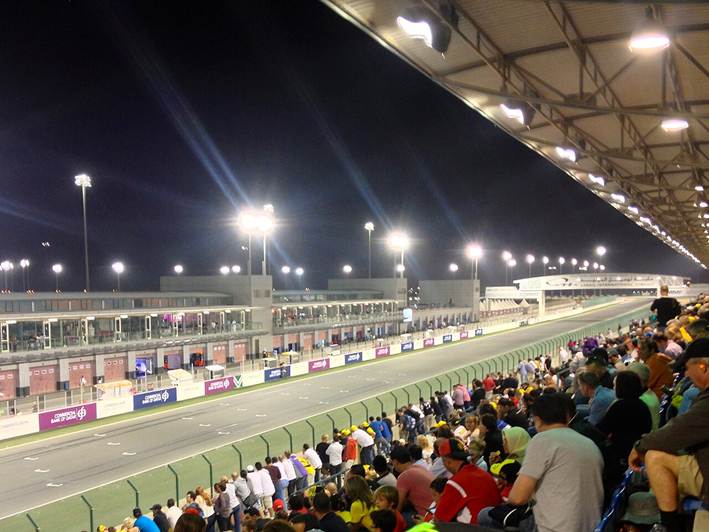
    El Circuito Internacional de Losail durante una sesión de MotoGP en 2013.

    By Trinidade – Own work, CC BY-SA 3.0, https://commons.wikimedia.org/w/index.php?curid=25913855

    Enrique Calvo Carmona

    27/11/2025

    Este pasado fin de semana, en la Fórmula 1, tuvimos dos sesiones competitivas: la carrera y la clasificación. Esta última solo decidió la parrilla de la salida, mientras que, en la carrera en sí, se premió con 25 puntos al ganador. En Qatar, sin embargo, será diferente: a la clasificación y la carrera se le añade la “clasificación al esprint” y la “carrera al esprint”. El vencedor de esta última es recompensado con ocho puntos.

    Hay quien dice que esto es necesario para que haya más acción competitiva en pista. Además, se argumenta que, si hay más de estas sesiones, es más probable que ocurran sucesos diferentes, por estadística y por haber más posibilidades de correr en lluvia.

    Lo innegable es que una ronda “al esprint” da ocho puntos más que un fin de semana “normal”. Una cantidad que, si además se multiplica por las 5 “esprints” de este año, puede decidir un título. Cada circuito requiere su manera diferente de conducir, y, con esta diferencia de puntos, se está valorando a un estilo de pilotaje por encima de otro.

    Quien está a favor de las “esprints” pone el espectáculo por encima de la justicia. ¿Por qué vale más Qatar que Las Vegas? Se supone que la variedad de circuitos acaba premiando a todos los estilos de conducción. Con las “esprints”, no tanto.
  • F1 swan songs: Giuseppe Farina

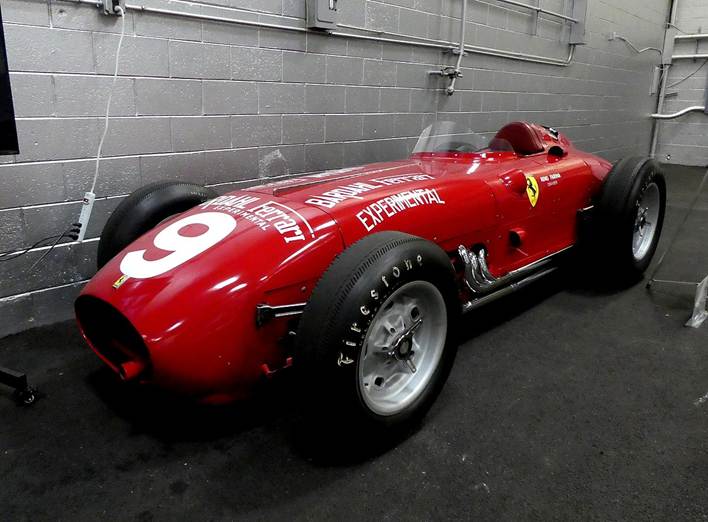
    The 1956 Ferrari-powered Kurtis Kraft 500D, entered as Bardahl-Ferrari, was the last car Farina ever raced in a Formula 1 Grand Prix

    This file (“Français : Ferrari Kurtis Kraft Bardahl Special”, 2020) is licensed under the Creative Commons Attribution-Share Alike 4.0 International license. Author: MaxPast

    As Formula 1’s first ever World Champion, Giuseppe Farina’s “lasts” are rarely ever remembered. But what if we told you the Italian’s last ever F1 race was as unconventional as it was unspectacular?

    After his 1954 F1 season ended early due to persistent pain caused by injury, “Nino” was ready to compete in the 1955 edition of the 500-Mile International Sweepstakes, nowadays called the Indianapolis 500 and part of the IndyCar Series calendar. But what does this have to do with Formula 1, you may ask? What some may not know is that the Indy 500 was part of the World Drivers’ Championship from its start in 1950 until 1960, and, therefore, was, technically speaking, Farina’s last F1 Grand Prix entry, and not the 1954 Italian GP.

    What is also unimaginable nowadays is Ferrari entering the so-called “Greatest Spectacle in Racing”. And whilst this technically also just happened once, when Alberto Ascari’s Ferrari 375 Indianapolis came in 31st place in 1952, Farina did enter the 1956 edition with a Bardahl-Ferrari. The car, a (now) classic Kurtis Kraft chassis, received its name from its Ferrari six-cylinder engine and its sponsorship from motor oil additive brand Bardahl.

    Despite the big names of the Italian giants accompanying car #9’s entry, actually qualifying for the race was proving to be a hard challenge. If the legendary Farina had an Achilles heel, it was the 500, as he failed to qualify in the first two time trials of May 19th and May 20th. The prize he had cherished and hoped for, pole position, was occupied by eventual winner, American Pat Flaherty.

    May 26th proved to be another unfortunate day for the Turin-born driver, as the rain forced the cancellation of the third session of time trials. On his final opportunity, May 27th, Farina officially failed to qualify for the 1956 Indianapolis 500 due to a lack of speed, and therefore officially ended a Formula 1 career he can be proud of.

    The Italian did not know this at the time, however, as he returned one year later to the USAC-sanctioned event with an entry alongside teammate and home hero Keith Andrews. The car, simply named “Farina”, was another Kurtis Kraft chassis, but was powered by Offenhauser this time around. However, car #62 never even attempted to qualify, as “Nino” withdrew after Andrews was killed during a test run on May 15th and Farina officially never participated.

    The 1956 Indy 500 was, therefore, the former Alfa Romeo driver’s last ever major race. He passed away himself, after a decade away from racing, in 1966, due to a car crash unrelated directly to motorsports.

  • The last 4 F1 drivers to have debuted at Monza

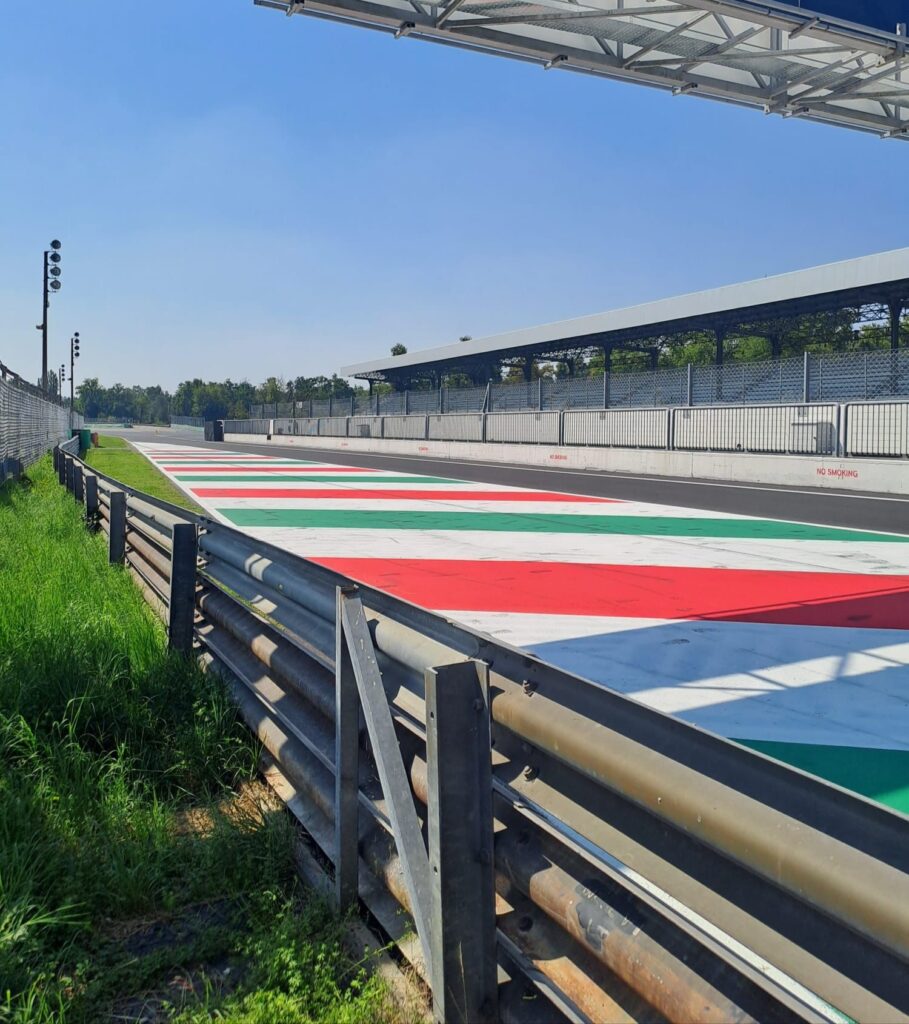
    The Autodromo Nazionale Monza, home to the Formula 1 Italian Grand Prix every year since 1950 (with the exception of the 1980 Imola edition), is one of, if not the, most iconic track in motorsport history. From incredible wins by legends such as Alain Prost and Michael Schumacher to being the title decider to World Championships won by Giuseppe Farina in 1950 and Jack Brabham in 1960, Monza is host of some of the most emblematic moments in F1 history, with every fan surely looking forward to another show of high-end racing in Lombardy this week.

    And whilst Argentina hasn’t had an Italian GP winner since Juan Manuel Fangio (Mercedes) in 1955, many recent fans from the South American country may remember Monza fondly because of Franco Colapinto’s F1 debut there last year. Since the Italian GP has never been the season opener, there hasn’t been that many debuts if we compare to other iconic curtain lifters like Australia’s Melbourne, Bahrain’s Sakhir or Brazil’s Interlagos and Jacarepaguá. However, intra-seasonal driver changes open the possibilities to make a list of the last few drivers to have ever debuted at Monza.

    4. Tomáš Enge – 2001 Italian GP (Prost GP)

    A serious crash between Prost GP’s Luciano Burti and Jaguar’s Eddie Irvine at the 2001 Belgian GP meant the former suffered some severe injuries that forced him to miss the rest of the season. Formula 3000 title challenger Tomáš Enge made the step up from Coca-Cola Nordic Racing to become the first ever Czech F1 driver at the 2001 Italian GP.

    A while was going to be needed to get somewhat used to the backmarker car, however, as the Liberec-born driver spun at the Ascari corner and failed to make a good first impression in practice. A rookie and a struggling car proved not to be the best combo, as Enge qualified in 20th (out of the then 22-car-grid), just ahead of the two Minardis, bottom of the barrel. Team-mate and 1997 vice-champion Heinz-Harald Frentzen however, qualified a respectable 12th.

    The eventual 24 Hours of Le Mans winner did what he could with a car that was, as well as incredibly slow, mechanically faulty during the weekend. A 12th position, one lap behind Juan Pablo Montoya’s Williams, was all he could possibly manage in what was arguably the second worst car.

    Whilst Enge finished the season, Prost GP’s bankruptcy in early 2002 meant that the 2001 Japanese GP was the last ever F1 race for both the Czech driver and the French team.

    3. Alex Yoong – 2001 Italian GP (Minardi)

    Another debutant at the same Grand Prix, and for another backmarker. Malaysian Alex Yoong, also the first driver to ever compete for his country, replaced the departing Brazilian Tarso Marques after the latter offered less money to drive the Minardi.

    And so, immediately, Yoong got acquitted with the typical Minardi experience. Mechanical problems meant the driver of Chinese descent struggled throughout all practice sessions, including the third where he even failed to set a time.

    Things would get even worse in qualifying, as both him and team-mate Fernando Alonso would suffer from terminal gearbox failures. Sharing the spare car, a rule that was allowed at the time, was all Yoong could do to get a lap in. Nevertheless, his time of 1:27.463, which was 5.2 seconds off pole and 1.2 off the Spaniard (21st), meant he would narrowly avoid the 107% turmoil and start in 22nd.

    His race would be as chaotic as the preceding events however, as he contacted with the Benetton of Jenson Button on the starting lap. The damage contributed to his first big mistake. A spin at Curva di Lesmo meant his race was close to ending as he almost contacted with the lapping cars of Michael Schumacher (Ferrari) and Montoya. Another spin sealed the deal. This was his last spin of the race, as his Minardi PS01 remained stalled in the Monza gravel and the Kuala Lumpur-born driver was forced to retire.

    Alex Yoong would also finish the season and would manage to race in most Grands Prix of 2002, also with the Italian team. That year’s Japanese round, however, was his last ever, as the now Cosworth-powered constructor chose to field Jos Verstappen and Justin Wilson to start the 2003 season.

    While it is expected that the pay driver, especially in the early 2000s, gets the backmarker seat, and that hardly anybody will remember Alex Yoong as the pinnacle of talent gone to waste, it could be said that he faired relatively well, all things considered. His promise largely kept of “don’t crash the car”, as well as the tricky situation of driving unforgiving machinery and partnering future race winner Mark Webber in 2002, and, of course, the all-mighty eventual two-time World Champion Fernando Alonso in 2001, should cut him some slack when compared to some of his fellow pay drivers of the era. After all, no awful driver gets two top 10s in a Minardi.

    2. Nyck de Vries – 2022 Italian GP (Williams)

    Nyck de Vries actually started his 2022 Italian GP weekend at Aston Martin, replacing four-time World Champion Sebastian Vettel during one of the obligatory rookie FP1 sessions. However, the appendicitis suffered by Alexander Albon of Williams meant all eyes turned to the Dutchman, who was also Williams’ test driver. De Vries, whose potential F1 career had been considered a long shot away due to his age (27 as a rookie), finally got his opportunity after test drives at the Grove-based outfit and Mercedes.

    With two practice sessions under the belt with Williams, the Formula E graduate managed to qualify 8th for the grid, partially thanks to many driver power unit penalties, quite common at Monza. Team-mate Nicholas Latifi, already on the verge of a sacking that came true at the end of the season, qualified 10th.

    On Sunday, an incident-free race and a steady rhythm by taking advantage of Williams FW44’s great straight-line speed meant the driver of Indonesian descent obtained his first ever two points by finishing 9th, as compared to Latifi’s P15 finish.

    His change of stock value was impressive, as he ended up in the 2023 Alpha Tauri seat ahead of race winner Daniel Ricciardo. Once the British Grand Prix was done and dusted, however, so was his decent, albeit short F1 career.

    1. Franco Colapinto – 2024 Italian GP (Williams)

    Franco Colapinto is the only driver of the current grid that made his debut at Monza and the second on this list to make it with Williams. The Argentine made his first F1 start by replacing departing Logan Sargeant at the Grove-based outfit after another no-points finish at the Dutch GP in Zandvoort.

    Whilst an unimpressive 18th place in qualifying didn’t set expectations on fire for driver of Ukrainian descent, a respectable P12 in the race whilst keeping out of trouble meant another driver was, once again, upping his stock because of a stand-in race in Monza, in a Williams. Despite some crashes in the latter parts of the season, Colapinto came back to the grid after his last Williams race in Abu Dhabi 2024 when he replaced Australian Jack Doohan at Alpine for the 2025 Emilia Romagna Grand Prix. And whilst rumours of a sacking always seem to loom the drivers of the French team, he has proved to be, whilst not a stand-out talent, a somewhat solid, yet replaceable, member of the premier class.

  • F1’s most controversial title decider

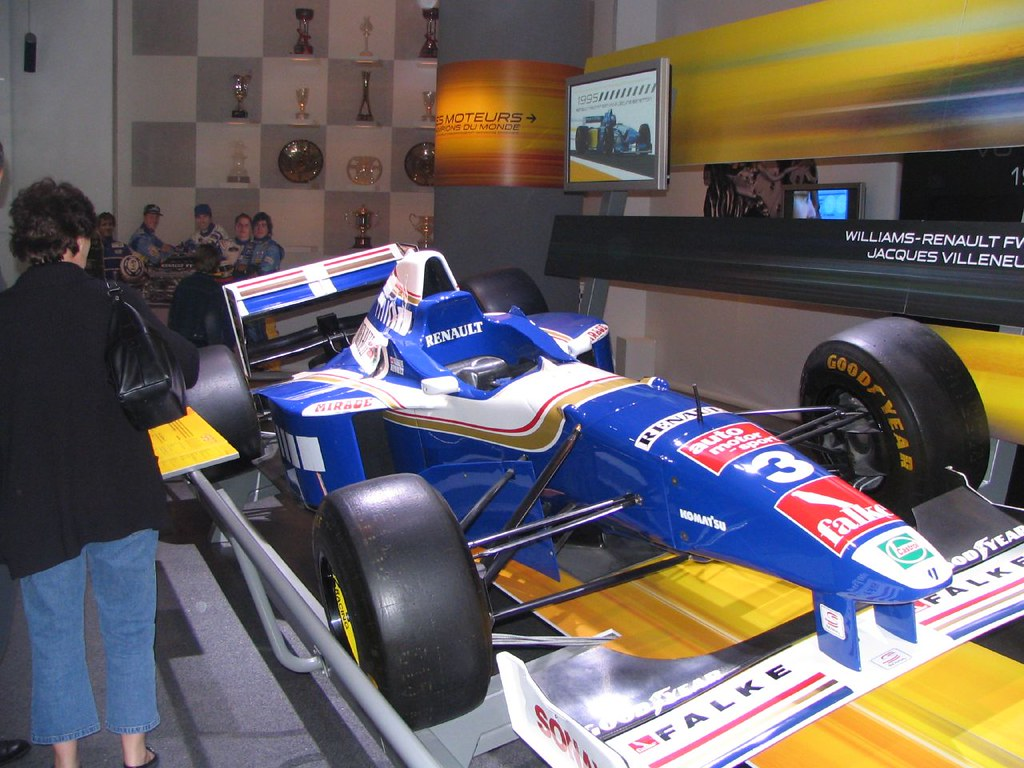
    “Renault” by Peter Long is licensed under CC BY 2.0.

    Every Formula 1 fan knows the famous 1997 championship and its outcome at the European Grand Prix held at the Jerez Circuit. After the Japanese GP, where Jacques Villeneuve had failed to score points due to a disqualification for ignoring yellow flags and Michael Schumacher had taken the grand prize of ten points by winning the race, the Drivers’ Championship was in full swing.

    The German, seeking to become a three-time victor after his 1994 and 1995 World Championships and to furthermore give Ferrari its first drivers’ title since 1979, arrived with a one-point lead over the Canadian. The Williams driver was dreaming of the title win in just his second season in Formula 1. Heinz-Harald Frentzen, his teammate in the already mathematically-proclaimed 1997 constructors’ champions, arrived at the Andalusian event with no chance of being champion (or, in theory, runner-up).

    The European GP weekend, which replaced the Portuguese GP at Estoril for financial reasons, began on Friday, October 24th, with two free practice sessions, both led by Frenchman Olivier Panis, who at the time was driving for Prost GP, also from France. On the morning of Saturday the 25th, the British partnership of David Coulthard and McLaren took the lead in both practice sessions.

    In the afternoon, however, the real action began. With three times of 1:21.072, identical down to the thousandth, both Schumacher’s Ferrari and the Williams of Villeneuve and Frentzen achieved the fastest lap of the qualifying session. Since the grid was decided according to what lap was set first, the Canadian took pole position ahead of his championship rival, second, and the driver of Spanish heritage, third.

    The race on Sunday the 26th began with Villeneuve losing the lead after the first corner due to a poor start and the “Kaiser” taking the lead of the race (ahead of Frentzen, second, and the Canadian, third) and, therefore, the championship. After a swap between the two Williams and pit stops that temporarily promoted the McLarens to 3rd and 4th, the positions of Schumacher (first) and Villeneuve (second) made the title decider all the more interesting.

    With only 22 laps remaining in a thrilling race, the two top dogs were fighting for first place, and, therefore, the championship. The Williams driver took advantage of a small braking error by Schumacher to gain the lead. However, before the German was completely overtaken, he deliberately collided with his rival, hoping to force the Canadian to retire from the race and lose the title. However, it was only Schumacher himself who didn’t finish the race after the crash, ultimately losing the lead to Villeneuve. After the Ferrari driver retired, the Williams driver didn’t push the envelope and ultimately lost the race to Finland’s Mika Hakkinen, who would go on to take his first GP victory. His McLaren teammate David Coulthard finished second, whilst a third spot on the podium was enough for Villeneuve to win the Drivers’ Championship.

    The controversial collision was reminiscent of the 1994 Australian finale, where Schumacher was seeking his first championship in a battle with Damon Hill. Many people (including Hill himself in 2007) eventually accused the then-Benetton driver of deliberately causing the collision that would deprive the Brit of the title. However, the controversy in 1997 was not as dismissed by the rule-makers, as runner-up Schumacher was eventually disqualified from the World Championship for unsportsmanlike conduct, with some calling for a permanent ban from Formula 1. This, however, did not happen, and the German continued in the top class, ending his career with seven world titles and retiring for the second and final time in 2012 as the most successful driver in history. However, the 1997 vice-championship will always belong to his compatriot Heinz-Harald Frentzen.

    That year’s European Grand Prix will go down in history as one of the defining races of the world of Formula 1, both because of Jacques Villeneuve’s only Drivers’ World Championship title (as well as Williams’ last to date) and because of Michael Schumacher’s disqualification, which quickly became one of the most controversial moments in the series’ history. And although it hosted several preseason sessions and continues to be used as a venue for private testing by teams such as McLaren and Haas, the controversial 1997 finale was also the final Formula 1 race at the venue now known as the Circuito de Jerez-Ángel Nieto. And what a way to close out that era!

  • Hamilton retirement “could happen”, says top F1 journalist

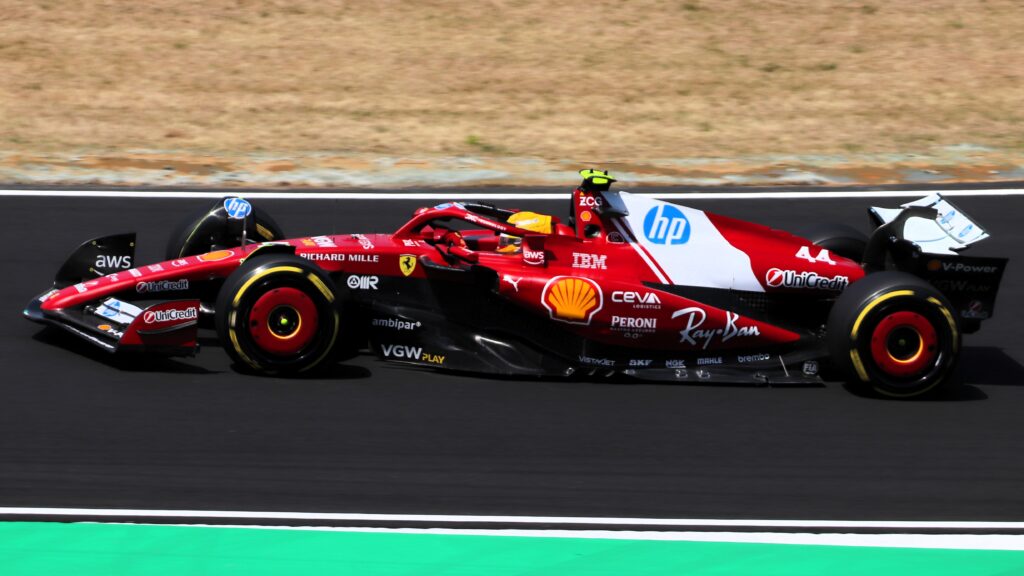
    “2025 Japan GP – Ferrari – Lewis Hamilton – FP1” by Liauzh is licensed under CC BY-SA 4.0.”

    “I’m useless, absolutely useless. (…) The team (…) probably need to change driver.” (…) Ferrari driver Lewis Hamilton’s post-qualifying words with Sky, alongside his “I drove terribly” comment to F1 TV, have accelerated the rumours of a 2025 retirement, especially after another poor result (12th) in Sunday’s race. And top journalist Antonio Lobato, who has been narrating Formula 1 in Spain for almost two decades (2004-15, 2018-present), has recently declared that this “could happen”.


    In a video posted on news outlet Soymotor, the Asturian journalist theorized about a near F1 future without the seven-time world-champion: “Imagine Hamilton, after this year, says ‘goodbye’. (…) This could happen, he could think “yes, yes, I am useless, I don’t want to continue with this, I don’t want to keep suffering’”.


    Despite an early success with a win in the Chinese GP sprint, Lewis Hamilton has struggled this season. As of Sunday, the Brit stands more than 40 points behind team-mate Charles Leclerc, and the Monegasque has not been the only team-mate that has outpaced him in the last few years. George Russell has proved more than competitive despite the odds, outperforming Hamilton in two of his three seasons together at Mercedes.


    Lobato also made a prediction about the future of another multiple world-champion depending on Hamilton and/or Ferrari’s decision:
    “The other option is that [Hamilton] stays for 2026, but Ferrari says ‘Verstappen is free to go’, and then, Toto [Wolff] has a problem because, depending on how the Mercedes performs next year and how Ferrari performs, Verstappen could make a choice.”


    The Dutchman recently confirmed to F1 that he is not leaving to Mercedes despite the rumours: “For me it’s always been quite clear that I was staying anyway.” However, his commitment to Red Bull seems to not be confirmed beyond the first season of the new regulations, and the performance of the Austrian team in 2026 could change his destiny. It has been widely reported, including by beIN’s Júlia Cabral, that the Belgian-born driver has a performance-based clause allowing him to leave every year.


    Whether Hamilton chooses fulfill his 2027 contract with Ferrari or not, it seems like the silly season rumours for that season are already underway.