Category: Formula 4
-
“No matter how good you are, you need to have the funding”, interview with F4’s Alex Newbold
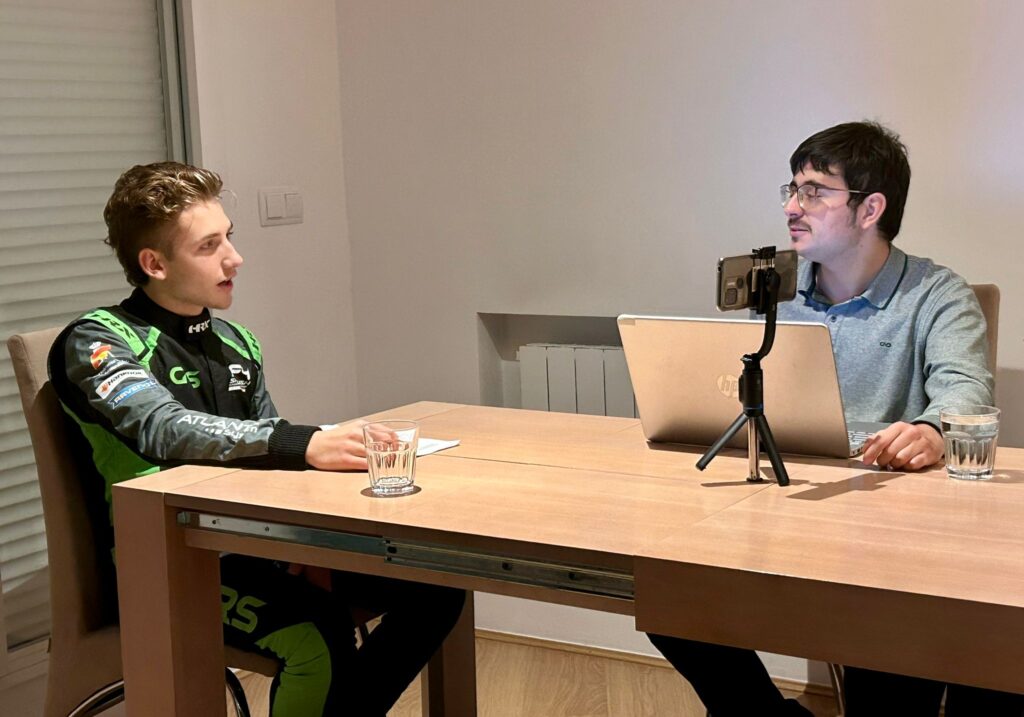
Alexander Newbold is a 16-year-old Italian Australian racing driver who’s currently testing with GRS Racing in Spanish Formula 4. He tells us all about his journey so far, as well as the goals for the future in his motorsport adventure.
Enrique: Hello, Alex. How did you feel about your 2025 season?
Alexander: It’s been pretty good. A lot of testing in the F4 car and training in the gym, because it’s only my pre-season. But I’ve been putting a lot of work into trying to build the strength and confidence in the car to be ready for my first season. Then I can hopefully have a strong start.
E: It’s a pretty big switch to go from karts to Formula 4. Can you describe the main differences?
A: I feel like the main difference is the feeling of the car and what it wants. The g-forces are so much bigger. It really feels like the car wants to oversteer in the fast corners, but the key is just trying to find a balance and trusting the car.
E: Have you felt comfortable there yet?
A: It is quite a good first car: very easy and forgiving. However, in the high-speed corners, you do have to trust that it does what it’s built to do and won’t oversteer.
E: You’ve only done testing there, so far. Do you think qualifying and racing in Formula 4 will be much different?
A: I feel like the biggest factor affecting that will be the pressure. When you’re qualifying or in a race, you’re there to win or get pole position, so there’ll be a lot of pressure. You just have to block it all out and focus on being the best.
E: Tracks-wise, it’s also quite different…
A: Yes, very.
E: What would you say is the racetrack you’ve most enjoyed so far?
A: I would probably go with Jerez, because it’s quite a good mix of high speed and low speed corners. It’s just a really beautiful track, with great surroundings.
E: A former F1 racetrack as well.
A: Yes, that was a very good Grand Prix.
E: You mean the last one, in 1997?
A: Something like that, yes. Michael Schumacher’s day.
E: Well, that was the day he got disqualified.
A: Yes.
E: So, it was Jacques Villeneuve’s day, as well as Mika Hakkinen’s since the latter got his first win. But we’re speeding up around 25 years onwards: to the 2023 Australian Grand Prix. Max Verstappen won, second-placed was Lewis Hamilton and third was Fernando Alonso. That was an amazing race. You attended that Grand Prix and that’s what got you into motorsport, right?
A: Yeah, it was awesome. I remember the sound of the engines… I think more than a driver; it was just the thrill and the atmosphere. But overall, there are so many amazing idols that I have in racing. I think my biggest one would probably be Max Verstappen or Ayrton Senna. They have the mentality, and, even when they’re not in the best car, they can still manage to pull off miracles. It’s just awesome what they can do under pressure.
E: What about Verstappen this year? We’ve seen him in a clearly inferior car, but he’s challenged both McLarens. What did you think about the finale?
A: I must say that was very exciting considering it’s been the first time in something like 15 years that it’s been three drivers down to Abu Dhabi. It was a very impressive run from 104 points to just losing by two. I think Max really just showed how he’s possibly the best on the current grid with his performance this season.
E: You’re one of the only people I’ve heard say “possibly” and not “definitely the best”.
A: I think he is the best this season. It’s just unbelievable what he was able to do in that Red Bull. At the start of the season, it looked so far gone, but coming second by two points is incredible. He is, by far, the driver of the generation.
E: When we’re talking about karting, 14 is a pretty unusual age to start. There’s a lot of kids that had their eyes set out on Formula 1 way before that age. Can you talk about the disadvantages?
A: I think the biggest disadvantage would just be the track time. When going to the testing days before the races and when driving in the karts, you could really see the track time difference. Also, in the industry as a whole, the disadvantage is that I don’t come from a motorsport background.
My family has never been into racing, so I’m sort of the first of a generation of racers. But I think I’ve found a good group of people who’ve been able to help guide me on this journey and hopefully get me where I need to be to have a successful career.
E: Before karting, you did Australian rules football (AFL), which I have actually heard about.
A: That’s new. I can’t explain it to anyone here.
E: Yeah, you do have to be a big sports fan or from Australia… You also did cricket as well. So, about those two sports, what did they teach you when you made the switch to karting?
A: The principles of training. Getting up early and just being persistent. Now with racing, it’s all very similar: going to the gym and trying to stay consistent. So, I feel like the principles and the fitness aspects still apply, even though they’re both very different sports.
E: So, you mentioned the Circuito de Jerez before, but that doesn’t look like it’s going to make a comeback to Formula 1. What track do you most look forward to racing on, either in F1 or on the way to get there?
A: It is a bit cliché, but I really look forward to Albert Park. I grew up there my entire life, and I lived 15 minutes down the road from there. So, in the morning when I woke up, I could hear the engines of the Australian Grand Prix from my bedroom.
Also, every three or four days a week, I would be playing cricket or footy in between turns 14 and 15. So, I really spent most of my life driving down those roads or being around the track. Especially at school, where it was so close, since I went to Albert Park College, and that was right around the corner from the track. So, I feel like everything I did in my childhood growing up, it was always either near or on the circuit.
It would be really special to race there: in front of my home crowd. I used to be the one in the crowd, watching. So, I think it would be awesome to race at Albert Park.
E: That would be…
A: It’d be magical.
E: It would be a cool story, honestly. Because last time, the Melbourne hero [(Oscar Piastri)], he kind of…
A: Yeah, I was heartbroken for Oscar. I was at the Grand Prix this year, which had crazy weather, like usual.
E: About Piastri: he’s got a great feeder series career, since he’s won Formula 2 and Formula 3. But there’s also been a lot of talk about the political nature of the F1 feeder series ladder. Do you feel a little bit worried about possibly going up against that?
A: Not really, because I trust my abilities and I trust I have what it takes. And I think with the right people, they can get me where I need to be. I surround myself with the right people and the right team. I’ve just got to do what I do best and drive; and I believe I will be able to make it.
E: And if they gave you a blank cheque, you could change anything in motorsport?
A: I’ve just got to think about it… I guess, maybe, a one-off competition for drivers to really show how good they are, for less of a price of entry for a race. And then if they win, they get a fund of their four season or something up the ladder Unfortunately, these days, the biggest winning factor is money.
I know this because I’ve seen a lot of good talents in karting that haven’t been able to do much of it because of money, unfortunately. But I feel like if there was some feeder competition that could get funding for seasons with less of a cost, that would be really good to see for the motorsport community and world.
E: And I have to ask you about social media. So how did that start?
A: Well, it was quite random, I must say. I used to not do much on social media until racing. So, I’d sort of just post a few karting clips and updates.
Then I was approached by a social media company, which I originally thought was a bit of a scam, because they sort of just picked me up on Instagram. But then, I talked to them and they told me they wanted to help me post on my account, which they have done very well. So since then, it’s been quite good.
E: So, you’re the one editing and making the videos?
A: Not me, unfortunately. My mom does. I am quite busy because of school and the gym. But I help out when I can, since it is quite a big task to be making all these social media posts. She’s done a very good job.
E: Congrats to mom on that one! Do you think it’s important to maintain a social media presence?
A: I think that in this day and age of motorsport, 80% or 90% is about business. So, if you want to be a good driver, you have to be a good businessman. When companies take a look at you, they want to see what you can give to them.
In that way, social media and exposure to people online is a big factor that they look for. I think it is key, in order to find sponsorships, to keep going and put your name out there.
E: You also juggle all of that with your studying.
A: I do.
E: Why do you feel it is important to keep studying?
A: Although it is quite challenging, I want to show people that you don’t have to choose between one or the other. It is possible to do both and to be sort of a role model to all those people in a hard position. You don’t have to drop out to become a race driver. You can do both, but you just have to work twice as hard.
E: 2026 is just around the corner. You want to get into French F4 in the near future, right?
A: Yes. French F4 or really any Formula 4 that I can drive in.
E: I mean, that is pretty competitive. You look at the champions list there for French F4, and you can’t help but feel impressed. You’ve got Théo Pourchaire, Ayumu Iwasa, Victor Martins, Evan Giltaire… There are also F1-bound drivers like Stoffel Vandoorne and Jean-Éric Vergne. How do you think next season will play out, if you do make it?
A: It will be quite interesting. I’ve seen the list of tracks, and there are a lot of good circuits in there. And it looks like, by the look of things, there’s even better competition. It will be a good learning curve. Hopefully, I can get a few learnings out of French F4 to hopefully carry onto Spanish F4.
E: Do you think there’s a standout driver on the grid?
A: I mean, at this point in time, I haven’t seen the grid list, but I’m sure there’ll be many great talents like there always is in motorsport. And I’m looking forward to the challenge and to see what drivers I come up against.
E: You’ve shared track with a lot of drivers…
A: Yes, quite a few…
E: Is there one where you said: “wow, they could make it to F1 in a few years”?
A: I mean, all the drivers I’ve been with on track are all so very talented. These days, the difference between first and 20th is all half a second, six tenths… So, I really think it’ll go down to the wire and it’s anyone’s game when it comes down to making it. They are all incredibly talented. If I had to choose one, I really couldn’t, because they’re all such great drivers and the grid is full of good talent for the future.
E: You’ve got a chance to race in Spanish F4 in 2027. What about from 2028 onwards? I know we’re kind of playing the long game, but where do you see yourself progressing ideally after that?
A: It depends on how my F4 season goes… If it’s not the best, I’ll maybe do another year in F4. But ideally, I’d like to progress to Eurocup or just Formula 3 in general, maybe even FREC! I’d just like to make some sort of progression upwards.
E: FREC for 2028?
A: FREC, F3, Eurocup… Any sort of step up that might be a bit more of a challenge if my F4 goes well. But, if not, I’m happy to see what other opportunities arise and go with the flow, I guess.
E: What led you to move here, to Barcelona?
A: Originally, it was not much of a racing decision, unlike every other driver. My dad got a job working part-time from Spain, so we originally moved from Australia to Barcelona for his work.
But then, we saw that the opportunities for motorsport here were just so much greater, since there is more of a motorsport culture. So, I thought I’d probably get into it, since I really wanted to give it a go.
E: There’s a lot of good drivers from Melbourne. Obviously, there’s 2025’s P3 in the standings, Oscar Piastri. Melbourne has an F1 driver and it’s also got James Wharton in Formula 3. It’s quite peculiar, because, Barcelona doesn’t have a driver on the F1 grid. It is quite a curious situation… Why do you feel that Melbourne was more limited than Spain?
A: Because I feel like Spain, or just Europe in general, has so much more motorsport around it. Meanwhile, Australia, when you look into it, they have Australian F4. Then, after that, there’s no F3, so ultimately you have to end up moving to Europe anyways.
So, I think most of the drivers usually move to Europe for F4 beforehand and then stick with a good team over here. There are just many more options here. It’s more flexible.
E: You’re Australian, but you’re also Italian. How does that help you?
A: I can go anywhere around Europe. I can be wherever the racing needs. If the team wants me somewhere in Italy or Spain, I can go there. I’m a dual citizen, so I don’t need a Visa.
So, it’s really helpful for when I want to test with other teams or other cars. I can go there without a Visa. That’s just awesome.
E: You did switch from Australian rules football and cricket to karting. Was that just because of the Grand Prix in Melbourne, in 2023?
A: In Australia, it was always fun to go rental karting with my mates and whatnot. Because there weren’t too many karting competitions of high level anyways. It was always father-and-son, there was never any team karting.
So, once I came to Spain and realised how popular it was here, I thought about stopping this as a hobby and just giving it a proper go. The idea of standing on the podium was just so awesome to me. I just thought: “I’m going to stop doing it for fun and I’m going to try and see if I can make something out of it”.
E: And what karting team did you race with?
A: I raced with RC2, who are based in Barcelona. They were very good and they took me on quite early. I started with a sort of school program where I’d go every Sunday, a few times a month. I eventually joined their team and did a few different championships with them.
E: Which championships?
A: The Valencian Championship, so the CKCV, I believe. I also raced in the CCK and the CEK. I sort of just did the main Spanish ones.
E: And then you had a little bit of a conversation with the Club Operations Executive at the British Racing Drivers’ Club.
A: Yeah, I’d say that was the biggest turning point in my motorsport career. Karting these days has gotten a bit more expensive. We didn’t really know where to go from karting or what to do next.
Then we were talking to Luke Evans. He was telling us that the best we can do, at my age, was to start single seaters as early as possible and just get out of karts. So, I think that was the best decision we ever made: to get me to F4 as soon as possible.
E: You talked before about financial backing. Why do you think it’s such a critical factor, especially in your current stage?
A: In my current stage, it’s just to get with some of the best teams, which is really unfortunate. But these days motorsport has just gotten so expensive. And if you want to be able to race, you need to, no matter how good you are, always have the funding.
It’s very unfortunate that I’ve seen so much good talent try and come to F4, even in my karting days, and they just can’t progress solely because of money. I’ve known some really great drivers and I think it’s quite upsetting.
E: On your side, do you have a pretty strong professional support team?
A: Yes, I do have quite a good team around me, which is quite good to see. I have a good F4 team and I think a good few mentors to help me on my journey.
E: And you obviously do simulator training.
A: Yes. I feel like it’s very good to learn the track layout, know when to downshift, the racing line: all the basics. I would say the only downside is, just like with any simulator, you can’t simulate the G-forces.
So, I feel like, around the high-speed corners, that’s where the biggest disconnect is: the feeling of the G. It almost feels like the car wants to oversteer under you. Besides that, I would say the simulator is quite good for learning tracks and getting a feeling for what it will be like.
E: You’ve also done car training with Felix Portero, how has he helped you? I’ve heard he trained Brad Benavides (former Formula 2 driver) as well.
A: Yes, Felix is quite amazing. He’s raced GB2 with Lewis [Hamilton] and I think, during some pre-seasons he helps with Carlos [Sainz]. But yeah, he’s really been able to help me build the endurance and the strength needed to drive Formula 4. Especially the KZ cars, which are brutal on the neck and arms; even more than F4 sometimes.
He’s been really helpful; he teaches me how to push the car or vehicle to the limits and get a feeling for when to push or when not to. Overall, it’s been an amazing learning experience having him as a mentor to help me improve at karting. Especially in the KZ, which was quite new to me this year, a very big step up from X30s. With his help, I’ve been able to grasp it quite quickly. It’s been a really awesome journey so far with him.
E: Finally, what do you feel you need the most right now to prepare for your racing?
A: I feel like, at the moment, to prepare, besides from just keeping my physical fitness up, what I need the most is track time. Physical fitness does help me when it comes to those races which are around 30 minutes long, since I need to be able to stay fit and keep up the same high intensity for the entire length of the event.
However, I’d say track time is more important: getting a better feeling for the car, tyre management, knowing when my tyres are warm enough to push, how to cool down my tyres… But besides that, I feel ready.
-
“Monza es la mejor pista del mundo”. Entrevista a Ian Rodríguez, piloto guatemalteco de automovilismo
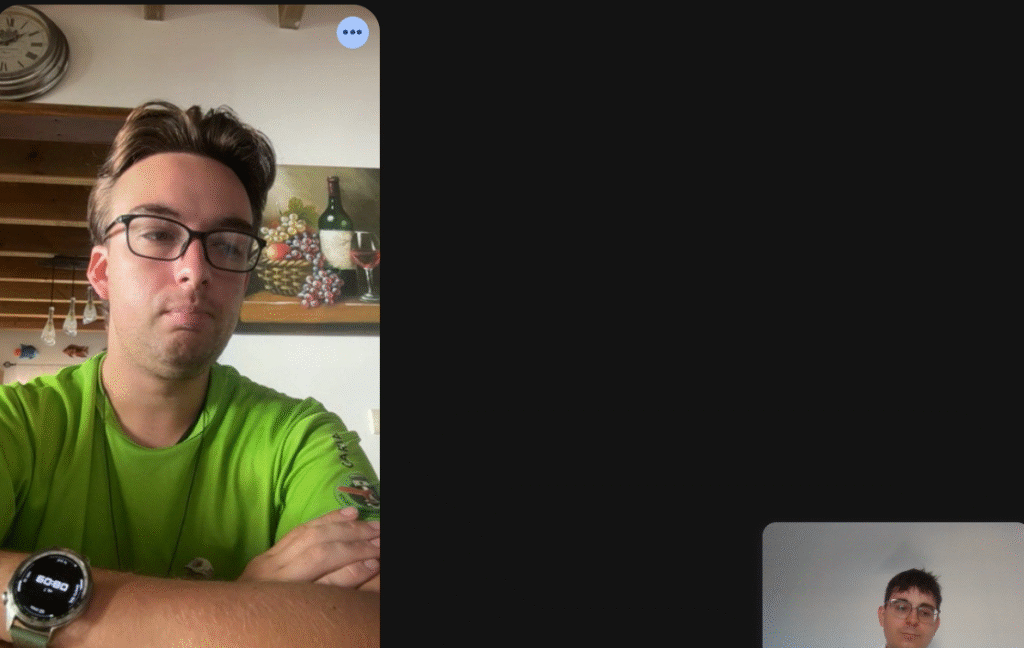
Ian Rodríguez, piloto de Faems, es el actual campeón de la GT Cup Open Europe en 2025. En el pasado, y tras una exitosa etapa en los karts, estuvo probando su suerte con monoplazas. Desde 2015 hasta 2019, compitió en la F4 Italiana contra pilotos de la talla de Lando Norris, Mick Schumacher, Guanyu Zhou o Jack Doohan. Si os suenan esos nombres, es porque acabaron en la Fórmula 1.
A posteriori, Rodríguez dio el salto a la Fórmula Regional Europea en 2020. En su único fin de semana en la categoría, en Imola, se convirtió en vencedor de una carrera, ganándole a futuros pilotos de Fórmula 2 como Dennis Hauger y Arthur Leclerc.
El pasado viernes, tuve la oportunidad de entrevistarle y cubrir una variedad de temas.
- Ian: Hola.
- Enrique: Hola. ¿Qué tal, Ian? ¿Cómo estás? ¿Qué tal va todo?
- I: Bien. Gracias a Dios, estoy contento. Es bonito poder estar en casa y festejar con todos la victoria en el campeonato.
- E: Conseguiste el título en Monza mismo. ¿Dirías que es tu mayor logro hasta el momento?
- I: Sí, seguramente. Si no es el mejor, es uno de los mejores. Definitivamente es bonito.
- E: Además, la conseguiste en Monza: una pista legendaria. ¿Pero es tu pista favorita?
- I: Sí, seguramente es la mejor del mundo. Como pista es muy diferente con fórmulas. Todas las veces que corrí en esa pista fue en fórmulas, y al llegar a GT1, uno se piensa que es lo mismo. Pero definitivamente no lo es. La forma de interpretar las curvas, aunque tenga pocas, es completamente diferente. Entonces, sí, me gustó bastante; pero creo que hay cosas que aprender y que practicar si Dios me da la oportunidad de regresar.
- E: Mencionamos anteriormente que has competido contra pilotos de Fórmula 1, sean ex o actuales. Incluso en tiempos recientes has corrido contra Juan Pablo Montoya y Nelson Piquet Jr. ¿Quién dirías que es el rival más difícil con el que te has enfrentado?
- I: ¿En toda mi trayectoria?
- E: Sí.
- I: Hay muchos… Ay, qué buena pregunta… Hay muchos, pero yo creo que tal vez no puedo decir uno en específico. Seguramente Juan Pablo y Nelson, aunque había otros en LMP2, que me acuerdo de que eran bastante buenos. Corrí con Paul di Resta, que también hizo Fórmula 1. Ahora, en la Porsche, en la GT Cup [Open] Europe, había también un holandés llamado Paul [Meijer], que era también bastante rápido. Pero, decir solamente uno, tal vez no. La verdad es que sí, hay bastantes que son rápidos. He tenido la oportunidad y el regalo de Dios de poder aprender de ellos.
- E: Con algunos de tus rivales te enfrentaste en monoplazas. ¿Consideras que la escalera a la Fórmula 1 es un mundo muy politizado, donde no se valora suficientemente el talento?
- E: Definitivamente sí. No lo digo por mí, lo digo por otros que, a día de hoy, tristemente… Bueno, cuando vamos avanzando más y más, todo va más de dinero. En el porcentaje para llegar a la Fórmula 1, entre el talento y el dinero, tristemente cada vez se necesita más dinero. Y, como te decía, no lo digo por mí. He visto pilotos muy buenos que se merecían mucho más el puesto que otros que sí llegaron. No estoy diciendo que los otros no sean buenos, pero digamos que estos pilotos seguramente les iba mejor [en lo deportivo] y no llegaron porque no tuvieron la capacidad económica. Entonces, es triste, ¿no? Al final tendría que ser un deporte por talento y no por aporte económico. Espero en Dios que un día cambie eso, para que lleguen pilotos que se lo merecen más que otros.
- E: Sí, estaría bien una meritocracia más justa. ¿Te acuerdas del nombre de algún piloto que creas que tendría que haber progresado más allá? ¿Algún piloto más infravalorado?
- I: Me acuerdo de un piloto brasileño: [João] Vieira. Estaba ahí y le ganaba a Lando [Norris]. Era [2015,] mi primer año de Fórmula 4, pero para él, ya era su segundo o tercero: los mismos que los que llevaba Lando. Me acuerdo que, en ese entonces, estaba Mücke Motorsport y ahí estaba Lando, [David] Beckmann y Robert Shwartzman. Él estaba ahí y a veces le ganaba con un equipo mucho más bajo que ellos. Ahora que me lo preguntas, se me viene a la mente él, aunque seguramente hay alguien más como él: alguien que se merecía mucho más que muchos ahí.
- E: También hay otro aspecto de las categorías júnior de fórmula que se critica bastante. Se dice que los coches no son realmente todos iguales. ¿Tú qué opinas?
- I: Yo tuve el regalo de Dios y la bendición de poder correr con DRZ Benelli, que fue un equipo que lo dio todo por mí. De hecho, hicieron el equipo exclusivamente por mí. Ahora ya no corren: se dedican a otra cosa. Y, sí, la verdad es que, me acuerdo de una carrera de Fórmula 4 en Monza donde normalmente la “pole position” se hacía con rebufo. Si no tenías rebufo en la clasificación, era muy raro. Es más, era casi imposible conseguir la “pole” sin aquello, porque ganabas cuatro o cinco décimas en cada vuelta si agarrabas el rebufo. Me acuerdo de que, en ese momento, se podía ver los vídeos de muchas “pole position”. O sea, no sé si se sigue pudiendo, pero después [de la clasificación] se juntaban todos los pilotos en la sala de reuniones del campeonato. Ahí se podía ver el vídeo de la “pole position” una vez y después estudiar la telemetría. Me acuerdo de que estábamos ahí por haber quedado o terceros o cuartos en la clasificación. Entonces estábamos hablando con Francesco, que era mi ingeniero en ese momento, y yo les decía: “pero ¿cómo es posible? Yo agarré el rebufo en todas y no es posible que él haya ido tres o cuatro décimas más rápido que nosotros”. Cuando vimos el video no tuvo ningún rebufo en toda la vuelta. Ahí es cuando te preguntas: “¿no tenían que ser todos los [coches] iguales?” Pero, bueno, ahí sí que es el campeonato, tal vez. No lo sé.
Aunque, lógicamente, este periodista no lo sabe de primera mano, sí que se habla de ello entre los integrantes o exintegrantes de las categorías formativas de fórmula. Es un secreto a voces entre ellos, pero me gusta poder hablar de este tema con los protagonistas.
- E: ¿Estuviste cerca de dar el salto hacia, en ese momento, GP3 o, posteriormente, FIA F3?
- I: Si te soy sincero, nunca pudimos hacer una temporada entera de Fórmula 4. Empezando por ahí, era imposible poder pensar en llegar a [FIA] Fórmula 3, aunque sea solamente la mitad del campeonato. Pero, bueno… Terminamos lo que pudimos de Fórmula 4 y justo después se nos presentó una oportunidad. En ese momento, el equipo de fórmula de Danilo Rossi con Fabio Pampado, llamado RP Motorsport, me dio la oportunidad de correr una fecha del Campeonato de Fórmula Regional Europea. Yo llevaba un año sin correr por el COVID, porque no se podía viajar ni nada. Pero se dio el gran regalo de Dios y la gran bendición de poder participar. La guinda del pastel fue que pudimos ganar la carrera. Esa fue la última carrera en Europa con fórmulas. Pero después, correr el campeonato o pensar en pasar a FIA F3 era, para nosotros, imposible.
- E: Tú estuviste un total de cinco temporadas en F4. Últimamente se habla mucho de pilotos más veteranos en categorías junior, ya que hay gente que considera que las acaparan. Este año se han criticado casos como, por ejemplo, en FIA F2, Richard Verschoor este año y Colton Herta el que viene. ¿Tú que opinas de esto? ¿Tendrían que estar las categorías formativas reservada a pilotos de menor edad?
- I: Yo siento que, definitivamente, la Fórmula 4 te da una gran escuela. Es más, es de las categorías en las que más aprendí en toda mi vida. Es de las más competitivas y de las más difíciles. Estoy seguro de que sirve muchísimo. O sea, es muy importante. El único problema o inconveniente es el que te comentábamos: que [desafortunadamente] no todos los pilotos tienen la capacidad de pasar por ahí. Es, en cierto aspecto, triste o un poco decepcionante, seguramente, para muchos, porque a mí me ha ayudado Fórmula 4. Lo ves en otros pilotos, que les cuesta muchísimo cosas que, tal vez, a los pilotos de fórmula se les hace muy fácil. Entonces yo sí siento que es muy importante, por no decir esencial.
- E: ¿Y escogiste la F4 Italiana por delante de otra F4 por alguna razón en específico?
- I: Porque era la más difícil en ese momento. Ahora no sé cuál será la más difícil, pero en ese momento definitivamente lo era. Era la que todos los pilotos querían ganar. Aparte, el equipo era italiano, y fue entonces, por esa razón, que decidimos correr ahí. Y, rectificando: fueron cuatro años en los que hice Fórmula 4, ya que en el 2015 solamente corrimos una carrera. Fue la última o la penúltima en Imola.
- E: Ahora pilotas Gran Turismos. ¿Son más difíciles estos coches o los coches de fórmula?
- I: Yo siento que no hay uno más difícil que otro. Siento que los dos tienen sus secretos… Bueno, no hay un secreto, porque si todos supiéramos el secreto todos seríamos muy rápidos en [coches]. Pero siento que tienen cosas muy diferentes, siento que en GTs es muy importante el uso del freno. No es que en fórmulas no lo sea, pero en fórmulas al tener un [coche] aerodinámico trabajas de otra manera completamente diferente. En un [coche], siento que es importante sentir las transferencias de peso o trabajar mucho con eso. En fórmula es más aerodinámico, está más al límite de la adherencia, aerodinámicamente. Entonces sí que siento que son bastante diferentes.
- E: ¿Y con cuál disfrutas más, de las dos?
- I: Los prototipos han sido los [coches] que más me han gustado. El LMP2, por la fuerza aerodinámica que tiene ese [coche], era increíble definitivamente. Aunque a día de hoy no he probado un GT3 y por lo tanto tampoco sé cómo se siente.
- E: Entonces, idealmente, ¿qué coche gustaría pilotar?
- I: Sería un Fórmula 1. Siempre es mi sueño, definitivamente. Ese es mi objetivo y es por lo que trabajo todos los días. ¿Ahora, a corto plazo? Me gustaría manejar un GT3 y el próximo año poder hacer un campeonato de GT3.
- E: Una pregunta un poco más amplia: ¿si tuvieras un cheque en blanco para cambiar algo en el automovilismo que sería?
- I: ¿En cuánto a reglas?
- E: Sí, o lo que sea.
- I: Darle más posibilidades a pilotos que no tienen la misma capacidad económica que los demás. O darles un[a oportunidad]. De verdad que cambaría mucho, porque muchos pilotos que están en Fórmula 1 hoy en día no estarían. Habría otros.
- E: ¿Me puedes dar nombres?
- I: Ahora mismo, no me acuerdo. Pero me acuerdo muy bien que, cuando estaba en go-karts, había también [pilotos] muy buenos. Cuando empecé a llegar, no entendía cómo no habían llegado a Fórmula 1.
- E: Para ir acabando: ¿me mencionabas que año que viene saltas a GT3?
- I: Dios quiera. Estamos trabajando en eso. Otra vez regresamos al punto de lo económico, ¿no? Estamos viendo cómo podemos encontrar la capacidad económica para lograr correr unos campeonatos.
- E: Vale, muchas gracias, Ian. Ha sido un placer estar contigo en esta llamada y mucha suerte en todo. Se te ve muy buena persona y ojalá vaya todo muy bien. ¡Gracias!
- I: ¡Que pases feliz tarde!