Category: Karts
-
“Todos los pilotos estamos en un mismo nivel y nos diferenciamos por detalles”, entrevista a Bosco Arias, campeón de la WSK Final Cup (OKJ) de karting
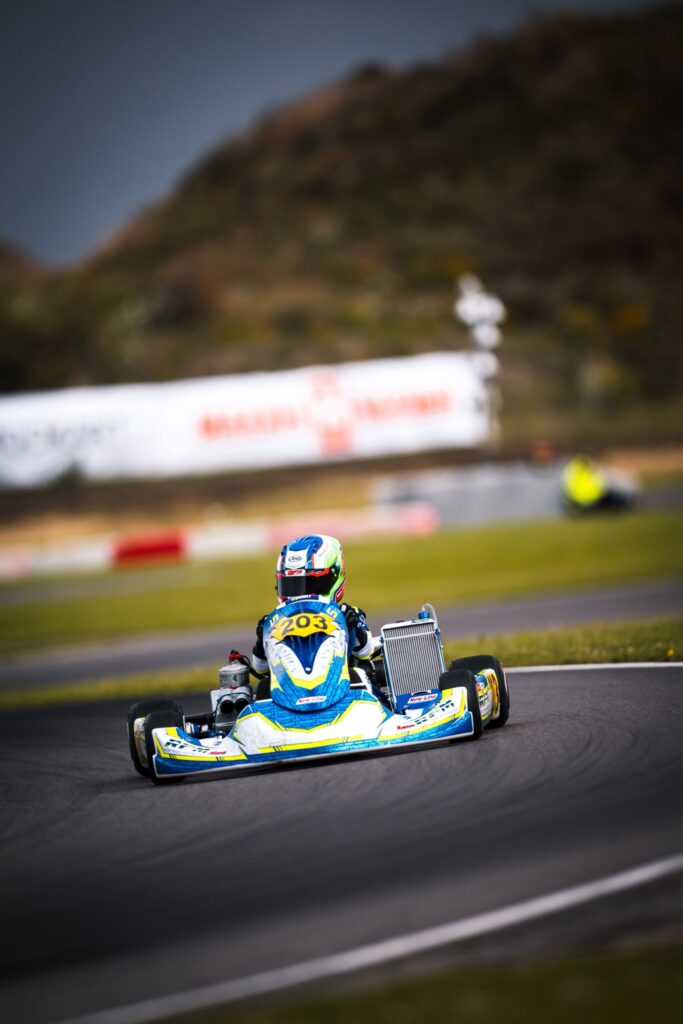
Foto de: Matteo Segato (@matteoessevisuals en Instagram)
Existe un piloto de karting de 14 años que ya deslumbra al mundo. Bosco Arias, que es todo un piloto de Ricky Finn Motorsport y de Lando Norris Kart, deslumbra a propios y extraños en el mundo del automovilismo. “Boscohete”, flamante nuevo campeón de OK Junior en la WSK Final Cup, cuenta acerca de su trayectoria hasta el momento.
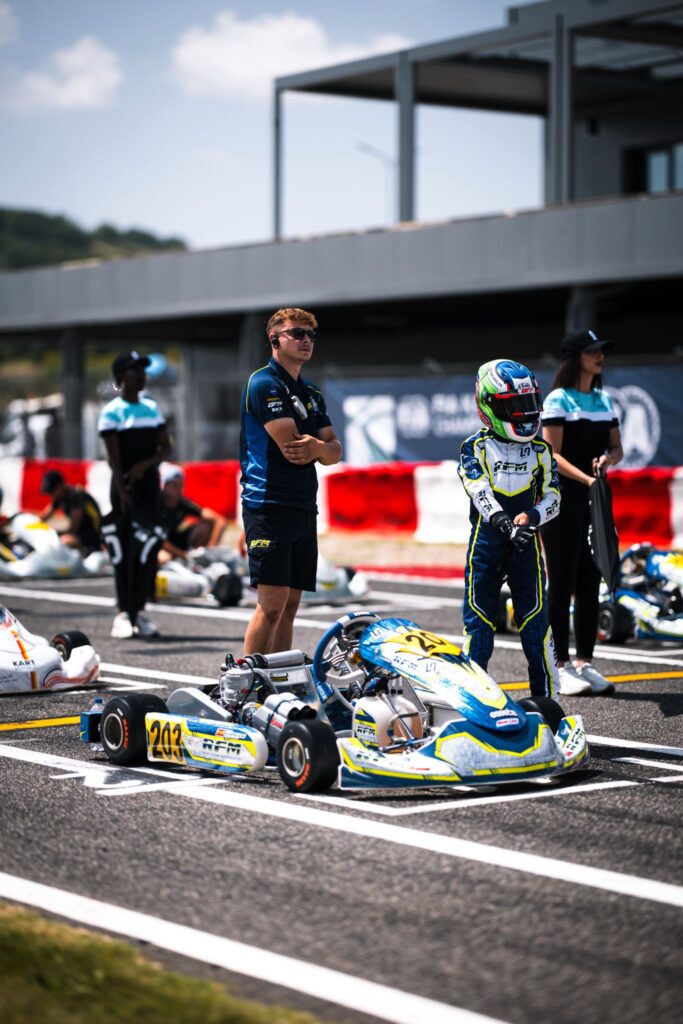
Foto de: Matteo Segato (@matteoessevisuals en Instagram)
Enrique: ¿Qué tal? ¿Cómo has visto este 2025 para ti?
Bosco: Empezamos el año muy motivados, con la noticia de que íbamos a estar en el equipo de Ricky Finn. Aun así, no empezamos como queríamos. Nos costó al equipo y a mí al principio, no estábamos ahí con los grandes para luchar en el podio o en el top cinco. Sin embargo, a mitad de año hicimos un cambio y al final hemos acabado muy bien, que realmente es lo que cuenta.
En este mundo, solo cuentan las tres últimas carreras. Después, la gente ya se va olvidando un poco… Hemos acabado muy bien y ahora tenemos ganas de empezar con fuerzas el 2026.
E: Te dieron el título de WSK Final a posteriori, al haberse producido un error en el sistema operativo. ¿Cómo viviste esa victoria?
B: A pesar de que me empujaron por detrás y sufrí un accidente, al acabar la carrera en teoría era campeón yo por un punto. Pero, a posteriori, una sanción a otro piloto hizo que, en teoría, perdiésemos el título.
Sin embargo, nadie sabía que a mí no me sumaron los puntos bien. Después, ya, al llegar a casa, le escribió un periodista a mi jefe de equipo diciendo que había algo raro con la puntuación. Ahí ya lo empezaron a comprobar… Llamaron a la WSK y nos dieron la razón. No habían sumado los puntos bien. Al final, tuve la gran alegría de ganar por un punto.
E: Es un poco surrealista la situación, si me permites el adjetivo.
B: Pues sí. El único campeonato donde voy muy bien y estoy para lucharlo… Y pasa esto. Pero con tal de ganarlo estamos todos felices.
E: Aquí se ha solucionado el tema, pero seguro que ha habido otras ocasiones donde vives injusticias. Por ejemplo, contaste que te echaron de pista. Eso no lo puedes solucionar. ¿Cómo vives eso?
B: Hay muchas injusticias, pero también, alguna vez, puedes salir tú ganando. Aun así, la mayoría de las veces te deprimes un poco, porque a este nivel no pueden pasar estas cosas. Pero al final es lo que pasa y hay que intentar ganar. La justicia que hay es cuando las victorias salen bien.
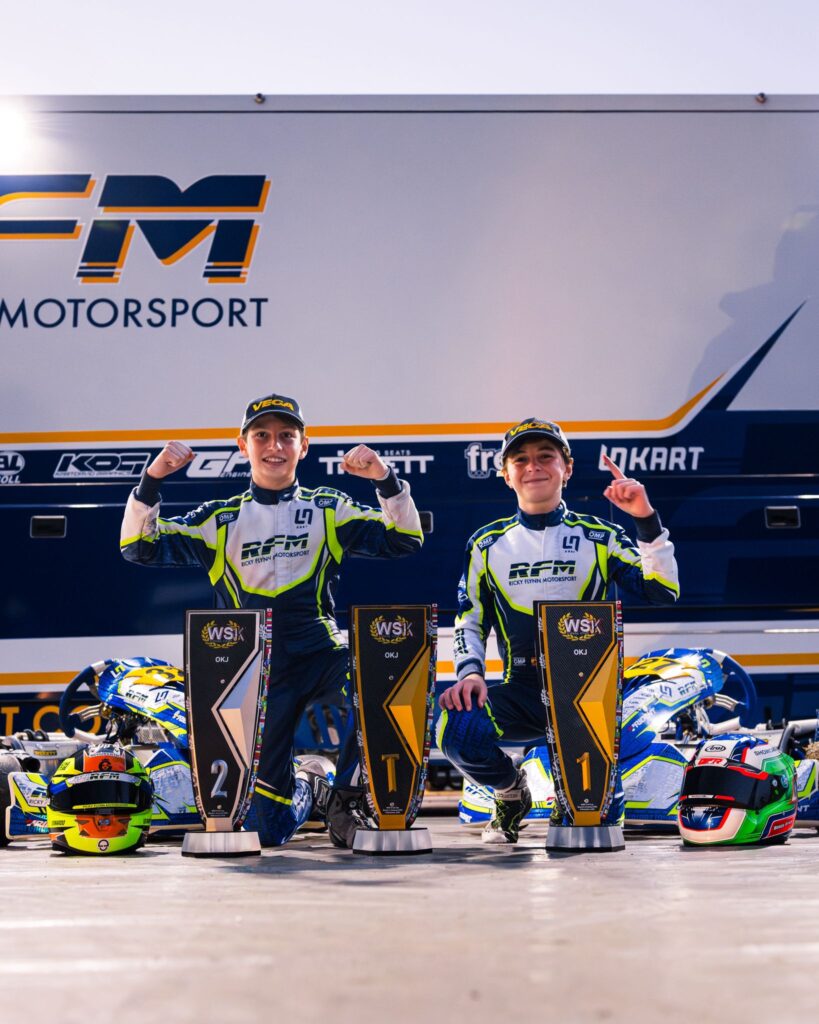
Foto de: Matteo Segato (@matteoessevisuals en Instagram)
E: ¿Cómo te has sentido progresando hasta OK Junior? ¿Qué diferencias hay entre karts?
B: La verdad es que el Mini corre mucho menos. Es más de ir detrás de alguien y seguirle. En el OK Junior depende más de la constancia y de entrar bien a las curvas. No puedes cometer errores, porque un fallo te cuesta mucho en OKJ. Tienes que ser muy fino.
En el Mini si cometes un error tampoco pasa mucho, porque tienes al de delante y le coges el rebufo. Aquí ya no hay mucho rebufo… Puede haber un poco, pero no hay mucho. Las ruedas, además, ya son grandes y, por lo tanto, las tienes que cuidar.
Hay también muchas más “heats”. En el Mini suele haber dos o tres. Aquí ya hay incluso seis. Ya hay que cuidar los neumáticos bien, porque, si no, llegas a la última “heat” con muchos aprietos. Normalmente el que tiene mejores ruedas corre un pelín más.
E: El OK Junior es una competición de mucho nivel. ¿Cuál dirías que, sea aquí o en otra competición, es el rival más duro con el que te has enfrentado?
B: Al final, no hay rival más duro. Hay pilotos que han hecho una temporada muy sólida, la verdad. Pero ha destacado el mejor material. Te diría que no hay rival más duro porque en la categoría en la que estamos tampoco somos todos perfectos. Cada uno tiene su debilidad. Te diría que con los que más me han costado han sido con los pilotos de mejor material, como Dean Hoogendorn.
E: Estuviste probando un Fórmula 4, ¿qué diferencias notas con respecto al kart?
B: Es un salto grande. El F4 tampoco es un coche de verdad, pero se parece. La velocidad cuando estás dentro de él es increíble. El paso por curva también lo sientes mucho más… Fue una experiencia muy buena.
E: También, en Fórmula 4, hiciste trabajo de simulador. ¿Qué peso tiene esto en tu entreno?
B: Al final, el simulador lo utilizas para aprender la pista, para ver qué marchas utilizar. Pero tampoco es exactamente igual que el coche. De todas maneras, sí que es una buena herramienta para hoy en día.
E: Estuviste pilotando en el simulador en Cheste. ¿Cuál es la pista con la que más cómodo te has sentido?
B: Realmente solo he ido a dos pistas. Pero Cheste, al ser ya un circuito de verdad, me gustó más. Aunque los otros también me agradaron.
E: ¿Hay algún circuito que te gustaría conocer en el futuro?
B: A mí me gustaría ir al Circuito de Mónaco. Todos los pilotos hablan muy bien de Montecarlo, así que me gustaría poder probarlo. Pero también hay muchas más pistas a las que me encantaría ir, como Spa-Francorchamps. Estaría muy satisfecho si llegara a correr en una de esas dos.
E: Sí, al final son circuitos legendarios y en los cuales también se corren categorías inferiores. Hablando de Fórmula 2, Fórmula 3… Se ha estado hablando bastante del mundo un poco político que es el camino hacia la Fórmula 1, donde algunas veces no prima tanto el talento sino un poquito más el tema del marketing. ¿Tú qué opinas? ¿De cara al futuro temes que te pueda quitar un poquito la ilusión?
B: Al final todos los pilotos estamos en un mismo nivel y nos diferenciamos por detalles. Yo llevo corriendo desde que tengo seis años y no creo que se me quite la ilusión. Ahora mismo estoy muy motivado para el 2027 y espero estar así ya los próximos 5 años. Después, si sale algo… Si lo sigo haciendo bien y con un poco de suerte, podemos por lo menos lucharlo un poquito.
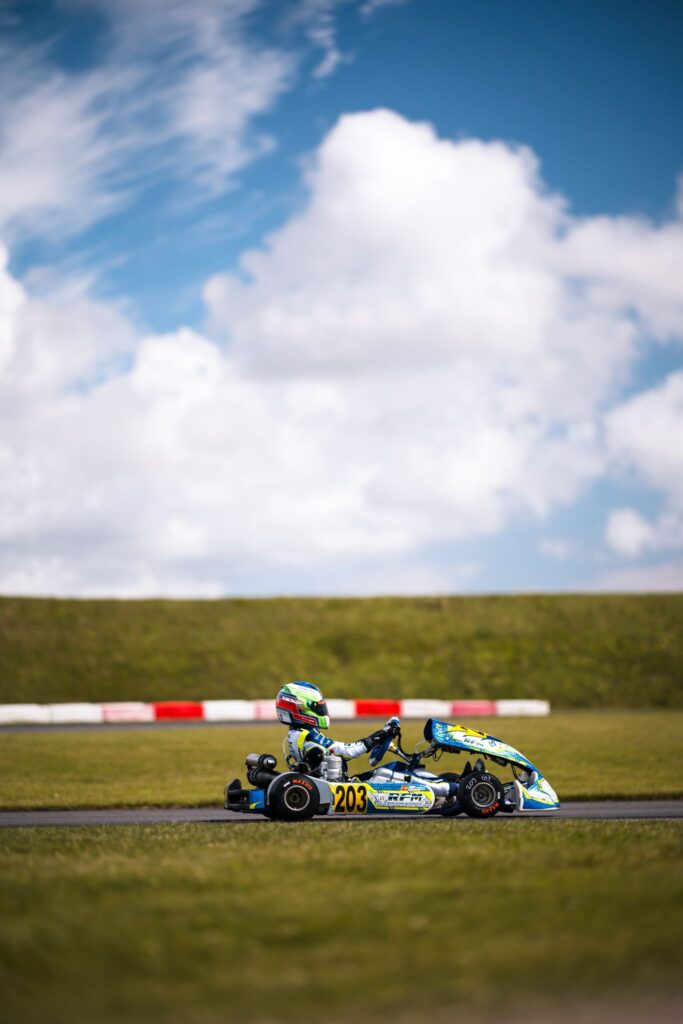
Foto de: Matteo Segato (@matteoessevisuals en Instagram)
E: ¿Cuál dirías que hasta el momento ha sido tu mejor carrera?
B: No lo sé, porque hay diferentes condiciones. A lo mejor ha habido una en la que he hecho un cuarto puesto, pero ha sido mi mejor carrera porque el coche estaba para hacer un 15º. Cuando ves la carrera dices, “bueno, ha hecho cuarto”, pero dentro del coche y desde fuera hay un esfuerzo muy grande por llegar ahí algunas veces. Entonces no te sé decir ahora mismo.
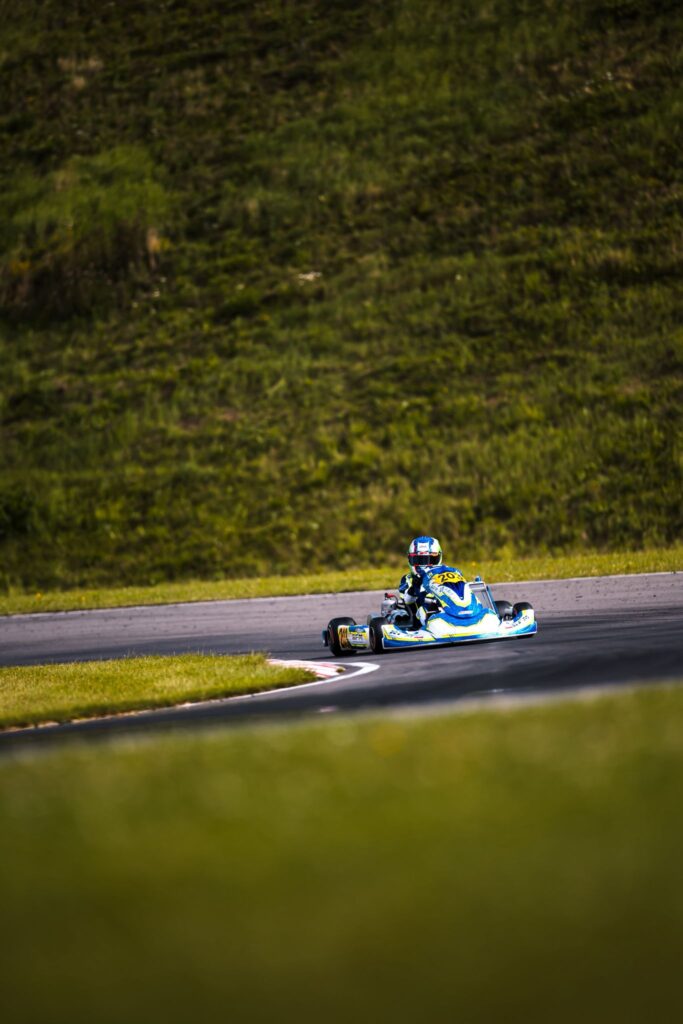
Foto de: Matteo Segato (@matteoessevisuals en Instagram)
E: ¿Destacarías alguna en particular?
B: Me acuerdo mucho de la Mini, porque se juntó que yo estaba muy bien y el material también, y conseguimos ganar la Margutti. También está la de Cremona el año pasado, porque fuimos imbatibles en la crono y en las “heats”. Éramos los más rápidos, pero también cuando nos adelantaron, lo hicimos bien y no nos pusimos nerviosos. Adelantamos en la siguiente curva, se pusieron nerviosos ellos, empezaron a tapar y ahí ya fue cuando pude conseguir la victoria en la final. Entonces sí, alguna en Margutti, la WSK de Cremona…
E: Esa fue en seco. ¿Te gusta más correr cuando llueve?
B: Me gustan mucho las dos condiciones, aunque prefiero pasar por agua. Cuando llueve es más divertido, si corres.
E: Sí, en agua cada vez se va corriendo menos… Y un sitio donde algunas veces llueve es, precisamente, Marina Bay. Tú estuviste comentando la Fórmula 1 en DAZN, concretamente el Gran Premio de Singapur de 2025. Tu manera de comentar me recuerda bastante a la de Pepe Martí en el Gran Premio de São Paulo de 2024. Tienes ese perfil de piloto, como el de Pedro de la Rosa. ¿Cómo te sentiste ahí?
B: Me sentí muy contento al comentar. DAZN me trató muy bien, me dio esa oportunidad y me enseñaron las instalaciones. Fue un día muy productivo y divertido, donde comenté la carrera junto a dos compañeros, y estuvo muy bien. La carrera también estuvo muy divertida, y verla desde esa perspectiva fue una muy buena experiencia. Cuando lo ves desde casa parece que esté todo perfecto. Ves el estudio, y parece grandísimo, pero en realidad, cuando vas ahí, lo ves todo descolocado y no te ubicas mucho.
E: ¿Qué tal con Antonio Lobato?
B: Lo pude conocer cinco segundos, pero lo conocí.
E: ¿Eres gran admirador de Lobato? ¿Te sale mucho en los anuncios de YouTube de compramostucoche.es?
B: A ver… Sí que le he visto narrar y me gusta, porque llevo viendo la Fórmula 1 muchos años y ha estado él todo el rato comentando. Es toda una referencia en ese mundo.
E: Tú eres piloto de la Academia de Karts de Lando Norris y anteriormente también estuviste pilotando en la de Fernando Alonso. ¿Cómo dirías que te han apoyado ambas academias?
B: En DPK colabora Alonso, y es un equipo profesional, igual de bueno que Ricky Flynn (Lando Norris Kart). Con el equipo de Fernando hice mi primer año y la verdad es que aprendí mucho. Hay personas que hacen muy bien su trabajo en ese equipo. No cerramos la temporada como queríamos, pero estoy muy agradecido con ellos. Hicieron una gran labor.
Ricky Flynn también es un equipo profesional y con muy buena gente en él. Nos ayudamos mucho mutuamente y hay mucha química. Eso es lo más importante entre un equipo y un piloto. La verdad es que este equipo es inmejorable.
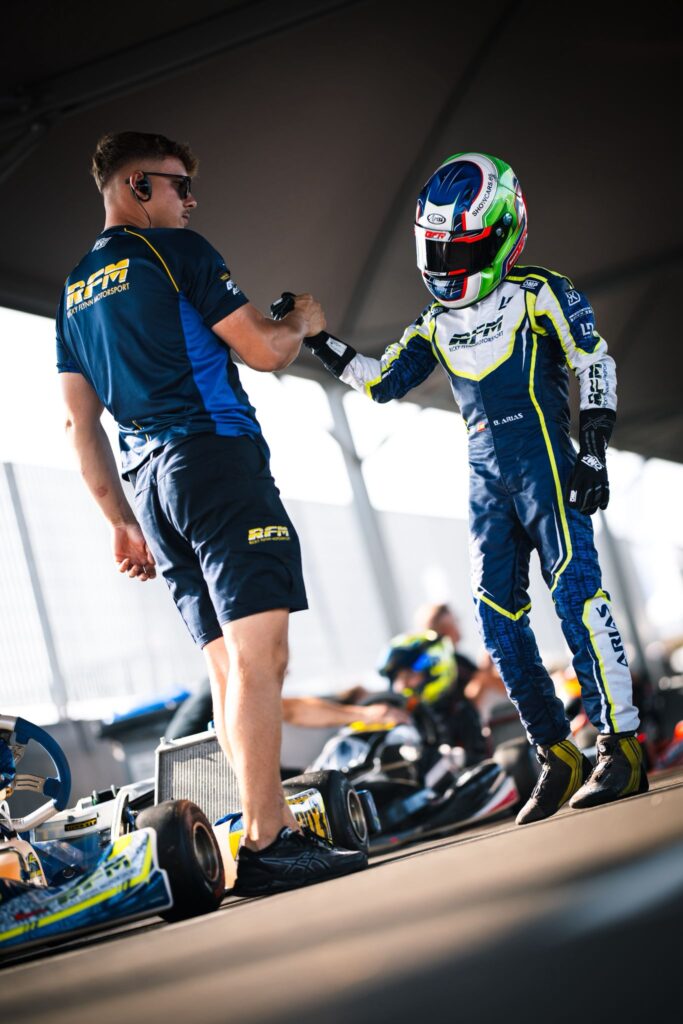
Foto de: Matteo Segato (@matteoessevisuals en Instagram)
E: ¿A Lando Norris lo has conocido en persona?
B: No, nunca. Creo que vino una vez el año pasado… Pero con la temporada que ha tenido no ha podido venir tanto.
E: ¿Quién dirías que es tu ídolo en cuanto a pilotaje?
B: Mi ídolo de más pequeño era Lewis Hamilton, pero cuando Verstappen empezó a destacar, me decanté por él. Max siempre busca los huecos y es muy agresivo. Tienes que serlo. Si no, te quedas atrás.
E: A Max Verstappen se le podría calificar como una fuerza de cambio en el automovilismo, es un poco “rara avis”. ¿Si te dieran un cheque en blanco para cambiar cualquier cosa de este deporte, qué elegirías?
B: Poner los coches al mismo nivel. Tanto en la Fórmula 1 como en todo. En los karts, también. Que se cambien ruedas y que el piloto haga lo que tenga que hacer.
E: ¿Tú quién crees que ganaría en Fórmula 1?
B: No cambiaría la cosa mucho, pero sí que estaría mucho más nivelado. Creo que ganaría Verstappen. Él se adapta muy bien al coche. A lo mejor Alexander Albon, que lucha para sumar puntos, te sorprende y acaba en el top cinco.
E: ¿Has visto a Alex Albon mejor que a Carlos Sainz este año?
A: Albon ya lleva unos años en el equipo. Para ser el primer año de Sainz, lo ha hecho muy bien consiguiendo dos podios. Además, no sé a quién le dan según qué material, como en todas las escuderías. Tanto Sainz como Albon han hecho muy buena temporada.
E: Y si te dieran otro cheque en blanco para probar cualquier vehículo, sea de Fórmula 1 o de otra competición, ¿cuál escogerías?
B: En Fórmula 1 iría a McLaren porque es el mejor coche. Pero me gustaría probar el Williams. Junto con Ferrari y con McLaren, creo que son los tres equipos en los que todo el mundo quiere estar.
E: Sí, pero me refería a si te dieran a probar algún vehículo histórico…
B: Siempre me ha gustado mucho el Renault R26 azul y amarillo que pilotó Alonso.
E: ¿Y para el año que viene qué objetivos tienes?
B: Mi objetivo es tener un inicio fuerte. Empezar ya peleando. Pero también ser muy constante, no chocarme… Si tenemos la suerte de tener un buen material, podemos hacer grandes cosas.
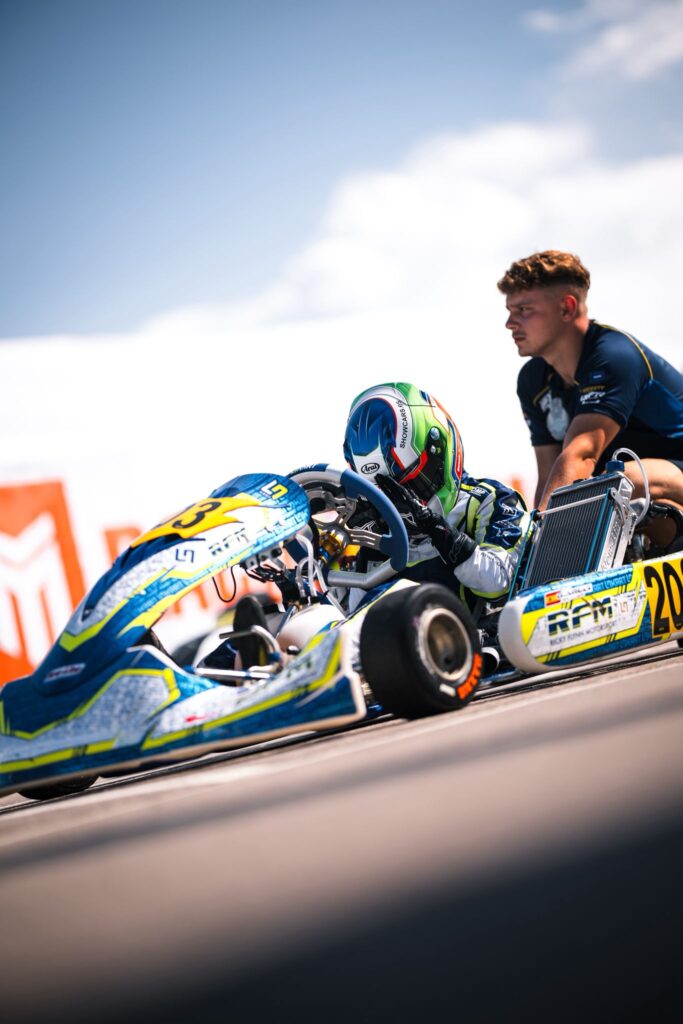
Foto de: Matteo Segato (@matteoessevisuals en Instagram)
E: ¿Cómo ves el material que tienes con Lando Norris Kart?
B: No se sabe el material que vamos a tener en 2026 porque todavía no hemos hecho los test con esos motores. Se hacen en La Conca a principios de año. Me gustaría responderte, pero no lo sabemos. A lo mejor va muy bien, pero quizá no… No creo que vaya mal, pero nunca se sabe en este mundo.
E: ¿Pero hasta ahora?
B: El carburador y motor va variando durante la temporada. Fui veloz con Fernando Alonso Karting y he ido rápido con Lando Norris Kart. He estado muy contento con los dos. Ahora ya contamos con un motorista fuera del equipo. En 2025 hemos tenido a GFR, y son los mejores motoristas con los que he corrido. He tenido buen material, sobre todo a finales de año. Tengo que darle las gracias a GFR y a Ricky Flynn. Son muy profesionales, en cuanto a motores y a telemetrías. Con DPK era un motor IAME y ahora con Ricky Flynn es TM. Son dos marcas diferentes. Han ido muy bien los dos motores y me han tratado fenomenalmente los dos equipos.
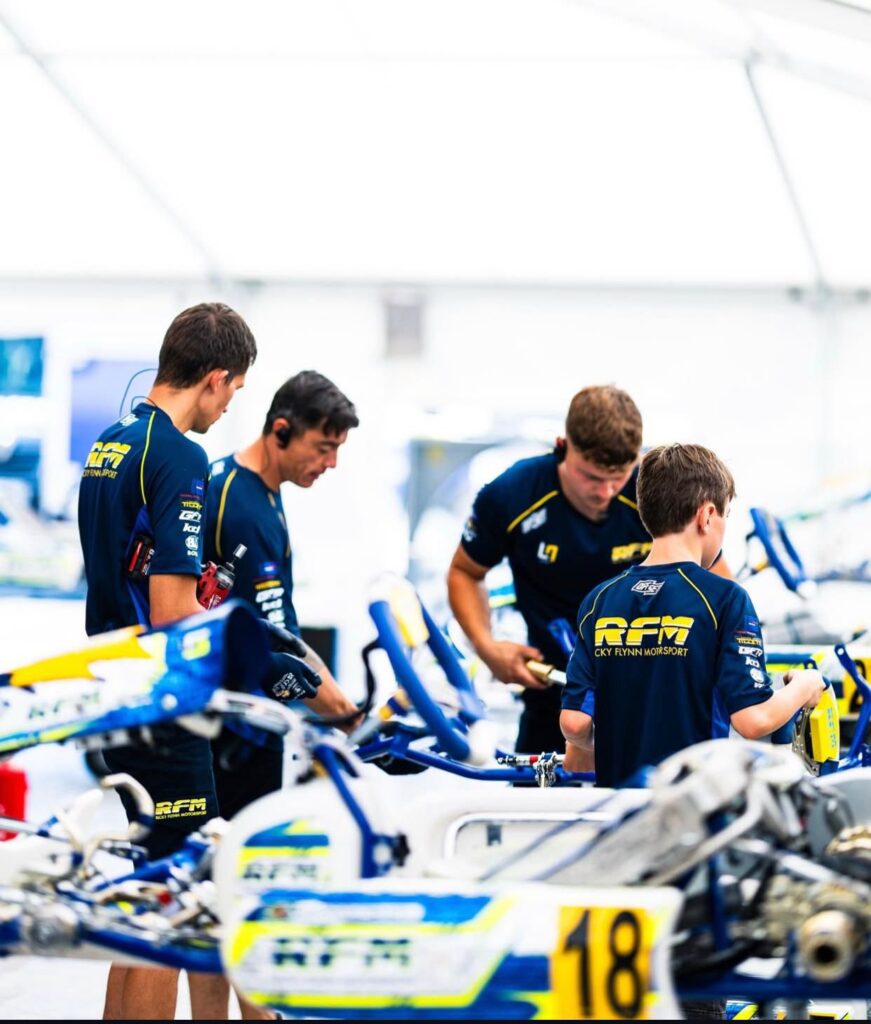
Foto de: Matteo Segato (@matteoessevisuals en Instagram)
E: En cuanto a competiciones, el año que viene, ¿qué vas a hacer?
B: Voy a hacer lo que he hecho en 2025, pero pasando de categoría. Haré el campeonato de WSK a principios de año. También tenemos la Champions y el Europeo. Y al final el Mundial. A ver si conseguimos una buena temporada y, para el 2027, ir a monoplazas.
E: A ti para, hipotéticamente, llegar a Fórmula 1, ¿qué camino te gustaría llegar a seguir?
B: Lo mejor para llegar a la Fórmula 1 es ganar, como lo está haciendo Leonardo Fornaroli. Ha ganado Fórmula 3 y Fórmula 2, y hacer eso es dificilísimo. Todo piloto quiere llegar ahí victorioso, siendo una bestia, y sabiendo que los demás están por detrás.
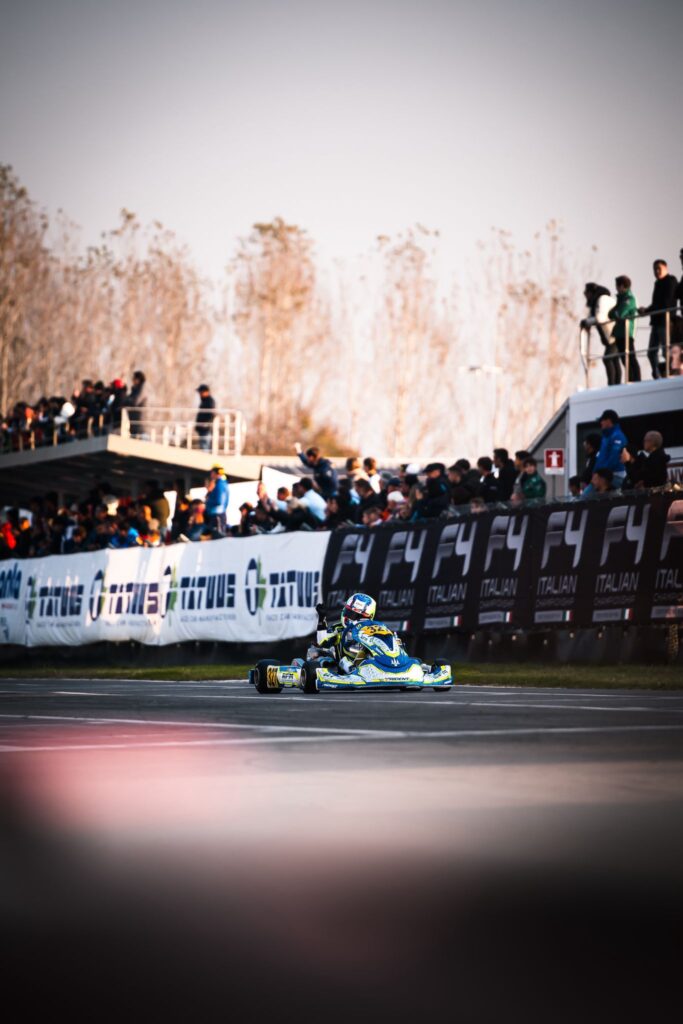
Foto de: Matteo Segato (@matteoessevisuals en Instagram) E: ¿Qué te gustaría hacer después de un posible paso por Fórmula 4?
B: Depende de cómo vaya la temporada de F4. Si va muy bien, hay muchas categorías bonitas. También están competiciones como la Eurocup-3, la cual es un paso intermedio. Es muy difícil pasar directamente a Fórmula 3, pero se puede. Pero antes, vamos paso por paso, viendo cómo va esta temporada, o la siguiente, y a ver si conseguimos muchas victorias.
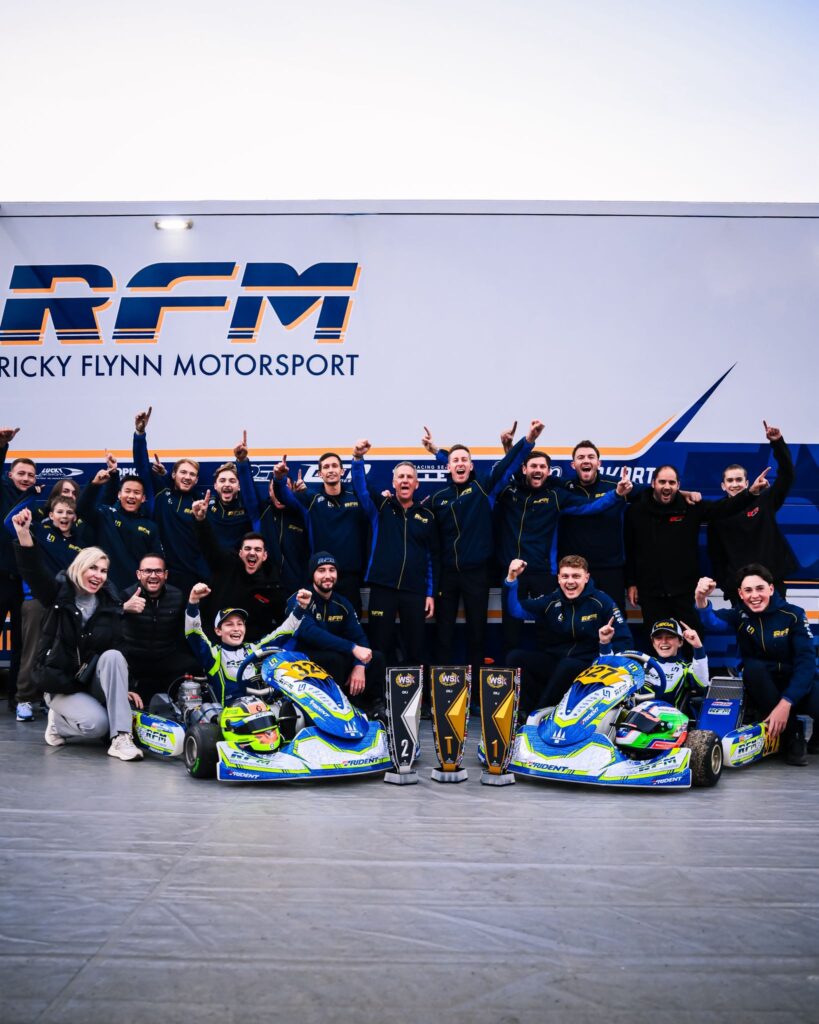
Foto de: Matteo Segato (@matteoessevisuals en Instagram) Muchas gracias a Bosco Arias por esta entrevista y por su tiempo. Le deseo la mejor de las suertes para 2026.
-
“En 2026 quiero llegar a F4, pero sin apoyo económico es imposible”, entrevista a Aaron García, campeón del Mundo de Karting IAME Senior 2025
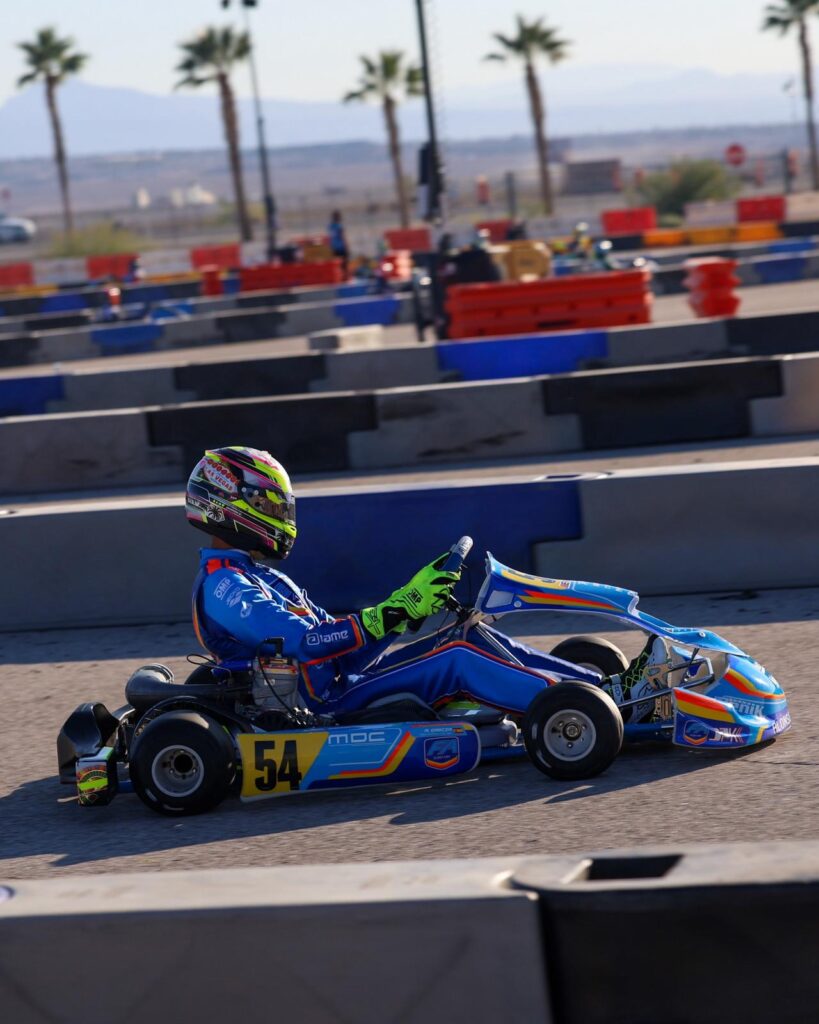
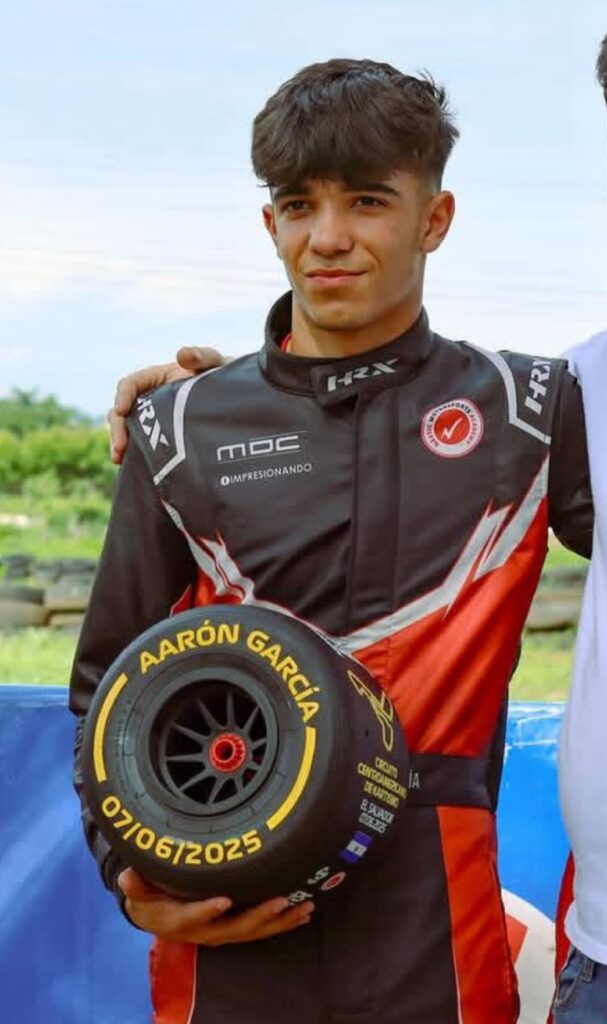
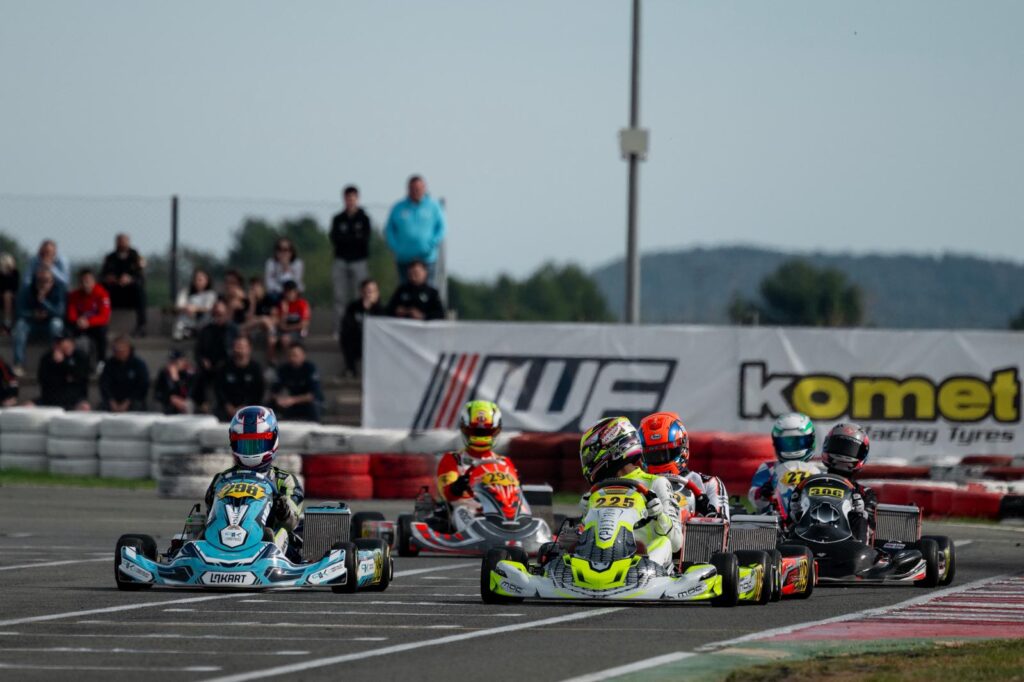
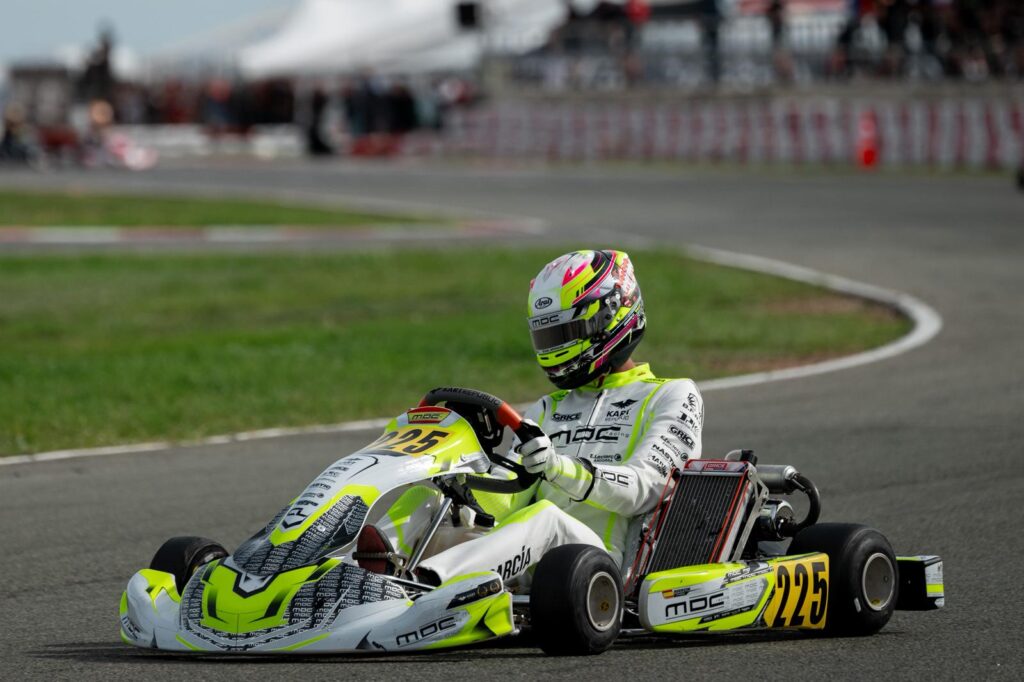
Aarón García es un piloto de karting nacido en Málaga hace 17 años. El joven pupilo de Fernando Alonso tuvo un 2025 soñado con un doblete al alcance de pocos: ha sido campeón, tanto del Mundial como del Europeo, de la categoría Senior en la IAME de karting.
Enrique: ¿Qué tal Aarón, ¿cómo estás?
Aarón: Hola, buenas tardes. Todo bien. Muchas gracias por invitarme aquí a hacer la entrevista.
E: ¿Cómo has visto el 2025?
A: Estoy muy contento con el año y con ganas de más. Creo que ha sido un 2025 bastante positivo. Hemos conseguido ganar el Europeo y el Mundial el mismo año, y creo que es algo bastante difícil de igualar. Ha sido, además, un año bastante duro también en cuanto a esfuerzo. Hemos tenido que entrenar mucho y prepararnos bastante para conseguir todo esto.
Todos los años que llevo de experiencia han venido muy bien. Desde los tres o cuatro años he dedicado toda mi vida a correr. Lo he ido combinando con los estudios, y gracias a la Nàstic he podido compaginarlo aún mejor con los exámenes.
Hay que agradecerles a ellos también y evidentemente a todo el equipo, ya que creo que sin ellos no hubiera podido ganar nada. Es un deporte individual, en el cual corres tú solo, pero para tener el material, necesitas a un equipo bueno que te respalde.
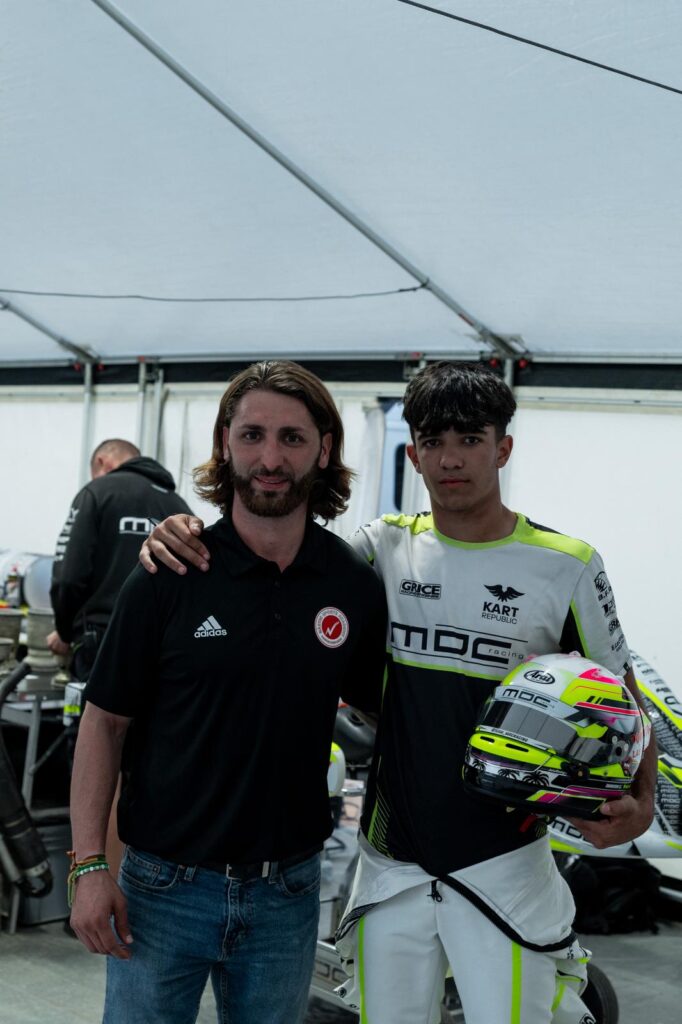
E: Ya estás en la categoría Senior, ¿cuán diferente es este kart con otros anteriores que has conducido?
A: Cuando debuté en karts, lo hice en la clase Mini. Antiguamente había en esa categoría dos karts diferentes. Pero ahora solamente hay una, donde es bastante más pequeño el kart y es de los 8 años hasta los once. Luego, ya das el salto a la Junior, que se disputa desde los once hasta los catorce años. El kart de la Mini a la Junior cambia, inclusive el motor. Después, en el cambio de la Junior a la Senior (esta última desde los 14-15 hasta los 30), el kart es el mismo. Lo único que cambia es el motor, que tiene más potencia.
E: A estos niveles tan altos, hay siempre mucho talento y pilotos de muchísima habilidad. ¿Quién dirías que es el rival más duro con el que te has enfrentado hasta el momento?
A: Hasta ahora he tenido bastantes rivales. En España, por ejemplo, diría que fue un catalán llamado Eloy. Luego, en Europa, me he ido encontrando con oponentes más difíciles, como otro español: Rubén Moya. También está Danny Carenini, un italiano, con el cual me he jugado el Europeo y el Mundial. También me jugué el Mundial con un británico, pero diría que, hasta ahora, en cuanto a velocidad y a peleas, me decanto por Rubén Moya.
E: También se habla muchísimo de lo complicado que es forjarse un camino hasta ser piloto profesional, donde algunas veces no prima tanto el talento, sino que priman actores un poco más externos. ¿Tú qué opinas, de cara al futuro?
A: Este deporte es de los que más se centra en la parte económica. Por no decir el que más. Aunque tengas mucho talento, si no tienes el dinero, creo que es muy difícil o casi imposible llegar. Es lo que más te ayuda para dar el salto.
Ahora, por ejemplo, estamos intentando buscar patrocinadores para conseguir entrar a F4 en 2026. Está siendo difícil, pero creo que el 2025 ha sido bastante positivo y lo estamos aprovechando. A ver si podemos conseguir dar el salto a Fórmula 4. Luego, si se puede conseguir algo más, lucharemos por ello.
E: ¿Tu objetivo para el año que viene es llegar a disputar alguna carrera de F4?
A: Sí. Creo que el año que viene ya tendría que dar el salto a Fórmula 4 e intentar hacer un campeonato entero.
E: ¿Uno entero?
A: Sí, ya sea Fórmula 4 española, italiana…
E: ¿Idealmente en que campeonato correrías?
A: Si pudiera elegir sería el de España o el de Italia, que son las dos competiciones más fuertes de Fórmula 4.
E: Has estado en Macao hace nada, pilotando en el Kartódromo de Coloane. ¿Qué pista te gustaría probar en un futuro?
A: ¿En Fórmulas?
E: En cualquier coche.
A: El Red Bull Ring en Austria me gusta mucho. La zona de dentro de Spa-Francorchamps también me parece bastante bonita. Me encantaría, además, correr en Le Mans.
E: ¿Te gustaría correr ahí como piloto del Mundial de Resistencia?
A: Sí, y tanto. Me ilusionaría mucho correr las 24 Horas de Le Mans.
E: ¿Ese es tu objetivo máximo, para un futuro?
A: Sí, la verdad es que me haría bastante ilusión llegar a disputar las 24 Horas de Le Mans. Pero ahora mismo tengo el objetivo de dar el salto a Fórmula 4 o a cualquier monoplaza.
E: Hasta ahora, ¿en qué pista te has sentido más cómodo?
A: Yo soy de Málaga. En la que siempre entrené de pequeño era la de Campillos. En 2025 competí aquí, pero hacía ya dos años desde que no competía. Siempre he tomado ventaja cuando se corría aquí: siempre ganaba yo, porque sabía de algunos puntos donde se podía tirar más o menos. Otra pista que me gustó mucho es la de karting en Le Mans. Para mí es mi favorita.
E: De cara a un posible paso a Fórmula 4, ya se empieza a hablar bastante del papel del simulador. ¿Qué peso puede llegar a tener el simulador en tu entreno?
A: El simulador es bastante importante. Cuando vas a dar el salto a monoplazas, te ayuda desde ya a conocer los circuitos y a conocer algunos puntos de referencia para ir empezando. También trabajar con el tema del set-up del coche.
Creo que me viene bastante bien. Yo, por ejemplo, llevo todo el año centrándome en entrenos de Fórmula 4 y de Gran Turismos. Intento ir tocando cosas para empezar a entenderlas, en caso de que se dé el salto. En la Nàstic Sports Academy tienen un simulador donde se pueden hacer tests de F4.
E: Sí, eso es un paso importante. Pero sea en el simulador o en la pista, ¿te gusta más correr cuando hay lluvia o cuando está seco?
A: Siempre he preferido ir en seco, la verdad. Pero sí que, últimamente, el agua me está gustando bastante. Creo que tiene su punto. En mitad de la carrera, por ejemplo, cuando se va secando y tienes que ir pensando si puedes ir ya más por dentro o no… La lluvia puede marcar bastante la diferencia, aunque no es más difícil que rodar en seco. Sin agua está todo bastante más compactado.
E: ¿Cuál dirías que ha sido tu mejor carrera hasta el momento?
A: No sé si te diría la del Mundial de este año. También está la primera del 2024, la Winter Cup europea, donde salía último y llegué hasta el cuarto puesto.
E: También has pilotado en la Academia de Karts del grandísimo Fernando Alonso. ¿Qué tal aquello? ¿Cómo te han apoyado?
A: Aunque no empecé ahí, cuando hice el primer año completo en el Campeonato de España fue con ellos. Desde 2017 hasta 2021 estuve con FA y me han apoyado muchísimo. La mayor parte de lo que aprendí ha sido gracias a ellos.
Estoy muy contento con todo lo que me han podido ayudar. No conseguimos ganar el Campeonato de España, pero he estuvo muy cerca dos o tres veces. Sí que conseguimos ganar muchas carreras, muchos títulos… Siento una gran felicidad por haber trabajado con ellos y aún seguimos teniendo esa ayuda que nos damos entre nosotros para poder seguir hacia adelante.
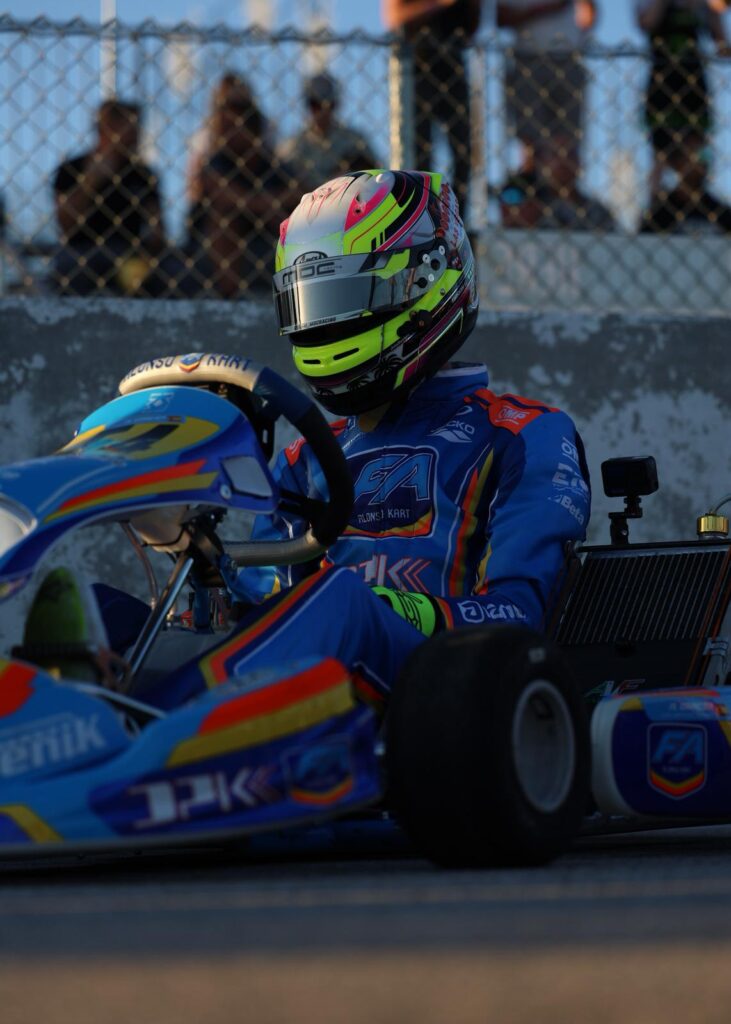
E: ¿Sigues en contacto con ellos para un posible paso a Fórmula 4?
A: Creo que me seguirán apoyando siempre. Me he criado con ellos y nos hemos ayudado bastante entre nosotros. Es posible que sigamos asociados.
E: ¿Has llegado a conocer a Fernando Alonso?
A: Sí. Fernando no suele ir a las carreras, pero sí que le conocí una vez en su circuito de karting, cuando fuimos a hacer un entreno del equipo y estaba ahí. De hecho, tengo una foto con él en Instagram.
E: No la había visto. La tengo que ir a ver… Y siendo Alonso tan fan de los karts, ¿has llegado a correr contra él?
A: No, nunca. Aunque puede ser interesante, eso sí.
E: Sinceramente, es un baremo bastante alto para medirse.
A: Sí, lo es.
E: Hablando de ídolos como es Fernando Alonso, ¿quién dirías que ha sido tu referencia automovilística?
A: Personalmente nunca he tenido un ídolo. Sí que soy un loco de las carreras, siempre las he visto y me he fijado mucho en los pilotos, pero nadie ha sido mi ídolo. Pero a mí, por ejemplo, de pequeño me gustaba bastante Fernando Alonso. Ahora, en esta época, me gusta mucho Max Verstappen. Es muy agresivo y tiene mucho esfuerzo por detrás. Es en el que más me fijo ahora mismo.
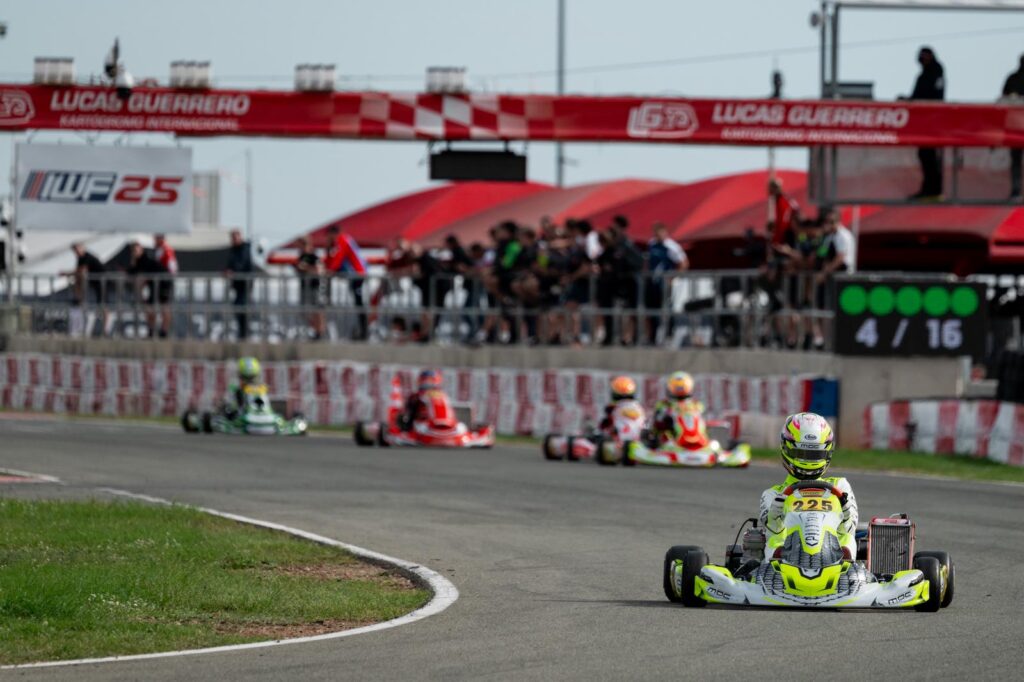
E: Imagínate que te dan el poder de decisión de cambiar cualquier cosa en el automovilismo. ¿Qué elegirías?
A: Yo le daría oportunidades a personas que no tienen esa parte económica. No solamente me ha pasado a mí, sino también con muchos conocidos. Es una pena, porque te esfuerzas mucho (por ejemplo, en el karting) para intentar dar el salto y al final nunca llega la posibilidad.
E: ¿Has visto algún caso?
A: A alguien famoso, no. Pero sí que tengo a gente que les cuesta y que no han podido progresar.
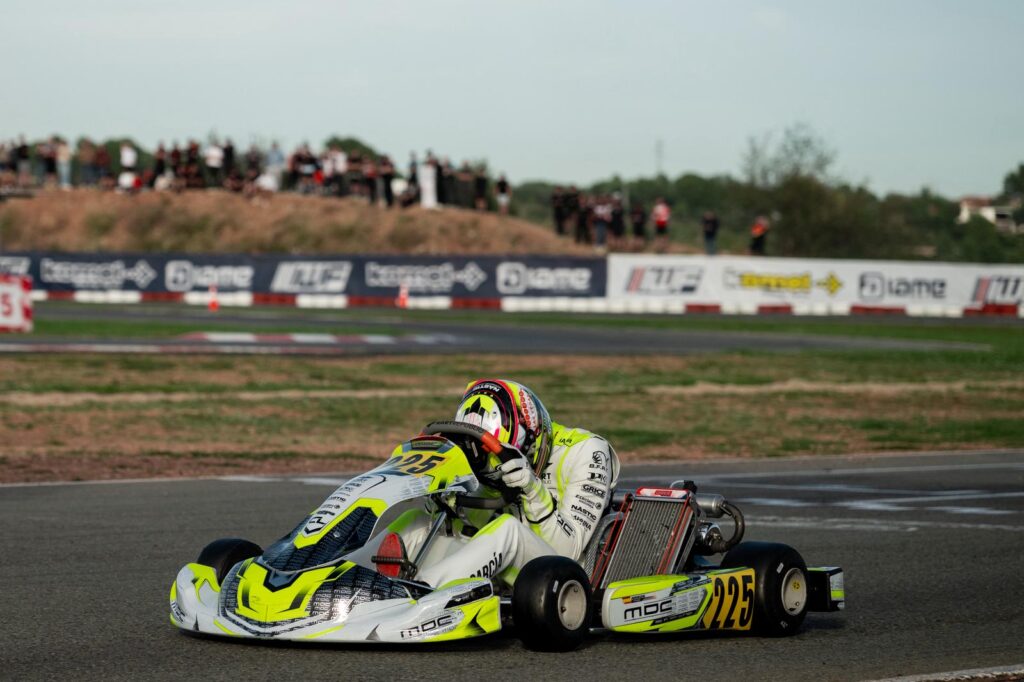
E: Comentabas que llegar a disputar las 24 Horas de Le Mans sería tu mayor logro. ¿Tienes algún otro objetivo? Por ejemplo, si se diera el caso, pilotar en otras competiciones.
A: Yo soy competitivo en todo lo que corro. Tengo muchísima ansia por ganar siempre. Si tuviera la oportunidad de ir avanzando poco a poco, siempre intentaría mejorar el máximo con el equipo que esté y conseguir las máximas victorias posibles. Después, si se da la casualidad, intentar conseguir algunos campeonatos, pero siempre he pensado en mejorar y en ir a por ello.
E: Eres muy aficionado a las carreras. ¿Qué competiciones sigues? ¿Ves el Mundial de Resistencia, la Fórmula 1…?
A: La F1, no tanto. Últimamente no la estoy viendo mucho. Pero la última parte del 2025, cuando se puso más igualada la lucha, sí que la vi. Me gusta mucho una competición, cuyo nombre no recuerdo, que es parecida a la NASCAR, pero en circuitos urbanos. Luego las que me veo muchísimo son las carreras de karting. Las sigo todas.
E: ¿Quién dirías que es el mejor piloto del karting del mundo?
A: Ahora mismo, no te sabría decir quién… En 2025, pienso que ha sido Christian Costoya. Creo que lo ha hecho muy bien y que ha tenido un año increíble.
E: ¿Crees que es mejor que Dries Van Langendonck?
A: No me puedo decantar por uno. Vi muchas carreras de Dries en 2024, cuando estaba en la Junior, y me sorprendió bastante. Están muy iguales.
E: Ahora ha conseguido su premio: fichar por la academia de McLaren.
A: Sí, están los dos en la misma academia. Es una buena rivalidad para el futuro.
E: Muchas gracias por esta entrevista, Aarón. La verdad es que me ha gustado mucho. ¿Quieres decir algo más?
Gracias a toda la gente que me ha apoyado hasta donde he conseguido llegar. Gracias a mi familia, a mis amigos, a todos los equipos que me han ayudado. A la Nàstic, también, por estos dos últimos años, en los cuales me han apoyado muchísimo. Gracias también a ti por invitarme a esto. Nos vemos pronto.
E: Muchas gracias.
-
“My biggest achievement is not giving up”, an interview with Russian karting driver Egor Laryushin
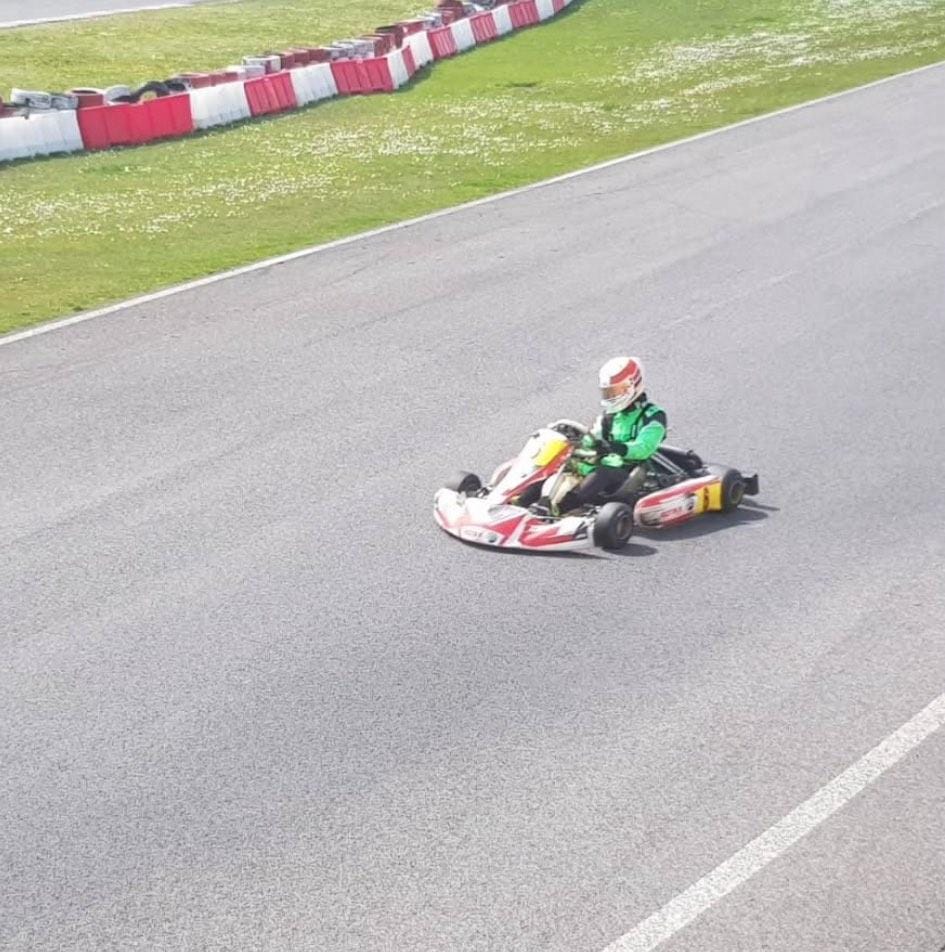
Egor Laryushin is a 17-year-old Russian karting driver currently competing in the Sodi World Series. He started in rental karting, joined Sergei Sirotkin’s academy in 2021, and competed in his Sodi-Rotax Championship. In 2022, he was promoted to professional karting in the form of Rotax-Max. However, he struggled to find financial support and had some heart problems, which didn’t let him compete in the Russian Rotax-Max Championship. He moved to Austria that same year, where he was about to join a team competing in Central European Karting. However, the financial aspect did sadly stop him from progressing again. This all led him to participate in the Sodi World Series, which he has been doing since 2024.
Enrique: Hello Egor, how are you feeling?
Laryushin: Yeah, I’m feeling great, thank you for inviting me. It’s a pleasure.
E: So, how have you seen the season so far?
L: It started quite interestingly, because in the first race, I happened to find my first actual team in the Sodi World Series. In the last season, I had my own team with my friend in the Czech Republic. We’ve got our own team, but it isn’t very serious. We competed in only one race, and it wasn’t great. Not that promising either, probably.
So, I found my first real team, with which I competed in a 24-Hour race, also in the Czech Republic, in Modřice. I’ve gotten some plastic cups from those races, because I did win a couple of times, but I’d say it was the worst category, because it was my first time on the circuit and so on. I’ve also raced in the first ever long endurance race in Austria, conducted on the 1st of May.
It was called the 10 Hours of Kleinbach, and it went particularly bad. Our team wasn’t ready at all. One of my colleagues had only started pursuing karting, and his first real race was the 10 Hours. This didn’t give us an advantage, especially in the rain, when he had to drive. Meanwhile, I was trying to compete with the leaders and was within the same lap time. Then, we switched to this guy, and suddenly we started going 15 seconds slower by lap.
So, I couldn’t bring home anything. The most usual category of races in the Sodi World Series, however, is a sprint, with 10, 12, or maybe 15 laps in a single race. They’ve been all right, I would say, because I’m participating on mostly new tracks, or on tracks I haven’t been on for a long time. We are good enough to be in the mix, to be, at least, in the middle group, starting right for the qualifying and the race. So here we are.
E: You’re here now, but how did you get into karting? What encouraged you to begin?
L: It was probably my father. Of course, I’ve also watched the “Cars” movies, and Lightning McQueen has also encouraged me. But it was especially my father who did, since he’s been watching Formula 1 since 1992. We’ve had F1 races on our television almost every Sunday. And one day, I just told him, “I want to be there, so let’s try and achieve the dream”.
I did start with rental karts, because it is hard to buy them. It is quite expensive; I’ve got to admit, especially if you’re only starting. As I started pursuing karting, COVID-19 did just hit. That was also kind of a barrier to improve in the first stages. But I would say I was all right at rental karting, at least.
E: Who does your dad support, by the way?
L: He’s been a Ferrari fan for ages already. He was a big Michael Schumacher fan. He also supported Vettel back in the day, when he drove for Ferrari. Massa as well. But now, he does also like Hülkenberg. I’d say Ferrari and German drivers. He also talked a lot about Nick Heidfeld, whom he also supported in the past.
E: And who have you supported throughout the years? When did you start watching F1?
L: It’s hard to pinpoint when I started watching F1, because I could have done it not very consciously… I remember watching a race in Baku, for example, and I remember Checo Pérez standing on the podium, so it was probably 2017 or 2015. I can’t say that I rooted for him, since I did only start to seriously watch Formula 1 around the same time I started pursuing karting.
It was around the start of COVID-19 in 2020. I was also very passionate about my favourite driver, Antonio Giovinazzi, at that time. It is hard to explain why, it just happens. You see him struggling in that Alfa Romeo and you have some empathy for him.
He was really underrated, especially during his 2021 season, where I would say Alfa just started sabotaging him… When this deal with Zhou emerged on the side with those 20 million euros for the 2022 season, they just started sabotaging Giovinazzi to get a reason to fire him. He was greatly underrated. I can talk for hours about how he missed great opportunities to score some good points or even podiums in 2021. And I’m not going crazy. It was for real.
E: In Hungary 2021 he could have actually won… I’m not calling it a sabotage, but it was bad strategy.
L: Yeah, it was a stupid mistake. He was the only one who started on slicks and then they put him on the inters. I think he would have definitely been in the place of Ocon, at least at the beginning of the race. Then, who knows? Ocon and Vettel… Their cars weren’t much better. So, I think he could have at least caught up to them.
E: Honestly, that Alfa, and especially that Aston was better at that point, I would say, in 2021. But, after that year Giovinazzi went to Formula E, then he went to the World Endurance Championship (WEC)… Who did you root for in F1?
L: I was struggling to find a new favourite driver. I mean, I was still kind of supporting Sauber/Alfa Romeo, or Haas, because they’re backmarkers, they’re the underdogs. And it’s always funny, at least, to see, for example, Kevin Magnussen in P5 in Bahrain or on pole in Brazil.
It has always been a great joy to see such underdogs succeeding. I think I like Williams as well, but I preferred Haas and Alfa, since they have less resources and less media attention. They were the real underdogs at the time.
E: We’re not leaving F1 just yet, because you did drive for Sergey Sirotkin’s academy. How did that happen?
L: I mean, we just found an offering in this championship, which he organized with his academy. We decided to try to compete in that, because it would probably be an important step in competing with other professional or, at least semi-professional, drivers on quite a good level, I would say. Although it was still on the rental kart basis, it was a Sodi kart, although it had the Vortex engine.
So, it was a kind of great kart, but we just found that offering. And in order to prepare for this tournament, we also started to visit his regular trainings in some karting tracks near Moscow. I stayed after the tournament. I was even given the “Progress of the Year” Award, because I was starting the championship as a newcomer, pretty much. I only just joined the academy and didn’t have much experience.
And in my last two races, I was pretty much fighting for podiums in the junior category, in which I was racing. In the last race, I even clinched the podium by overtaking the championship leader on the last lap, which cost him the championship.
He wasn’t especially happy with that. I wanted to shake hands with him, but he was quite angry actually at the end of the race, because he lost his championship in that corner.
E: You did a bit of a reverse Timo Glock?
L: (laughs) Yeah, probably.
E: And have you met Sirotkin himself in person?
L: Yes, he attended quite a lot of trainings. And he was always there during the races. We’ve had some contact with him. I’ve even managed to race with him a couple of times, as part of the training. When we did the race, he started last. And the other guys, they were allowed to qualify themselves. And I was, of course, starting in the front row, because he was starting last. So, we didn’t even fight with each other. He couldn’t even catch up.
E: I mean, technically you’ve faced an F1 driver. So that’s a pretty big accomplishment in itself. But apart from him, who would you say is the best driver you’ve ever raced against? What about Artem Severiukhin. You raced against him, right?
L: Yeah, I’ve been on the same track with him. He was on some testing group for the Vortex Max. I mean, he was already banned from the European Karting Championship at that time. But he could at least do the test sessions in order to come back. And I think he has returned.
E: He’s in Italian F4 now.
L: I’ve also competed against some drivers who raced in Spanish Formula 4. For example, Oleksandr Bondarev. He didn’t do especially well, I think. We were pretty much on the same level as we competed in Sirotkin’s Academy. But he obviously had more sponsorships.
And now I think he’s racing in the Russian Endurance Championship. So yeah, there are a lot of actually successful cases from the Sirotkins Academy who have stepped not only just to the level of the Russian Karting Championship, but also to formula cars in Formula 4. Not Formula 3, not FRECA… But Formula 4 has been the step to achieve, at least.
E: And would you say that the drivers you’ve mentioned so far are the best you’ve ever raced against?
L: They might be. There are also some other, more experienced, drivers who I’ve raced against, who raced in GTs mostly, or even rallycross, I think. It’s kind of hard to compare them to the youngsters in Spanish Formula 4. But we can say that this level was probably achievable.
E: What would you say is your biggest achievement so far?
L: My biggest achievement so far, to keep it banal, I would say that I’ve not given up, that I’m still doing karting. It’s my greatest achievement because after the doors were shut because of financial and health-related problems, it was hard not to give up. And now I’ve managed to redefine my own career. It’s not dreadful. We can call it promising at some specific level.
E: Do you think you can make a career of it?
L: I hope so. I could probably race in GT, maybe in rallying, because I do have some connections with those Czech guys. They’re competing in rallies, and if we find sponsors… We were actually planning to even try to compete in the European Rally Championship, at least in the Czech race, as wild card drivers, a couple of years. But it comes down to the biggest and most important point: the money. If I had that, it would be possible.
E: That’s your biggest achievement; I have to agree. But what about your biggest achievement on track? What’s the best race you’ve ever done, one you’re really proud of?
L: I can be proud of some of them. A lot of races which I won, were actually won by strategy. Because sometimes, in karting, when you drive a race with a pit stop, there is a pretty simple and, frankly, underrated strategy, especially in warm conditions.
You just pit early, as early as possible. This decision has won me, from memory, at least three races. I just started in the leading group, and I was fighting the whole time during the first five or four laps, before the pit window opened. Then, I just jumped in the pit stop immediately, switched the kart, rejoined the track in the completely free air, and drove my best laps, whilst the other leaders were fighting against each other, losing a great amount of time.
Once, there was a race, that I didn’t even know that I won. I was so far in front of them that I thought I was behind them. It was like more than a half of a lap. They lost so much time while competing with each other.
E: What year was this race in?
L: It was in 2022, with Sergey Sirotkin’s academy. The race was around 35 laps, so it was a little bit longer than a sprint. Great race, since I won.
E: So, this was before leaving Russia?
L: It was still in Russia, yes.
E: In 2022, at 14 years of age, you moved from Russia to Turkey, and then from Turkey to Austria.
L: That’s right, but I couldn’t stay in Turkey for a long period of time. I think it’s because we didn’t have any property. We had to go back to Russia and prepare all the documents to move to Austria. This lasted like half a year. During this time, I was still doing karting in Russia, with Sirotkin’s academy, and this was the last month there.
E: Do you still keep in contact with Sirotkin?
L: Not anymore, no. I did want to try and catch up with him, in order to do an interview for my high school. I had to do my final project there, which was about the aerodynamics of racing cars.
He is known for his technical knowledge. Sirotkin was test driver at Renault because he understood the car: he could help in the setup of some specific tracks. I think that’s one of his best aspects, as a driver.
E: What are you studying right now? You’re finishing school, but then, what are you planning to do for college or university?
L: I’m still not sure. I would like to study something like journalism. Maybe TV science, or something like that. Maybe even film and theatre science. I think that way because physics hasn’t gone especially well in my high school.
Our high school physics teacher is a menace. No one understands what he’s saying. All those possible dreams of studying physics and possibly becoming a Formula 1 engineer, they’re getting further and further away from me with every one of his high school lessons right now.
E: But just because there’s a specific subject in high school that you don’t like? That doesn’t mean you can’t pursue physics for college or for uni.
L: Yes, probably, but I think then what becomes a problem is the lack of knowledge. Either I start studying physics right now, and cover up all those problematic aspects, all those topics which I haven’t managed to learn under that specific teacher, or I try to find some other thing which could interest me the same, or even more, and pursue that.
Physics is not the only way; it’s not a fantasy. I just might have to think about it again, if it’s worth it or not. Maybe it is, I just have to rethink the whole situation. I still have a bit of time to do that, around half a year.
E: So, the reason why you’d study physics is to one day get into Formula 1?
L: Yes, I would say so. It would be a dream job to study physics. If I eventually get into Formula 1, it will make the whole studying process worth it. Even getting into IndyCar would be worth it, since I would like to work for a racing team.
E: In Formula 1, right now, we’ve obviously got the elephant in the room: the Abu Dhabi Grand Prix this weekend with a 3-way fight between Lando Norris, Max Verstappen and Oscar Piastri for the title. It’s also the last race for Yuki Tsunoda, which is sad. But who do you think is going to win, between Lando, Max and Oscar?
L: Even if I don’t really want Lando to win the championship, I think he is still the biggest favourite. I think there is around a 70% or 75% chance that Norris is going to win. The gap between him and Verstappen is just too big. I mean, it is obviously possible that McLaren will screw up another time with their strategy or it will just be a bad race for Lando. But I don’t think he will have a bad race in Abu Dhabi, since it’s the title decider. I don’t think he will let himself be two tenths slower than Oscar, like in Qatar, for example.
Lando is probably not giving the title away. It might be possible that he finishes second or even third with Max or Piastri winning. If, for example, Verstappen finishes second and Norris is only third… Would fourth be enough?
E: No.
L: Yeah, so a P3 is more than possible. It would have been a 10 points gap between Max and Lando if Andrea Kimi Antonelli hadn’t oversteered in that corner in Qatar. Then it would have been a 50% chance for him, probably. A third place for Norris is more than possible in Abu Dhabi. For a P4, then something should happen, I would say. So, my money’s on Norris, even though I want Piastri or Verstappen to win.
E: We’ll have to wait until after Abu Dhabi. By the way, there’s also been this big discussion recently, especially with this circuit and with Lusail, about the quality of the tracks. What would you say is the racetrack you would most like to race on in the future?
L: Spa-Francorchamps. Or, maybe, Suzuka. I think the latter offers the complete experience of a racetrack and it would be very fun to drive it in any sort of machinery. In a GT, in a Super Formula, or maybe in a Formula 1 car… Anything. I think it would be a really fun, but also very challenging experience. Especially in the first sector, with all those S-corners. I also have to mention Spa, because it’s just a legendary circuit.
E: You mentioned Formula 1… Obviously that’s very far away, but if they gave you an F1 test drive and you had to choose one car to race, which one would it be, out of all of the cars in history?
L: I think I would take the Mercedes W11 because it would be the hardest one to crash without any preparation, because it was just so stable. It steered very well. The DAS wasn’t disallowed in 2020, I think, and so it made the steering and racing experience even more comfortable for both drivers.
Sometimes, when you watch the onboard of Lewis Hamilton, Valtteri Bottas, or even George Russell in the 2020 Sakhir Grand Prix, it feels like they’re driving with climate control. This car is just so steady. I’m sure it is one of the best to drive.
E: It’s one of the best F1 cars ever, if not the best. And when we’re looking at the future for you, karting-wise, what do you see yourself doing next year?
L: In 2026, I think I’m most likely staying in pretty much the same position. Maybe I’ll find another team and compete in other endurance races, in other countries. I don’t know, because right now I’m mostly connected to Czech Republic, although I live in Austria.
Maybe I will find something in other neighbouring countries like Hungary, Italy… I don’t know. I don’t think that there is a great change, at least for next year. Right now, it’s hard to imagine.
You can listen to the interview here:
-
“I forget I’m deaf, half of the time,” an interview with GT racing driver Caleb McDuff
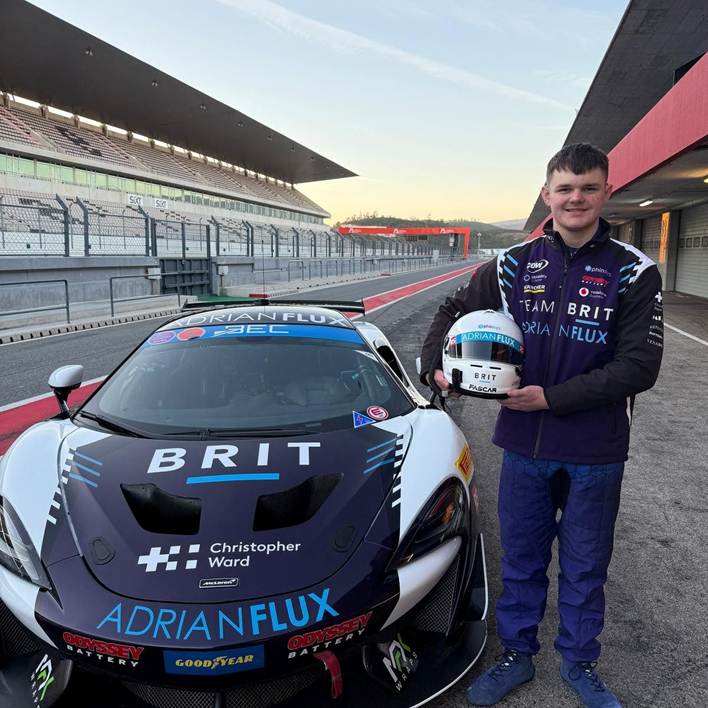
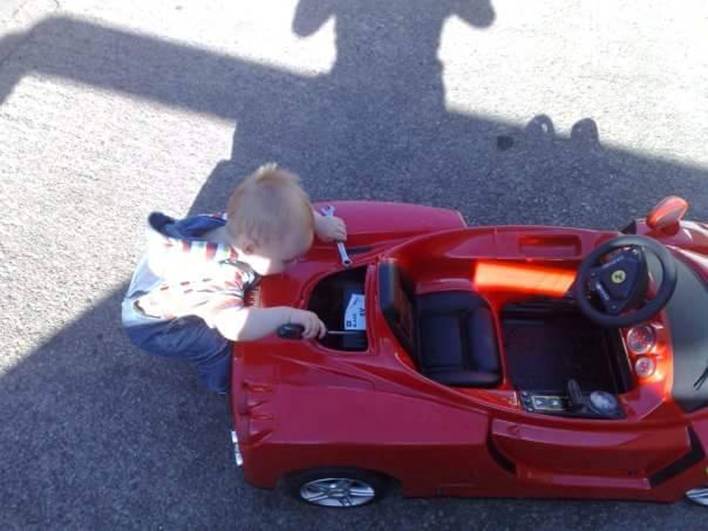
Alongside his father, Ian, the Team BRIT racer tells us about his personal and professional life. Caleb McDuff, born in Pontypool (Wales) 17 years ago, has been involved with motorsports almost since birth. At just 18 months old, he drove his first electric car. At the age of four, he got behind the wheel of his first go-kart. But that vehicle didn’t come out of nowhere. Ian McDuff, his father and close friend, bought it for him as a Christmas present.
“My dad has helped me a lot. Obviously, he paid for, pretty much, all of my races. He’s been supporting me with sponsors. He’s always been by my side, and if it weren’t for him, I don’t know what I’d be doing”. But besides supporting him in his sporting endeavours, he’s also been of great help in his personal life. “The support has been great,” says Caleb.
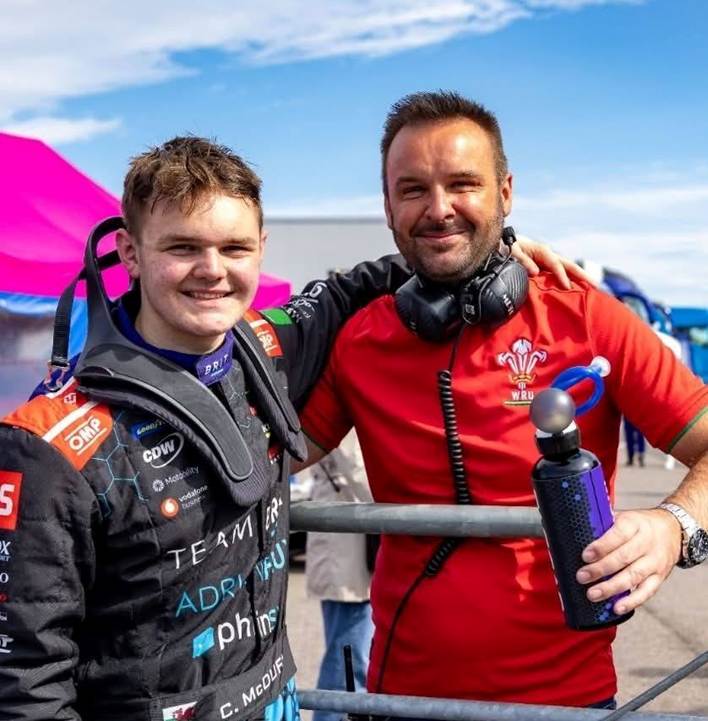
Credit: Peter Markwick His family has spoken with helmet manufacturers to find a suitable model. This is extremely important for all drivers, from a Formula 1 champion to an amateur. But for Caleb, it’s even more so, because he needs to use cochlear implants due to his profound deafness.
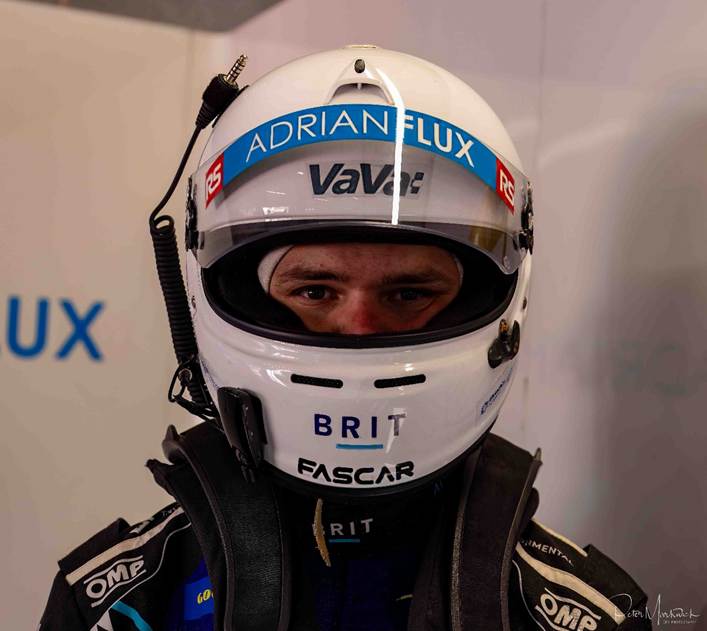
Credit: Peter Markwick In the world of Grand Touring, he is the only UK driver with this disability. “Being deaf has made me very unique, compared to almost everyone else; but my main goal is to inspire more deaf people. I try to encourage them to take up sports”.
Caleb claims to not have disability-related personal difficulties. “I simply socialize with others, like any other normal person. (…) The only problem is having to use the mini microphone, which is necessary for communication between the team and the driver. (…) But, with my cochlear implants, I have practically the same advantage as everyone else”.
“I don’t feel underestimated,” the driver adds. “I feel just as happy as everyone else. I feel included. I never think, ‘Oh, I’m deaf, I can’t do this’. Half the time, I forget I’m deaf: that’s how well I hear. I just fit in with everyone else”.
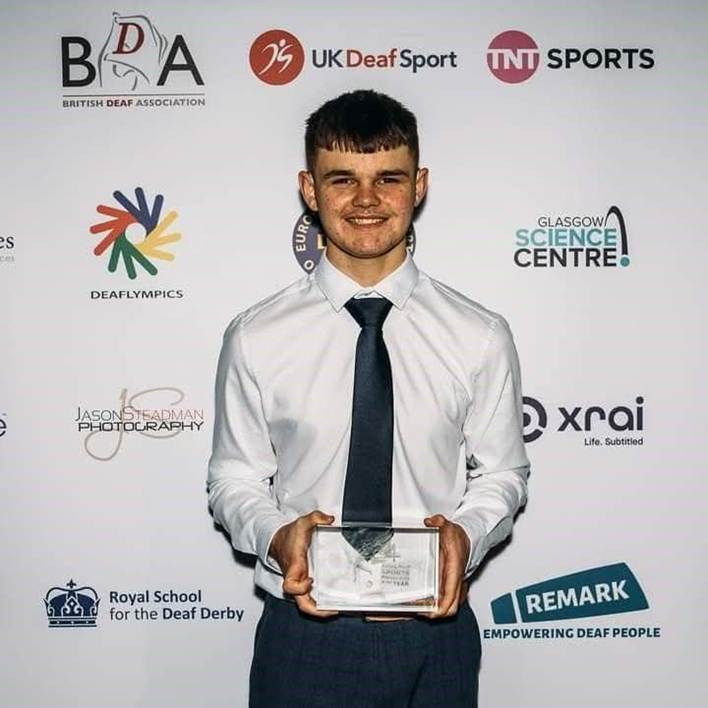
The McDuff family has now also gone international. “I’m glad I had the opportunity to race in the United States,” the Welshman said about the Veterans Race of Rememberance in early November, in which he participated behind the wheel of a Ford Mustang.
The race, held at Virginia International Raceway, was his first outing outside of the United Kingdom. But despite this, he managed to finish third overall. “Right off the bat, the handling wasn’t the best, and it was hard to drive. But fair play to the team: they fine-tuned the car, and everything worked out”.
As for his future in motorsport, Caleb has his sights set very high. “I’d like to compete in the BTCC. That’s the highest level I can reach. So, if I can do it, I will. That’s my biggest goal so far”. The prestigious British Touring Car Championship, which has had Formula 1 drivers such as John Love become victors there, has been running continuously since 1958.
“Currently, we’re working hard to get Caleb into the Porsche Carrera Cup GB next year,” says his father, Ian. “That’s our short-term goal, and we’re working with sponsors. Hopefully, he’ll be there in 2026: that will prepare him for his future goals in the BTCC”.
This immediate future, however, cannot be achieved without financial support to help him stay in the world of racing. “Motorsport is 50% talent and 50% money,” emphasizes the older of the two. “We definitely have the talent, but we need to raise the money. We’re working on it”.
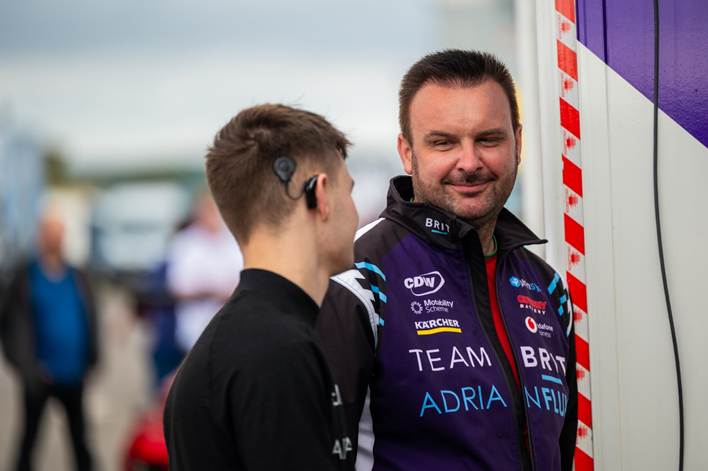
Credit: Media Thruxton They also work in other areas, beyond the strictly sportive realm. The book “Breaking The Sound Barrier: The Caleb McDuff Story,” was published on September 30th, 2025. The piece, written by both Ian and Caleb, tells the story of the young driver’s life and how he overcame his disability.
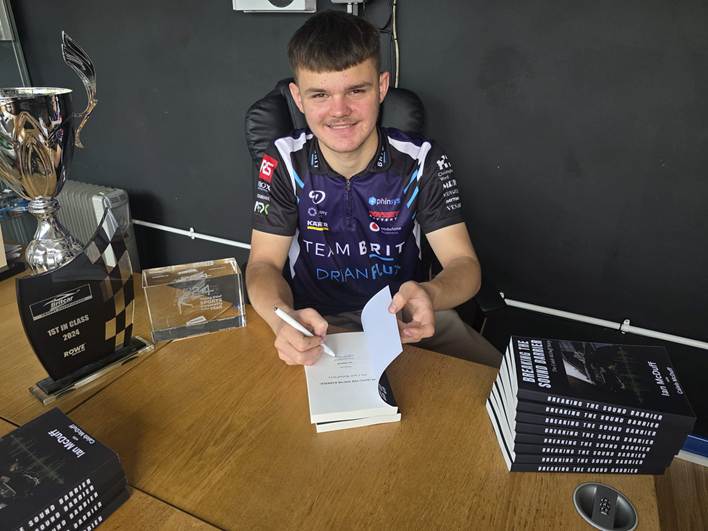
Ian, who manages “a lot” of Caleb’s social media accounts, says that “many deaf people contact us. This is especially because of the book. We’ve also received many messages from parents of deaf children. If they’ve recently discovered that their child is deaf, the first thing they do is search online, and Caleb appears very often in their searches”.
“When you find out your child is deaf, you think they won’t achieve much. It’s a stereotype”. His story, as Ian tells us, serves to “reassure” parents of deaf children. “In this sense, I think Caleb is considered a very strong role model in the deaf world, and the book has helped a lot”.
“It’s not just about racing. In fact, only a small part of it is about that. The book talks about what happens behind the scenes: how we got there and how we, as a family, dealt with our son’s deafness diagnosis. People have read the book and identified with it. They understand what I went through and what Caleb’s mother went through. The idea behind the book is to reassure people that there is a bright future,” Ian emphasizes.
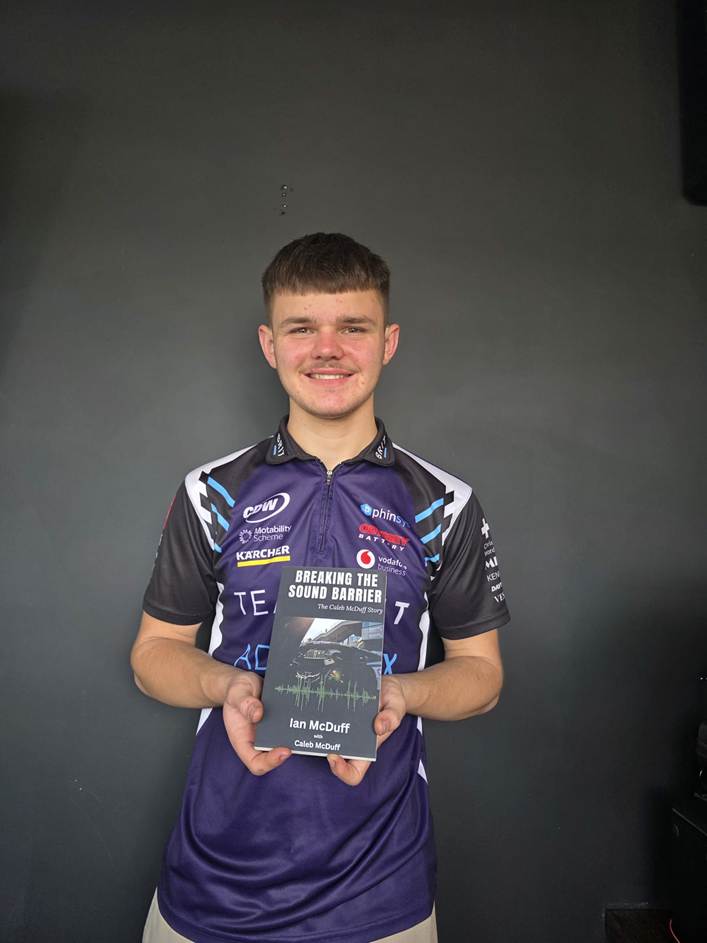
There’s an even more positive aspect: the advancement of technology. It’s changing and making racing increasingly accessible for deaf people, which brings us to another remarkable side of the McDuffs. “We’re involved in a couple of projects that address this issue, and there are a couple of different concepts”.
One, according to Ian, is a visual aid using a screen. “It’s a heads-up display in the driver’s visor. For example, in a fighter aircraft, the pilot has all that information on their visor or on a heads-up display on the dashboard. We’re working with BAE Systems on that concept”.
“We’re also working on text-to-speech and tactile feedback to give quick replies back to the pit crew. We’re involved in a couple of different projects where the team can type or say something. That information would reach the deaf driver as text. They could then respond using a keypad on the steering wheel”.
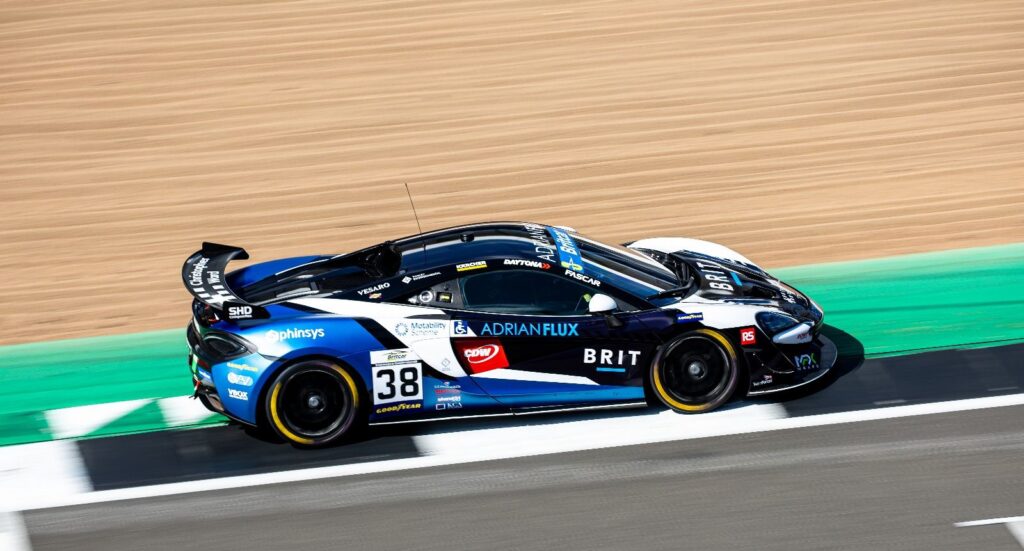
Caleb’s father also tells us that this tool would be practical for both the driver and the mechanic. “It would be a way to anticipate typical, expected responses. The options would be very easy to select and respond to”.
“Motorsport is the harshest sporting environment in the world,” Ian says. “If we can make these tools work in this sport, they could be used in others as well”. In a sport as demanding in terms of communication as is motor racing, the exchange of information between the driver and those in the pit lane is absolutely crucial.
But the McDuffs don’t limit themselves to the sportive aspect. Ian emphasizes that “even outside of sports, in everyday life, these aids could be applied to many different things”. The aforementioned tools, which transform the communication gap into a sense of connection, would help deaf people, whether they are athletes or not.
From his beginnings in karting to his, so far, short career in Grand Touring, Caleb McDuff has proven himself to be something special. Winning a category (specifically, Cadet Honda) in the Super 1 National Kart Championships isn’t for just anyone. Formula 1 World champions Lewis Hamilton and Jenson Button have triumphed in this tournament, as well as a vice-champion David Coulthard.
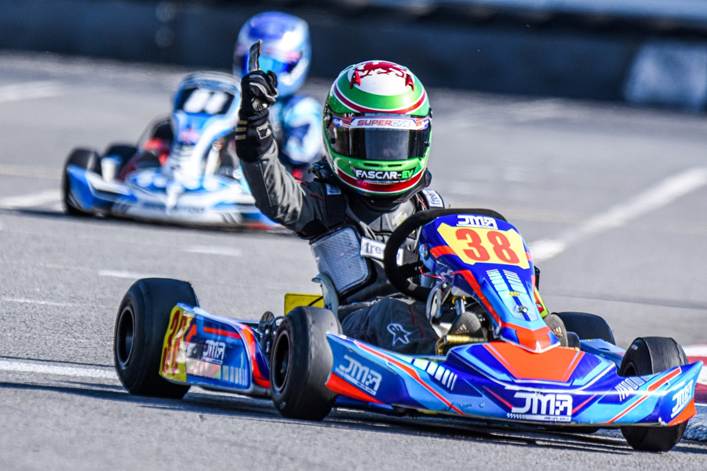
But a lot has changed since 2019, the year where he amazed in the most prestigious event in British karting. In 2020, a year in which the economic recession disrupted many plans, the McDuff family announced to South Wales Argus magazine that they had lost “all support” from their sponsors. A difficult year, but one that, for them, was not the end.
2024 proved that. A victory in his overall class in the Britcar Endurance Championship is his greatest sporting achievement to date. Although, in a broader sense, perhaps the most significant achievement is the progress that both Caleb and his father have made in facilitating access to motorsport for people with hearing loss.
-
Entrevista con Benjamín Mañach, piloto de karting OK
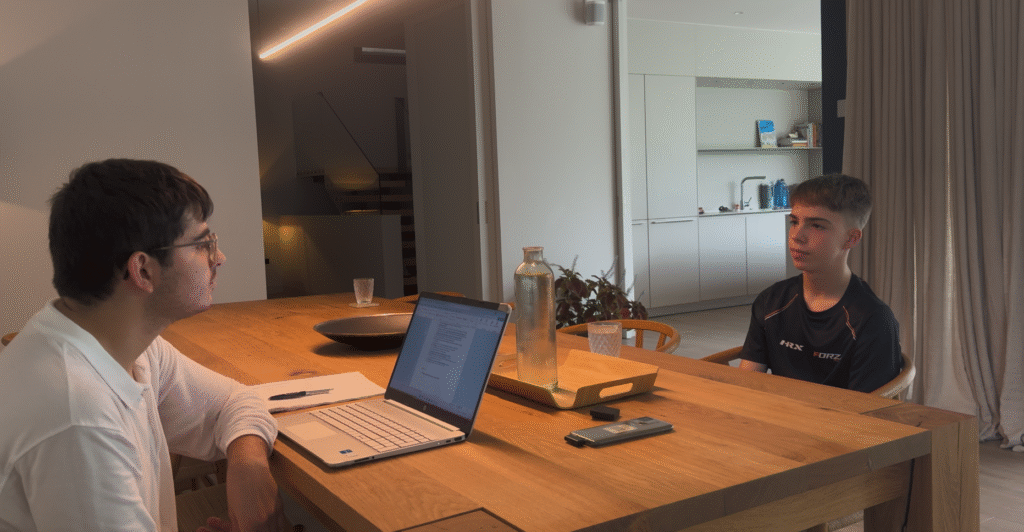
Corría el año 2011… En Fórmula 1, ni Max Verstappen, ni Lando Norris ni Oscar Piastri habían debutado. Nico Rosberg no tenía su título. Lewis Hamilton tenía un mundial y pilotaba para McLaren, mientras que el vigente campeón Sebastian Vettel solo tenía un título. Michael Schumacher corría con Mercedes. Fernando Alonso, con Ferrari. Y un 4 de abril en Barcelona, nacía Benjamín Mañach Klisowski, piloto de karting de tan solo 14 años que quiere seguir los pasos de todos estos pilotos. Especialmente, de Hamilton, su gran ídolo. Un servidor tuvo la oportunidad, el pasado viernes, de entrevistarle antes de la última ronda de la WSK Final Cup, donde compite en la categoría OK.
Enrique: Hola, Benjamín. Muchas gracias por la entrevista. ¿Qué tal, cómo te ves?
Benjamín: Muy bien. Aquí estamos.
E: La semana que viene te vas a Lonato (Italia), a hacer la última ronda de la WSK. ¿Cómo la ves?
B: Difícil. Antes de la carrera vamos ya el lunes. Entrenamos martes, miércoles y jueves. Tenemos pocas sesiones, pero intentaremos acostumbrarnos y llegar a la “qualy” para hacerlo lo mejor posible.
E: Entiendo que esta es tu última carrera esta temporada, ¿no?
B: Sí, correcto.
E: Y, después, ¿cómo afrontas el parón, cuando no estás compitiendo?
B: Habitualmente, el equipo intenta organizar unos test, aunque sea Navidad. Luego, normalmente, cuando estoy en casa, voy al gimnasio. También podemos entrenar con el simulador, preparando las próximas carreras del año que viene.
E: ¿Y de dónde vino esta pasión por el karting? Porque tú empezaste en motocross y a los nueve, que es una edad relativamente tardía, decidiste cambiar a los karts. ¿Por qué?
B: Sí, empecé con cuatro a probar el motocross; aunque tras un par de carreras decidí que era demasiado peligroso. Luego, nos fuimos de vacaciones a Menorca. Íbamos en barco y, al volver, vimos en la televisión del club náutico una carrera de Fórmula 1 en Mónaco. Cuando lo vi, le pregunté a mi padre: “¿Cómo puedo llegar a conducir ahí?”. Me respondió que tendría que empezar con los karts. El año después de eso, ya empezamos.
E: ¿A los nueve? Entonces era Mónaco 2021, entiendo.
B: Era esa, sí.
E: Es increíble que debutaste el mismo año que Hamilton y Verstappen estaban disputándose el título. Entiendo que ibas con Hamilton.
B: Sí.
E: Tristemente perdió al final. Pero, aparte de Hamilton, ¿tienes algún otro ídolo al que te gustaría emular?
B: A ver… Verstappen es muy bueno. Mi favorito es Hamilton, pero Verstappen es también una bestia. Su personalidad se basa siempre en atacar, y eso me gusta bastante.
E: Y en la parrilla actual, de este año, también está Kimi Antonelli. Esta temporada has recibido el apoyo de Antonelli Motorsport. Cuéntanos un poco sobre esto.
B: Al final del año pasado estábamos con el equipo Fusion. Los resultados no eran malos, pero no eran geniales. Nos llamó el padre de Antonelli, [Marco], y nos dijeron que estaban interesados en mí y que podrían darnos una buena oferta. También nos dijeron que el material sería muy bueno. A raíz de eso decidimos ir con ellos. Creo que, en la primera carrera, las “heats” fueron regulares porque hice una “qualy” relativamente mala. Y luego, en la final, creo que comenzamos el 34.º y acabamos el 14.º. No estaba mal. Después de eso, a principios del 2025, tuvimos la primera carrera en Franciacorta. No teníamos ritmo, la verdad. Entonces, me pregunté: “¿Y qué hacemos para el Campeonato Europeo de la FIA?” Porque claro, la FIA es lo más importante y queríamos estar preparados. Decidimos ir con ellos las primeras dos rondas y no fue nada bueno, realmente. Por lo tanto, decidimos cambiar al equipo al que estoy actualmente: Forza.
E: ¿Con Kimi has tratado directamente?
B: Sí, he estado con él. Me acuerdo de que, en Cremona, en la primera carrera, vino él junto a su padre. En otras carreras también ha venido [Marco]. Normalmente, Kimi no está tanto como su padre o el mánager. Tiene que viajar mucho, ya que corre en Fórmula 1. Pero ha estado ahí, y siempre le daba “like” a los “posts” de Instagram, lo cual está bien también.
E: Kimi es un caso bastante especial, porque pasó directamente de FRECA a Fórmula 2. Además, justo el año después, siendo “rookie” de F2, pasó a Fórmula 1. ¿Qué camino te gustaría a ti tomar para intentar llegar a F1?
B: Me gustaría primero hacer la FIA F4 Española. Creo que el nivel es un poco más alto que la [F4] Italiana. Y ahí corre MP, Campos, y todos esos equipos que están ahí arriba. Luego, el año después de eso, FREC. O FIA F3, aunque normalmente es difícil subir de FIA F4 a FIA F3. O sea, sería ir de FREC a FIA F3 y luego a FIA F2 y ya, después, F1.
E: Antes has mencionado al equipo Campos. Si no llegaras a F1, ¿te gustaría hacer un poco como Pepe Martí, que se acaba de ir del equipo Campos al equipo CUPRA Kiro de Fórmula E? ¿O intentarías hacer carreras de resistencia?
B: Creo que la Fórmula E está bien, pero no es lo que yo busco. Confío en llegar a la Fórmula 1, aunque sea muy difícil. Si no, la resistencia, como, por ejemplo, las 24 Horas de Le Mans, me gusta mucho.
E: ¿Valorarías algún día entrar en la IndyCar? ¿O Indy NXT y después IndyCar?
B: A lo mejor después de Fórmula 1, si estoy. Quiero continuar haciendo cosas. Yo creo que la Fórmula 1 es demasiado… O sea, cuando ya tengas 40 o 40 y algo, como Alonso, creo que ya es tiempo de parar. Y obviamente puedes hacer otra cosa. El Indy está muy entretenido también, pero tienes todas estas categorías a las que puedes ir.
E: Te has enfrentado, por ejemplo, a Filippo Sala (piloto de la Academia de Ferrari) y has obtenido resultados bastante similares a él. ¿Ha habido posibilidades de dar el salto a alguna academia?
B: Todavía no. Hemos tenido bastante contacto con algunos. Pero, el próximo año, ya que estamos en Senior, me van a ver más. Pienso que lo que importa más es el nivel Senior, porque ya subes a los monoplazas. A la que empiezas en la FIA a hacer top 10, top 5, y hasta podios y ganar, ya te ven y te pueden fichar.
E: Hablando del salto cuando cambias de karts, acabas de pasar de OKJ a OK. ¿Alguna diferencia que notes entre los dos karts?
B: Pues no tanto como de Mini a Junior, claro, porque ese es el salto más grande, pero sí que la válvula, cuando tú das gas, en la salida de curva con el OK Senior es un poco peor que el OK Junior. Pero luego en mitad es mucho más rápido que el OK Junior.
E: ¿Qué es lo más difícil de una carrera de karting?
B: Manejar las ruedas, ya que normalmente en las “heats” son 13 vueltas. Pero, luego, llegas a la final y tienes que estar todo el rato haciendo vueltas de crono seguidas. Si tienes a 10 chicos detrás de ti, tienes que intentar estar calmado y no estresarte.
E: Tristemente, en la última carrera tuviste que abandonar. Sé que no te gusta tirar culpas, pero no fue por la tuya. ¿Cómo gestionas cuando una carrera no sale bien?
B: Salíamos el octavo y me sentía positivo, ya que creo que teníamos ritmo suficiente para estar ahí arriba; pero en la salida un piloto me empujó. Fue 100% su culpa, y me monté encima de otro. Luego, estaba mal posicionado para la siguiente curva y me hicieron un sándwich. Después de cosas así no puedes hacer mucho: tienes que intentar estar calmado. Eso es el pasado y ahora tienes que concentrarte en el futuro. Ya no puedes hacer mucho cuando abandonas la carrera.
E: O sea, lo gestionas bien, lo aceptas.
B: Sí.
E: Ahora te estás adaptando al nuevo OK. ¿Qué parte del kart es la más importante para tu estilo de conducción?
B: Me acuerdo cuando estaba con el equipo de Kimi Antonelli, usábamos el chasis Kart Republic. Ahora llevo el Redspeed, que es parte de la fábrica OTK. Noto que tiene bastante más “grip” delante y que los frenos son mucho más directos. O sea, tú frenas y básicamente clavas ya. Siento que el OTK es más estilo Verstappen, ya que le gusta tener mucho agarre enfrente y luego que atrás le patine un poco. Y a mí me gusta así. No tanto, claro… Cuando tienes demasiado agarre adelante, yo creo que con eso ya te pasas, pero tenerlo balanceado está bien.
E: Hemos repasado los vehículos que has pilotado últimamente. En toda tu vida, ¿cuál dirías que es el vehículo con el que mejor te lo has pasado?
B: A mí me gustó bastante el Mini. Éramos pequeños, y, además, el rebufo se notaba muchísimo más que en otros karts de Junior y Senior. Podías estar todo el rato detrás de alguien, empujando. Todas las carreras eran: alguien se nos escapa, pero estáis todos ahí en fila. Eso me divertía mucho.
E: ¿Y algún vehículo en específico que te gustaría probar en un futuro?
B: Obviamente, el Fórmula 1. Pero si tenemos que escoger otra cosa, sería el Porsche. La Porsche Cup es muy difícil, pero muy divertida.
E: Pero me refería más bien a, por ejemplo, pruebas de exhibición con coches de Fórmula 1 antiguos. Iba más en ese sentido la pregunta.
B: Me gustaría probar el McLaren de 1988 que pilotó Ayrton Senna. Me parecería muy divertido y me encantaría probarlo. Es, además, muy difícil, ya que no tiene el halo.
E: ¿Tienes alguna pista donde te encantaría correr en el futuro?
B: Spa-Francorchamps. 100%. Es un circuito muy bien hecho. Tienes elevaciones, bajadas… y es un circuito muy rápido.
E: Y, hasta ahora, ¿cuál es la pista donde mejor te lo has pasado?
B: Todos los circuitos son bastante buenos. Obviamente, creo que el país que mejores circuitos tiene es Italia. ¿Número dos? España. Franciacorta (Italia) está bien, aunque tenga bastantes retas. También está Campillos: un circuito en el sur de España que me encanta muchísimo. Tiene elevaciones, bajadas… De todo.
E: Hasta ahora, ¿quién dirías que ha sido tu rival más duro?
B: Obviamente, están tus compañeros, que también son buenos. Pero yo creo que hay equipos con mejor material. Y, por ejemplo, en Prema, donde corren [Dean] Hoogendoorn y [Noah] Baglin, tienen material muy bueno. Además, están en escuderías. [En Williams y en Ferrari, respectivamente]. Una décima, incluso media décima de motor, lo cambia todo mucho. Por ejemplo, en mi última carrera en Cremona, en la “qualy” creo que quedé cuarto; pero desde el primero hasta el 25º había solamente tres décimas. Y, claro, eso afecta bastante.
E: Definitivamente. Pero, ¿dirías que te has enfrentado contra algún piloto que pueda, en el futuro, tener nivel de Fórmula 1?
B: Que haya corrido contra mí, no. Aunque sí que me parece muy buen piloto Freddie Slater, que ya está corriendo esta semana en Macao, aunque no haya corrido con él nunca. Es muy rápido y no tengo duda de que va a llegar a Fórmula 1.
E: Sí, quedó segundo en la “qualy”. El primero fue Théophile Naël, que también es muy bueno. ¿También le ves en la Fórmula 1?
B: Es muy difícil. Le veo… ¿en Fórmula 2? Quizá con Prema pueda llegar a estar con Ferrari. Sí que puede llegar también, aunque tenga más oportunidades Slater.
E: Si no me equivoco, existen rumores de que Slater se podría ir a la academia de Audi, ¿no?
B: Sí. Creo que casi todos los equipos le han dicho algo, pero él está esperando y quiere irse con el mejor.
E: ¿Cuál dirías que, hasta el momento, es la mejor carrera que has corrido?
B: El año pasado, en X30 Junior, en Zuera. Fue cuando hice mi segunda carrera en Junior. La “qualy” fue buena, ya que quedamos terceros. Luego, en las “heats”, hice resultados bastante buenos. Empezaba sexto en la final, pero caí al décimo. Aun así, remonté: el ritmo era superbueno y pudimos ganar en la final.
E: ¿En general te gusta más correr en seco o cuando llueve?
B: Depende. Todo depende del tipo de chasis. Prefiero ir en seco, porque en mojado tienes a unos que siempre están rodando en mojado y te pueden llegar a sacar un segundo; aunque depende de cómo está el chasis. Si todo va bien, yo creo que conducir en lluvia puede también ser muy divertido.
E: La semana que viene ya vas a hacer tu última carrera del 2025. ¿Cuál es el siguiente paso para ti, en 2026?
B: Hacerlo de la mejor manera posible en OK Senior y acabar la temporada. Luego, tener ofertas de equipos de Fórmula 4 para ir avanzando.
E: Fórmula 4, entonces, ¿de cara al 2027?
B: Creo que el próximo año podemos hacer más que solamente entrenar. A lo mejor participar en una carrera o dos. Luego, en 2027, el plan sería hacer toda la temporada de F4.
E: Vale, un placer charlar contigo. Muchas gracias y un saludo.