Author: Enrique Calvo

  • Rovanperä confirms F2 adventure in 2027

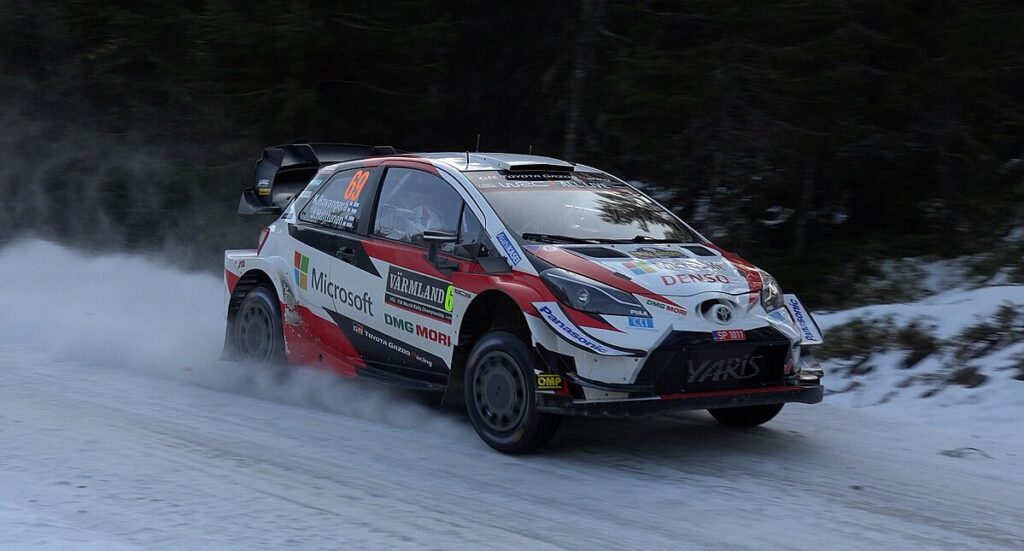
    “Kalle Rovanperä during Rally Sweden 2020”
    Image ( https://commons.wikimedia.org/w/index.php?curid=87242923 ) by Cal1 ( https://commons.wikimedia.org/w/index.php?title=User:Cal1&action=edit&redlink=1 )– own work, CC BY-SA 4.0. This file is licensed under the Creative Commons ( https://en.wikipedia.org/wiki/Creative_Commons ) Attribution-Share Alike 4.0 International ( https://creativecommons.org/licenses/by-sa/4.0/deed.en ) license.

    2022 and 2023 WRC champion Kalle Rovanperä has announced he will be leaving the pinnacle of rallying after the season end in Saudi Arabia. His destination? Next year, Super Formula. In 2027, Formula 2.

    The Finn’s announcement comes as a sudden shock for both fans of rallying and formula racing. Whilst, in recent years, experienced and successful F1 drivers such as Kimi Räikkönen, Robert Kubica and 2020 Rally Dakar “Rookie of the Year” Fernando Alonso have dipped their toes into rallies, it has not been as widespread the other way around. Sébastien Loeb is the only driver to have been rumoured to make the big switch. The WRC legend tested both the Renault R27 and the Red Bull RB4 and was seriously linked, as confirmed by himself, to a race drive in 2009 for Toro Rosso.

    Rovanperä, however, will apparently take the feeder series route to a possible place in the pinnacle of motorsport. Raymond Blancafort of Soy Motor indicates that the driver of Latvian descent has “Formula 1 as his objective”, which is only logical considering his unusual switch to FIA Formula 2. He will start the 2027 season at 26 years of age and will end it at 27, something uncommon in non-pay drivers. This is also the earliest ever announcement of a driver of the category since its inception in 2017.

    In an X video titled “New Chapter”, he also explains that he will be continuing to develop his career with the support of Toyota Gazoo Racing (TGR) in Super Formula. Rovanperä has become synonymous with the Japanese team, as he has driven with them in WRC for the last six seasons, winning two titles which could possibly become three this year. The trailer also insinuates he will be driving for Hitech-TGR when he makes the full switch to F1 feeders in F2, something logical considering the aforementioned links.

    It remains to be seen whether Haas, who has been partnered with Toyota since 2024, has the Jyväskylä-born driver in their plans for the 2028 Formula 1 season. And whilst the ties seem logical, it is, for now, nothing but speculation.

  • The comeback of Rudolf Caracciola

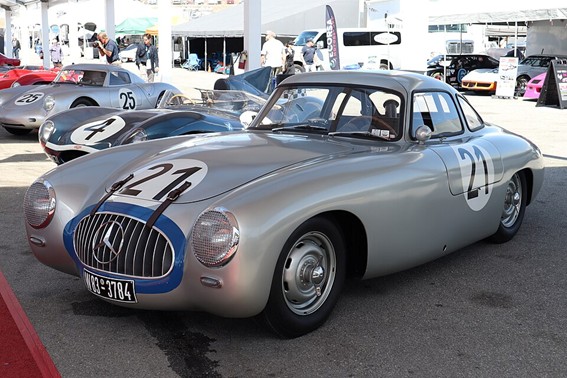
    The Mercedes-Benz 300 SL W194 was the sportscar model driven by Rudolf Caracciola in the two major 1952 races he participated in.

    “Mercedes 300 SL W194 at RMMR 2022” by Prova MO is licensed under CC BY-SA 4.0.

    Few words can describe how immense the accomplishments of Rudolf Caracciola were. Many people talk about Formula 1, but it didn’t just appear out of thin air in 1950 with the likes of more memorable heroes such as Juan Manuel Fangio, Alberto Ascari or Giuseppe Farina.

    The AIACR European Championship, a precursor of today’s Formula 1, held six full seasons, three of which were won by “Caratsch”: the most out of any driver. The German of Italian descent, who also held Swiss citizenship but never raced under said flag, also finished an honourable third with Alfa Romeo in 1932. These achievements undoubtedly make him one of, if not the best, driver of the pre-F1 era. And whilst his prime time, cut short by World War II, was quite obviously before the 50’s, few people remember his short-lived and not-so-successful comeback, which was somewhat involved with “modern” Formula 1.

    Long past his best years and already aged 51, Rudolf Caracciola decided to compete in a support race that was “part” of the 1952 Swiss Formula 1 Grand Prix event. It was not F1 itself, not quite, but a sportscar race of that level after a comeback from a serious leg injury was nothing short of impressive. Make no mistake, the “Rain Master”, as he was called during his winning days, had nothing to prove. Long before the births of Lewis Hamilton and Nico Rosberg, he had become synonymous with Mercedes and was, back then, the most successful Grand Prix car driver of all time.

    Whilst the Formula 1 Swiss Grand Prix was won by Ferrari’s Piero Taruffi, the “Prix de Bremgarten for Sportscars”, named after the Bremgarten Circuit it was held at, was not short of stars. One of his Mercedes team-mates was Hermann Lang; 3rd place in the 1937 and 1938 European Championship seasons and now officially an F1 driver. His other two team-mates, Fritz Riess and Karl Kling, also had the honour of having participated in the top class, the former of which won the 24 Hours of Le Mans alongside Lang himself later that year. Bonetto at Lancia, Biondetti at Jaguar, Duke and Parnell at Aston Martin and F1 race winner Luigi Fagioli at Lancia also participated in the race.

    The “Silver Arrow” driven by Rudolf Caracciola was none other than the legendary Mercedes-Benz W194 300 SL. Caracciola had fond memories of the car, as he and navigator Paul Kurrle had managed a 4th place at Automobile Club di Brescia’s Millie Miglia two weeks prior in that same machinery, in what was Caracciola’s. first major race post-comeback.

    In Bern, however, Swiss Sportscar Champion and home hero Willie Daetwyler of Ferrari took pole position in qualifying ahead of Kling (2nd) and Caracciola (3rd). “Caratsch” managed to outqualify team-mates Lang (4th) and Reiss (11th), although with the latter’s unique disadvantage of having to handle a previously unraced car.

    Three of the Mercedes-Benz W1940 300 SL cars ended on the podium. Karl Kling was the winner of the race, whilst Hermann Lang (who also took fastest lap) and Fritz Riess would accompany him in 2nd and 3rd, respectively. Sadly for Caracciola, the brakes on car #005 suffered a critical failure which meant the German would end up colliding against a tree. Whilst he survived, the injuries from another dangerous crash were, this time, career-ending. A wheelchair and a walking stick would accompany the Remagen-born champion, from that point onwards a Mercedes-Benz salesman, until his death of liver failure at 58.

  • FIA F3’s Rodin sign Brando Badoer for 2026

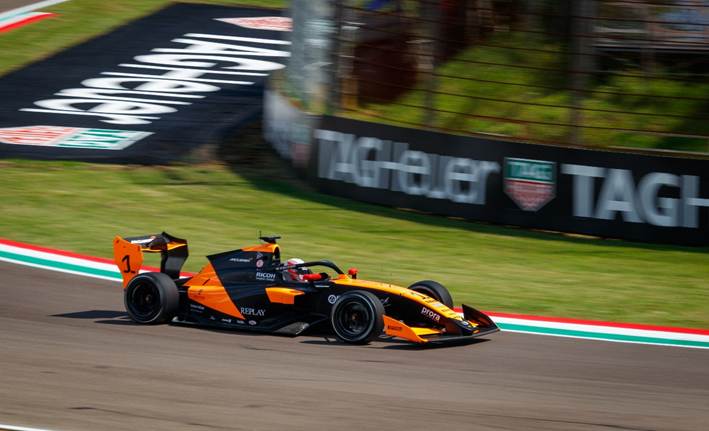
    “FIA F3 Imola 2025 Badoer” by Jen_ross83 is licensed under CC BY 4.0.

    “We’re delighted to welcome Brando to Rodin Motorsport for FIA F3 in 2026”. Those were the words with which Benn Huntingford, Sporting Director of the team, announced via Rodin’s official Instagram page that Badoer will be continuing his FIA F3 adventure with a different outfit compared to this year.

    The 19-year-old, who drove for the fellow Italians of Prema Racing in 2025, had a difficult year in the #1 car. His final place in the standings of 25th with only 13 points, especially compared to team-mates Noel León at 17th with 36 points and Ugo Ugochukwu at 16th with 43, will be something he surely hopes to revert for 2026.

    Whilst listing reasons for this second opportunity, Huntingford declared that Badoer had “shown great speed and maturity” and that he is “confident he’ll make a strong impact with the team”. A 5th place finish in his only ever FRECA season in 2024 does give some sense to Benn’s words on the speed of the Montebelluna-born driver, but his involvement in more than a couple of incidents in this year’s FIA F3 campaign also shows he needs to improve his racecraft maturity to one day hopefully reach the heights achieved by his father and former Formula 1 driver Luca Badoer.

    Despite a weaker year, he seemingly still has the support of the McLaren Driver Development Programme alongside prominent youngsters such as Norway’s Martinius Stenshorne, Ireland’s Alexander Dunne, and the aforementioned American Ugochukwu. The Italian will surely want to follow the footsteps of the first two, who have both made it to the silver lining of Formula 2 thus far.

    On the other side of the 2026 Badoer-Rodin partnership, the New Zealanders have had a decent year in 2025 at 6th, one position and 36 points ahead of Prema at 5th. Monza Sprint winner Roman Bilinski was Rodin’s highest-placed driver in the championship at 11th, whilst Callum Voisin (14th) and Louis Sharp (26th) completed the line-up of the British-based team. Brando Badoer becomes the 9th driver (and the first for Rodin) to be confirmed to be competing in the 2026 FIA F3 championship. AIX Racing have already announced their full line-up, which will consist of returning drivers Fernando Barrichello and Brad Benavides, as well as newcomer Yevan David. Freddie Slater and Matteo De Palo will be two of Trident’s drivers, whilst Mattia Colnaghi and Alessandro Giusti will race for MP Motorsport. Jesse Carrasquedo Jr. will enter next year with Van Amersfoort Racing and, after the Badoer-Rodin announcement, Campos Racing also confirmed the signing of France’s Théophile Naël.

  • What is F2 looking like for 2026?

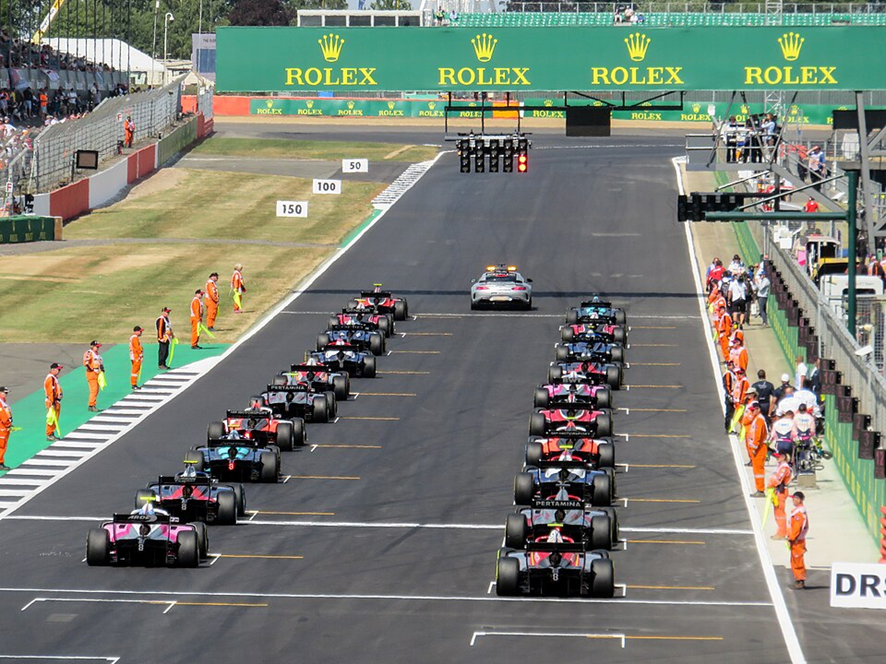
    This image was originally posted to Flickr by Jen_ross83 at https://flickr.com/photos/69527563@N05/43025503924 (archive). It was reviewed on 6 January 2019 by FlickreviewR 2 and was confirmed to be licensed under the terms of the cc-by-2.0.

    With Formula 2 heading to Azerbaijan for its twelfth round of the season, this weekend marks the third to last time we will be seeing the silver division in 2025. And whilst the championship is far from over, many have been setting their sights on the following year.

    MP Motorsport’s Richard Verschoor, who sits at 3rd and is 30 points off leader Leonardo Fornaroli (Invicta), has confirmed his departure from F2 regardless of him clinching the title or not. The Dutchman, now in his 5th (4th complete) season, is the veteran of the category and has stated to Formula Scout’s Jacob Awcock that 2025 will be his “last season for sure”.

    Another confirmed departure is the champion’s. The Formula 2 title holder has always been required to leave the category the following year, and this year will be no exception. Whilst Verschoor is already out for 2026, one of the title challengers will have to follow suit. It seems like this honour might be fought for by only two drivers however, as Fornaroli and Hitech’s Luke Browning (1st and 2nd with 174 and 153 points respectively) outscore outsiders like the Dutchman (3rd, 144 points), DAMS’ Jak Crawford (4th, 137 points) and Rodin’s Alex Dunne (5th, 124 points) by quite a big margin at this late stage. The only way that all of the youngsters mentioned in this paragraph feature in next year’s grid is for Verschoor to finally win the whole thing.

    Bulgarian Nikola Tsolov, recently crowned Formula 3 vice-champion, has made the step up to Formula 2 for next year and is the second officially confirmed driver after AIX’s Emerson Fittipaldi Jr. It is yet to be seen who will partner Alonso’s protégé at Campos, however, as rumours surround three of the four Red Bull-controlled seats in Formula 1.

    Auto Hebdo reports that there are “little doubts” that Isack Hadjar will join Red Bull in 2026, leaving a vacant seat at Racing Bulls. Whilst one of them would be occupied by one of Liam Lawson or Yuki Tsunoda however, the other could very well be taken by current Campos F2 driver Arvid Lindblad. The French outlet reports that the Brit making the big jump to Formula 1 is a “very high possibility”.

    This would come at the cost of fellow Red Bull junior and Campos team-mate Pepe Martí. The Spaniard, currently an outsider for the title at 6th with 112 points, is the other confirmed departure for 2026. Martí confirmed to Cadena COPE that this is his last season in the category, stating that he doesn’t “consider a third year in F2”. With his signing as Cupra ambassador confirmed, the Cupra Kiro Formula E rumours seem logical. As for who will replace him at the Spanish F2 team (if not Tsolov himself if Lindblad stays), Campos’ link to Red Bull does also spark rumours of a Tim Tramnitz jump to F2 with the Valencians.

    Aston Martin junior Mari Boya, who just finished his 2025 Formula 3 campaign with Campos, has announced he has left the team. Whilst it would make sense that the third-placed driver of last year’s F3 season makes the jump to Formula 2, it is not confirmed yet if he will do so. Whether he makes that logical step or not, the Campos-Boya link will not continue in 2026.

    The predictable signing of 2025 Formula 3 champion Rafael Câmara to the silver division was confirmed by himself immediately after his mathematical clinching of the title at the Hungaroring. And, although a team for the Ferrari junior is yet to be announced, recent F2 juggernaut Invicta (as reported by outlets such as Fórmula BR) seems like the logical choice for somebody who will surely be in title contention for 2026.

    The shock move is, however, quite obviously, Colton Herta’s. The Californian, who was IndyCar’s vice-champion in 2024 and is one of the stars of the American category, has been confirmed by Cadillac F1 as their first ever reserve driver and part of the 2026 Formula 2 grid. A future first team seat has been speculated by everyone including Formula 1 themselves, but not before at least going through the silver division.

    Whether or not he will replace either Sergio Pérez or Valtteri Bottas in 2027 however, will surely somewhat depend on the F2 team Cadillac chooses to partner with. A deal with the historic Prema, who has recently been on a bit of a downwards spiral, seems to be “confirmed” according to English journalist Bobby Parsons. However, this choice of machinery might not be the most effective for someone who surely hopes to conquer Formula 2 after following this unusual path from IndyCar.

    And whilst the Toyota link does seem to put Ritomo Miyata (currently at ART) closer to a Hitech seat, there have been no more credible or consistent rumours surrounding transfers for the following season of Formula 2. Whatever happens at the Baku City Circuit, however, will surely impact it.   

  • F1 swan songs: Giuseppe Farina

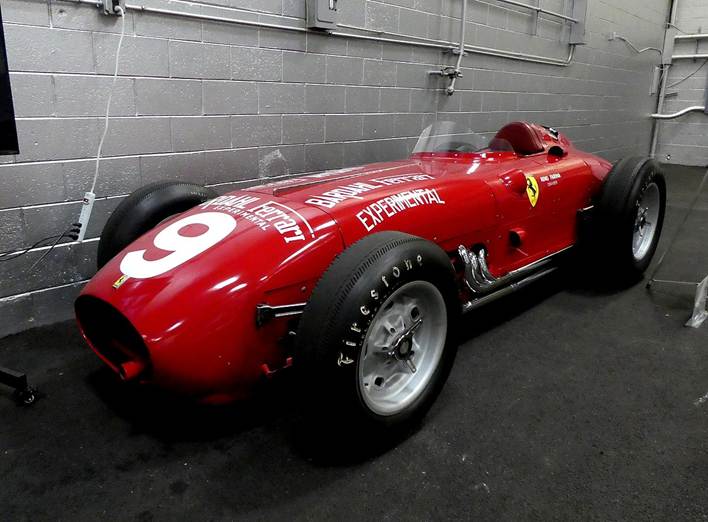
    The 1956 Ferrari-powered Kurtis Kraft 500D, entered as Bardahl-Ferrari, was the last car Farina ever raced in a Formula 1 Grand Prix

    This file (“Français : Ferrari Kurtis Kraft Bardahl Special”, 2020) is licensed under the Creative Commons Attribution-Share Alike 4.0 International license. Author: MaxPast

    As Formula 1’s first ever World Champion, Giuseppe Farina’s “lasts” are rarely ever remembered. But what if we told you the Italian’s last ever F1 race was as unconventional as it was unspectacular?

    After his 1954 F1 season ended early due to persistent pain caused by injury, “Nino” was ready to compete in the 1955 edition of the 500-Mile International Sweepstakes, nowadays called the Indianapolis 500 and part of the IndyCar Series calendar. But what does this have to do with Formula 1, you may ask? What some may not know is that the Indy 500 was part of the World Drivers’ Championship from its start in 1950 until 1960, and, therefore, was, technically speaking, Farina’s last F1 Grand Prix entry, and not the 1954 Italian GP.

    What is also unimaginable nowadays is Ferrari entering the so-called “Greatest Spectacle in Racing”. And whilst this technically also just happened once, when Alberto Ascari’s Ferrari 375 Indianapolis came in 31st place in 1952, Farina did enter the 1956 edition with a Bardahl-Ferrari. The car, a (now) classic Kurtis Kraft chassis, received its name from its Ferrari six-cylinder engine and its sponsorship from motor oil additive brand Bardahl.

    Despite the big names of the Italian giants accompanying car #9’s entry, actually qualifying for the race was proving to be a hard challenge. If the legendary Farina had an Achilles heel, it was the 500, as he failed to qualify in the first two time trials of May 19th and May 20th. The prize he had cherished and hoped for, pole position, was occupied by eventual winner, American Pat Flaherty.

    May 26th proved to be another unfortunate day for the Turin-born driver, as the rain forced the cancellation of the third session of time trials. On his final opportunity, May 27th, Farina officially failed to qualify for the 1956 Indianapolis 500 due to a lack of speed, and therefore officially ended a Formula 1 career he can be proud of.

    The Italian did not know this at the time, however, as he returned one year later to the USAC-sanctioned event with an entry alongside teammate and home hero Keith Andrews. The car, simply named “Farina”, was another Kurtis Kraft chassis, but was powered by Offenhauser this time around. However, car #62 never even attempted to qualify, as “Nino” withdrew after Andrews was killed during a test run on May 15th and Farina officially never participated.

    The 1956 Indy 500 was, therefore, the former Alfa Romeo driver’s last ever major race. He passed away himself, after a decade away from racing, in 1966, due to a car crash unrelated directly to motorsports.

  • The last 4 F1 drivers to have debuted at Monza

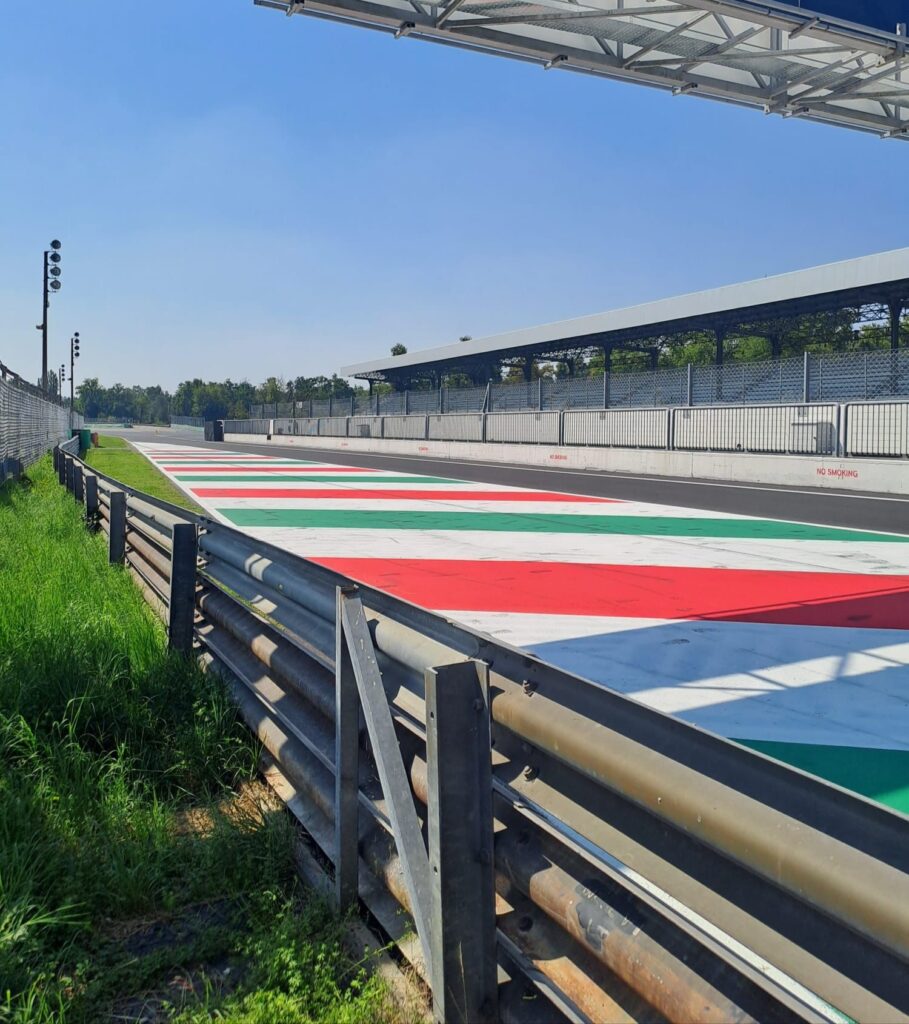
    The Autodromo Nazionale Monza, home to the Formula 1 Italian Grand Prix every year since 1950 (with the exception of the 1980 Imola edition), is one of, if not the, most iconic track in motorsport history. From incredible wins by legends such as Alain Prost and Michael Schumacher to being the title decider to World Championships won by Giuseppe Farina in 1950 and Jack Brabham in 1960, Monza is host of some of the most emblematic moments in F1 history, with every fan surely looking forward to another show of high-end racing in Lombardy this week.

    And whilst Argentina hasn’t had an Italian GP winner since Juan Manuel Fangio (Mercedes) in 1955, many recent fans from the South American country may remember Monza fondly because of Franco Colapinto’s F1 debut there last year. Since the Italian GP has never been the season opener, there hasn’t been that many debuts if we compare to other iconic curtain lifters like Australia’s Melbourne, Bahrain’s Sakhir or Brazil’s Interlagos and Jacarepaguá. However, intra-seasonal driver changes open the possibilities to make a list of the last few drivers to have ever debuted at Monza.

    4. Tomáš Enge – 2001 Italian GP (Prost GP)

    A serious crash between Prost GP’s Luciano Burti and Jaguar’s Eddie Irvine at the 2001 Belgian GP meant the former suffered some severe injuries that forced him to miss the rest of the season. Formula 3000 title challenger Tomáš Enge made the step up from Coca-Cola Nordic Racing to become the first ever Czech F1 driver at the 2001 Italian GP.

    A while was going to be needed to get somewhat used to the backmarker car, however, as the Liberec-born driver spun at the Ascari corner and failed to make a good first impression in practice. A rookie and a struggling car proved not to be the best combo, as Enge qualified in 20th (out of the then 22-car-grid), just ahead of the two Minardis, bottom of the barrel. Team-mate and 1997 vice-champion Heinz-Harald Frentzen however, qualified a respectable 12th.

    The eventual 24 Hours of Le Mans winner did what he could with a car that was, as well as incredibly slow, mechanically faulty during the weekend. A 12th position, one lap behind Juan Pablo Montoya’s Williams, was all he could possibly manage in what was arguably the second worst car.

    Whilst Enge finished the season, Prost GP’s bankruptcy in early 2002 meant that the 2001 Japanese GP was the last ever F1 race for both the Czech driver and the French team.

    3. Alex Yoong – 2001 Italian GP (Minardi)

    Another debutant at the same Grand Prix, and for another backmarker. Malaysian Alex Yoong, also the first driver to ever compete for his country, replaced the departing Brazilian Tarso Marques after the latter offered less money to drive the Minardi.

    And so, immediately, Yoong got acquitted with the typical Minardi experience. Mechanical problems meant the driver of Chinese descent struggled throughout all practice sessions, including the third where he even failed to set a time.

    Things would get even worse in qualifying, as both him and team-mate Fernando Alonso would suffer from terminal gearbox failures. Sharing the spare car, a rule that was allowed at the time, was all Yoong could do to get a lap in. Nevertheless, his time of 1:27.463, which was 5.2 seconds off pole and 1.2 off the Spaniard (21st), meant he would narrowly avoid the 107% turmoil and start in 22nd.

    His race would be as chaotic as the preceding events however, as he contacted with the Benetton of Jenson Button on the starting lap. The damage contributed to his first big mistake. A spin at Curva di Lesmo meant his race was close to ending as he almost contacted with the lapping cars of Michael Schumacher (Ferrari) and Montoya. Another spin sealed the deal. This was his last spin of the race, as his Minardi PS01 remained stalled in the Monza gravel and the Kuala Lumpur-born driver was forced to retire.

    Alex Yoong would also finish the season and would manage to race in most Grands Prix of 2002, also with the Italian team. That year’s Japanese round, however, was his last ever, as the now Cosworth-powered constructor chose to field Jos Verstappen and Justin Wilson to start the 2003 season.

    While it is expected that the pay driver, especially in the early 2000s, gets the backmarker seat, and that hardly anybody will remember Alex Yoong as the pinnacle of talent gone to waste, it could be said that he faired relatively well, all things considered. His promise largely kept of “don’t crash the car”, as well as the tricky situation of driving unforgiving machinery and partnering future race winner Mark Webber in 2002, and, of course, the all-mighty eventual two-time World Champion Fernando Alonso in 2001, should cut him some slack when compared to some of his fellow pay drivers of the era. After all, no awful driver gets two top 10s in a Minardi.

    2. Nyck de Vries – 2022 Italian GP (Williams)

    Nyck de Vries actually started his 2022 Italian GP weekend at Aston Martin, replacing four-time World Champion Sebastian Vettel during one of the obligatory rookie FP1 sessions. However, the appendicitis suffered by Alexander Albon of Williams meant all eyes turned to the Dutchman, who was also Williams’ test driver. De Vries, whose potential F1 career had been considered a long shot away due to his age (27 as a rookie), finally got his opportunity after test drives at the Grove-based outfit and Mercedes.

    With two practice sessions under the belt with Williams, the Formula E graduate managed to qualify 8th for the grid, partially thanks to many driver power unit penalties, quite common at Monza. Team-mate Nicholas Latifi, already on the verge of a sacking that came true at the end of the season, qualified 10th.

    On Sunday, an incident-free race and a steady rhythm by taking advantage of Williams FW44’s great straight-line speed meant the driver of Indonesian descent obtained his first ever two points by finishing 9th, as compared to Latifi’s P15 finish.

    His change of stock value was impressive, as he ended up in the 2023 Alpha Tauri seat ahead of race winner Daniel Ricciardo. Once the British Grand Prix was done and dusted, however, so was his decent, albeit short F1 career.

    1. Franco Colapinto – 2024 Italian GP (Williams)

    Franco Colapinto is the only driver of the current grid that made his debut at Monza and the second on this list to make it with Williams. The Argentine made his first F1 start by replacing departing Logan Sargeant at the Grove-based outfit after another no-points finish at the Dutch GP in Zandvoort.

    Whilst an unimpressive 18th place in qualifying didn’t set expectations on fire for driver of Ukrainian descent, a respectable P12 in the race whilst keeping out of trouble meant another driver was, once again, upping his stock because of a stand-in race in Monza, in a Williams. Despite some crashes in the latter parts of the season, Colapinto came back to the grid after his last Williams race in Abu Dhabi 2024 when he replaced Australian Jack Doohan at Alpine for the 2025 Emilia Romagna Grand Prix. And whilst rumours of a sacking always seem to loom the drivers of the French team, he has proved to be, whilst not a stand-out talent, a somewhat solid, yet replaceable, member of the premier class.

  • F1’s most controversial title decider

    “Renault” by Peter Long is licensed under CC BY 2.0.

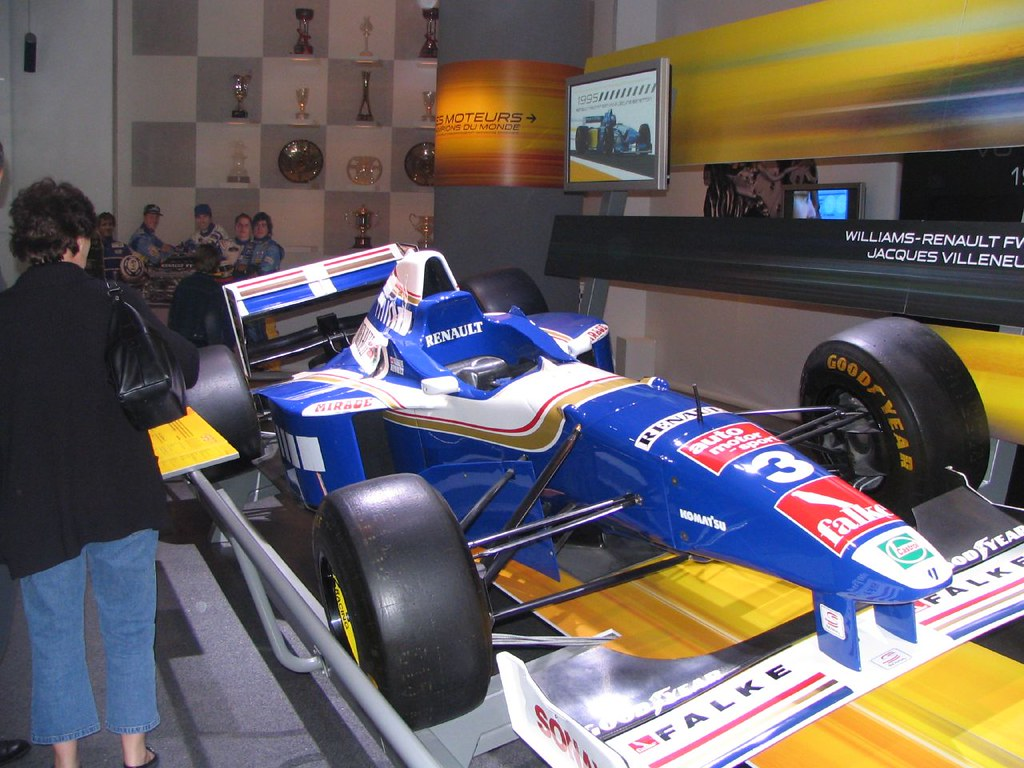
    Every Formula 1 fan knows the famous 1997 championship and its outcome at the European Grand Prix held at the Jerez Circuit. After the Japanese GP, where Jacques Villeneuve had failed to score points due to a disqualification for ignoring yellow flags and Michael Schumacher had taken the grand prize of ten points by winning the race, the Drivers’ Championship was in full swing.

    The German, seeking to become a three-time victor after his 1994 and 1995 World Championships and to furthermore give Ferrari its first drivers’ title since 1979, arrived with a one-point lead over the Canadian. The Williams driver was dreaming of the title win in just his second season in Formula 1. Heinz-Harald Frentzen, his teammate in the already mathematically-proclaimed 1997 constructors’ champions, arrived at the Andalusian event with no chance of being champion (or, in theory, runner-up).

    The European GP weekend, which replaced the Portuguese GP at Estoril for financial reasons, began on Friday, October 24th, with two free practice sessions, both led by Frenchman Olivier Panis, who at the time was driving for Prost GP, also from France. On the morning of Saturday the 25th, the British partnership of David Coulthard and McLaren took the lead in both practice sessions.

    In the afternoon, however, the real action began. With three times of 1:21.072, identical down to the thousandth, both Schumacher’s Ferrari and the Williams of Villeneuve and Frentzen achieved the fastest lap of the qualifying session. Since the grid was decided according to what lap was set first, the Canadian took pole position ahead of his championship rival, second, and the driver of Spanish heritage, third.

    The race on Sunday the 26th began with Villeneuve losing the lead after the first corner due to a poor start and the “Kaiser” taking the lead of the race (ahead of Frentzen, second, and the Canadian, third) and, therefore, the championship. After a swap between the two Williams and pit stops that temporarily promoted the McLarens to 3rd and 4th, the positions of Schumacher (first) and Villeneuve (second) made the title decider all the more interesting.

    With only 22 laps remaining in a thrilling race, the two top dogs were fighting for first place, and, therefore, the championship. The Williams driver took advantage of a small braking error by Schumacher to gain the lead. However, before the German was completely overtaken, he deliberately collided with his rival, hoping to force the Canadian to retire from the race and lose the title. However, it was only Schumacher himself who didn’t finish the race after the crash, ultimately losing the lead to Villeneuve. After the Ferrari driver retired, the Williams driver didn’t push the envelope and ultimately lost the race to Finland’s Mika Hakkinen, who would go on to take his first GP victory. His McLaren teammate David Coulthard finished second, whilst a third spot on the podium was enough for Villeneuve to win the Drivers’ Championship.

    The controversial collision was reminiscent of the 1994 Australian finale, where Schumacher was seeking his first championship in a battle with Damon Hill. Many people (including Hill himself in 2007) eventually accused the then-Benetton driver of deliberately causing the collision that would deprive the Brit of the title. However, the controversy in 1997 was not as dismissed by the rule-makers, as runner-up Schumacher was eventually disqualified from the World Championship for unsportsmanlike conduct, with some calling for a permanent ban from Formula 1. This, however, did not happen, and the German continued in the top class, ending his career with seven world titles and retiring for the second and final time in 2012 as the most successful driver in history. However, the 1997 vice-championship will always belong to his compatriot Heinz-Harald Frentzen.

    That year’s European Grand Prix will go down in history as one of the defining races of the world of Formula 1, both because of Jacques Villeneuve’s only Drivers’ World Championship title (as well as Williams’ last to date) and because of Michael Schumacher’s disqualification, which quickly became one of the most controversial moments in the series’ history. And although it hosted several preseason sessions and continues to be used as a venue for private testing by teams such as McLaren and Haas, the controversial 1997 finale was also the final Formula 1 race at the venue now known as the Circuito de Jerez-Ángel Nieto. And what a way to close out that era!

  • The best F2 drivers that never reached F1 (8-1)

    This image was originally posted to Flickr by /the_game at https://flickr.com/photos/42553406@N04/52616179769. It was reviewed on 19 January 2023 by FlickreviewR 2 and was confirmed to be licensed under the terms of the cc-by-sa-2.0.

    8. Paul Aron

    –    2023: 24th

    –    2024: 3rd

    Let’s move on to the most recent case, that of Paul Aron. The Estonian, who had just graduated from Formula 3 in 2023 (3rd), made his Formula 2 debut that same year with Trident during the Abu Dhabi Grand Prix, the only race he competed in that season. A 16th and an 18th place finish earned him 24th in the standings before starting his only full year in the category.

    Now at Hitech, the former Mercedes junior (2019-23) managed to fight for the title against Gabriel Bortoleto and Isack Hadjar. However, the Invicta and Campos drivers prevailed, winning the championship and vice-championship, respectively. It would not be the only achievement he would lose to them, as Aron had to settle for the position of reserve driver at Alpine F1 for 2025, with Jack Doohan already signed as a starter for this year.

    Following the early sacking of Esteban Ocon before the 2024 Formula 1 Abu Dhabi Grand Prix, the Australian made his debut earlier than expected, with Aron not being considered for a starting position (not even temporarily) with the French team. Likewise, the star signing of Franco Colapinto, already a rookie in F1 with Williams, would relegate him to the background, as the Pilar-born driver is the team’s first reserve.

    However, after a Doohan-Colapinto switch of roles, it seems that the Estonian could be next in line for the ever-changing Alpine, as long as the young driver of Italian Ukrainian descent continues to be inconsistent.

    7. Luca Ghiotto

    – 2017: 4th

    – 2018: 8th

    – 2019: 3rd

    – 2020: 10th

    – 2022: 25th

    A year after his GP2 debut with Trident, Luca Ghiotto signed with Russian Time for the inaugural Formula 2 season, where he finished 4th. After a 2018 season in which he achieved an 8th place with Campos, the Italian’s peak in the category came at the age of 24: in 2019. That year, while driving for UNI-Virtuosi, he completed the category’s podium behind future graduates Nyck de Vries and Nicholas Latifi.

    The Arzignano-born driver finished 10th after his switch to Hitech for 2020, his last full season in the second division. However, he later competed with DAMS in the 2022 F2 Italian Grand Prix following Roy Nissany’s race ban.

    He never met the standard to be considered for a Formula 1 seat, with a single test with Williams in 2017 being the closest he ever was to the category. After this, he competed in IMSA, IndyCar, and the World Endurance Championship. He currently drives in LMP2 for the Inter Europol team in the European Le Mans Series.

    6. Callum Ilott

    – 2017: 26th

    – 2019: 11th

    – 2020: Vice-champion

    Callum Ilott, a member of the Red Bull junior team during the 2015 European Formula 3 season, joined the Ferrari academy in 2017 after a weekend in Formula 2 with Trident (26th overall). After a third-place finish in the last season of the GP3 Series, the Brit enjoyed his first full year in the silver division in 2019.

    That season, in which he competed for the Sauber Junior Team by Charouz, he finished 11th and participated in a test for the Alfa Romeo F1 team. He also tested with the Swiss team in 2020, a year in which he fought for a Formula 2 title which Mick Schumacher claimed, and who would also snatch a seat at Haas from him, along with Nikita Mazepin.

    Ilott, who was the third-place finisher in the 2020 F2 series, was also a test driver for the Americans that year, before eventually driving in FP1 in 2021 as Alfa Romeo’s reserve driver. The then-Vasseur-led team also included Ilott as a reserve driver in 2022, in addition to serving as a Ferrari test driver in 2021.

    After being excluded from Formula 1 by both Haas and Alfa Romeo, the latter opting to retain Kimi Raikkonen and Antonio Giovinazzi for 2021 and to sign Valtteri Bottas and Guanyu Zhou for 2022, the Cambridge-born racer ended his ties with the premier class in 2023. Since then, he has participated in every IndyCar season, including the current one, and has competed in the World Endurance Championship. Despite some sporadic point-finishes in the former competition, he is perhaps best known for ending Álex Palou’s Indy 500 hopes in 2022 with a clumsy move that resulted in a crash.

    5. Frederik Vesti

    – 2022: 9th

    – 2023: Vice-champion

    Frederik Vesti is, most likely, the driver on this list who is closest starting his Formula 1 career, having publicly stated that he is in talks with Cadillac and serving as Mercedes’ reserve driver behind George Russell and Kimi Antonelli.

    He joined the German team’s academy in 2021, finishing fourth for the second consecutive season in Formula 3. After that, he joined ART for his debut year in Formula 2, achieving ninth place in the championship.

    In 2023, the Dane became a test driver for Mercedes and fought for the championship with Prema. He ultimately lost the title, finishing second to ART’s Théo Pourchaire. During that season and 2024, he participated in FP1 with Toto Wolff’s team and remains a reserve driver, a position he held last year.

    The Vejle-born driver balances this with other categories, having participated in the World Endurance Championship and currently races for the Cadillac Whelen IMSA team.

    4. Artem Markelov

    – 2017: Vice-champion

    – 2018: 5th

    – 2019: 16th

    – 2020: 18th

    As a veteran of the GP2 Series, having competed in the 2014, 2015, and 2016 seasons, the Moscow-born racer burst onto the scene in its sequel, Formula 2, continuing his partnership with Russian Time. Markelov would finish runner-up, a long way behind the F1-bound Charles Leclerc. Despite not having much of a chance in the title race, his performances and sponsorships earned him some sort of involvement in the premier class starting the following year.

    As a Renault development driver, he participated in the 2018 young driver tests, in addition to driving in the FP1 session at that year’s Russian Grand Prix. While he remained with F2’s Russian Time, rumours of a starting spot alongside his compatriot Sirotkin at Williams gathered pace. However, the Grove-based team opted for the signings of George Russell and Robert Kubica for 2019.

    After this, Markelov’s sporting decline began, having just finished 5th in the 2018 F2. The 2019 season, where he only managed to drive six races with stints at MP Motorsport and Arden, ended with a disappointing 16th place. His final year in motorsport, 2020, was even worse: 18th while driving for HWA Racelab. Since then, the eight-time F2 race winner has had no motorsport activity and is reportedly retired since then.

    3. Robert Shwartzman

    – 2020: 4th

    – 2021: Runner-up

    Robert Shwartzman is perhaps the driver on this list who has come closest to achieving his big dream the most times. After signing with Ferrari’s academy in 2017, the young Russian established himself as one for the future when he dominated the 2019 Formula 3 championship.

    He moved up to Formula 2 the following year with Prema, fighting for the title during parts of the season but losing out to Mick Schumacher, Callum Ilott, and Yuki Tsunoda in the championship. Following Romain Grosjean’s injury at the 2020 Bahrain Grand Prix that forced his early retirement from Formula 1, the Ferrari-powered Haas team opted to give Pietro Fittipaldi his debut.

    He also lost the American team’s 2021 seat to not only the German but also his compatriot Mazepin. He didn’t stay idle, however, and continued with Prema in the second-tier category that year, finishing second but losing the title to his teammate, the unstoppable Oscar Piastri.

    Shwartzman would also be rejected by Haas, which, after sacking Mazepin, eventually brought back Kevin Magnussen for 2022. That year, he competed, now under the Israeli flag, in numerous tests for Ferrari, including in FP1 at Grand Prix events.

    Despite being promoted to reserve driver and continuing with his extensive testing plan during 2023 and 2024, the Scuderia entrusted Oliver Bearman to replace appendicitis-affected Carlos Sainz at the 2024 Saudi Arabian Grand Prix. The Brit himself also signed for Haas for 2025 (participating in two races in 2024), leaving the Tel Aviv-born driver with no hope of reaching the premier class.

    After a 2024 season in which he also competed in FP1 at the Mexican Grand Prix with Stake, Robert Shwartzman left Ferrari after a seven-year partnership to join IndyCar’s newest addition, Prema, his former F2 and F3 team. And, despite not having the best of seasons so far (24th), he did start from pole position of the greatest race in the Series: the Indy 500.

    2. Felipe Drugovich

    – 2020: 9th

    – 2021: 8th

    – 2022: Champion

    These are the top guns: the champions. Felipe Drugovich competed in Formula 3 in 2019 with Carlin, failing to score a single podium and finishing 16th overall despite entering every race.

    However, the Brazilian, who also holds Italian nationality, made his Formula 2 debut with MP Motosport in 2020, his first year being somewhat lacking in notoriety (9th). In his second season, racing with UNI-Virtuosi, the youngster achieved slightly better results, finishing 8th in the final standings.

    In his third season, he returned to the Dutch team, and ensued to dominating the championship and leaving ART’s Théo Pourchaire, previously the favourite to take the title, with no possibilities. After his mathematical victory, the driver of Croatian and Austrian descent signed for Aston Martin as a reserve driver.

    He has been with the British team since 2022, having participated in a large number of tests throughout these seasons, including several FP1 sessions at official Grands Prix (starting with his first full year with Aston Martin) and the pre-season testing of the ever-so-successful 2023. During that year, he was also a reserve driver for McLaren, although he never got in the car for Zak Brown’s team.

    However, despite being the first option to get driving should Fernando Alonso or Lance Stroll suffer any problems, it is doubtful that the Paraná-born driver will be able to make it to Formula 1 as a starter, as both the Spaniard and the Canadian, son of owner Lawrence Stroll, are indispensable members of the team. Whether that be due to talent or other matters, especially for the latter driver, is up for debate.

    Although he maintains his association with the premier class thanks to Aston Martin and there have been rumours of a possible move to Cadillac, it seems that the future of the 2018 Euroformula Open champion lies elsewhere. Drugovich, who has already competed in competitions such as the World Endurance Championship and the ELMS since his time in F2, has already dipped his gloves into Formula E, at least for this year’s Berlin round (17th and 7th).

    1. Théo Pourchaire

    – 2020: 26th

    – 2021: 5th

    – 2022: Vice-champion

    – 2023: Champion

    We conclude this list with the Brazilian’s greatest rival: Théo Pourchaire. The Frenchman, then only fifteen years old, signed for the Alfa Romeo F1 Team’s Sauber Academy in 2019. The following year, after Piastri snatched the title last minute in Formula 3, he went from rookie in the bronze category to rookie in the silver category. The Grasse-born driver competed in the final two weekends of the category, scoring no points and finishing 26th with HWA Racelab.

    In 2021, he signed for ART, a team he would remain with for the remainder of his Formula 2 career. With the French team, he had a promising first full season, finishing 5th in the championship and being the clear favourite for 2022 after two victories in the category.

    However, he also failed to win the championship that year, finishing a distant runner-up to veteran Felipe Drugovich. In his third full year and fourth overall, the ART driver finally secured the title, defeating Vesti.

    However, the stock he had accumulated during his teenage years had already dissipated, and he completed a year as a reserve driver for the renamed Stake F1 team in 2024. Pourchaire, who had a real chance of fulfilling his dream with the Swiss team for 2025 but was ultimately passed over in favour of Nico Hülkenberg and Gabriel Bortoleto, ended up leaving the team’s Sauber Academy at the end of the year.

    He was a test driver for the team from 2021 and a reserve driver from 2023, with the ADAC Formula 4 champion being an option from 2022 to 2025 for seats that were ultimately filled by Hülkenberg and Bortoleto, as well as Guanyu Zhou and Valtteri Bottas.

    The Frenchman had to settle for several FP1s in official Grands Prix during those years (except for his last one in Stake) before embarking on his current adventure in endurance racing. After brief stints in IndyCar and Japanese Super Formula in 2024, he made his World Endurance Championship debut at the 24 Hours of Le Mans.
  • The best F2 drivers that never reached F1 (Part 2 – Oliver Rowland)

    “Oliver Rowland Monza F2 2017” by Liondartois is licensed under CC BY-SA 4.0.
    • 2017: 3rd

    After his 2015 and 2016 GP2 seasons, Oliver Rowland arrived to its successor with DAMS at 24 years of age. In his only Formula 2 season, he achieved third place in the championship thanks to two victories, in a year where PREMA’s Charles Leclerc dominated.

    2017 was also his only season as a Renault F1 development driver after spending 2016 as a “young driver” of the French constructor. The Brit had nevertheless already experienced the top class before, as demonstrated by his Red Bull and McLaren tests. The latter team also adopted him as part of their young drivers’ programme from 2007 to 2010. His role as Williams’ “official Junior Driver” in 2018, however, was his last year linked to Formula 1.

    The Barnsley-born driver was never seriously considered a candidate for a seat in the top class. The Grove-based outfit preferred Lance Stroll and Sergey Sirotkin, and Rowland was only ever thought of as a veteran that spent too much time in junior categories. Since his departure from feeders, the Formula Renault 3.5 champion has raced in the World Endurance Championship with CEFC and has been associated with Formula E since 2015-16. Rowland has competed in the latter category every year since then (except 2016-17) and finally reached his goal this season by conquering the 2024-25 title.

  • Hamilton retirement “could happen”, says top F1 journalist

    “2025 Japan GP – Ferrari – Lewis Hamilton – FP1” by Liauzh is licensed under CC BY-SA 4.0.”

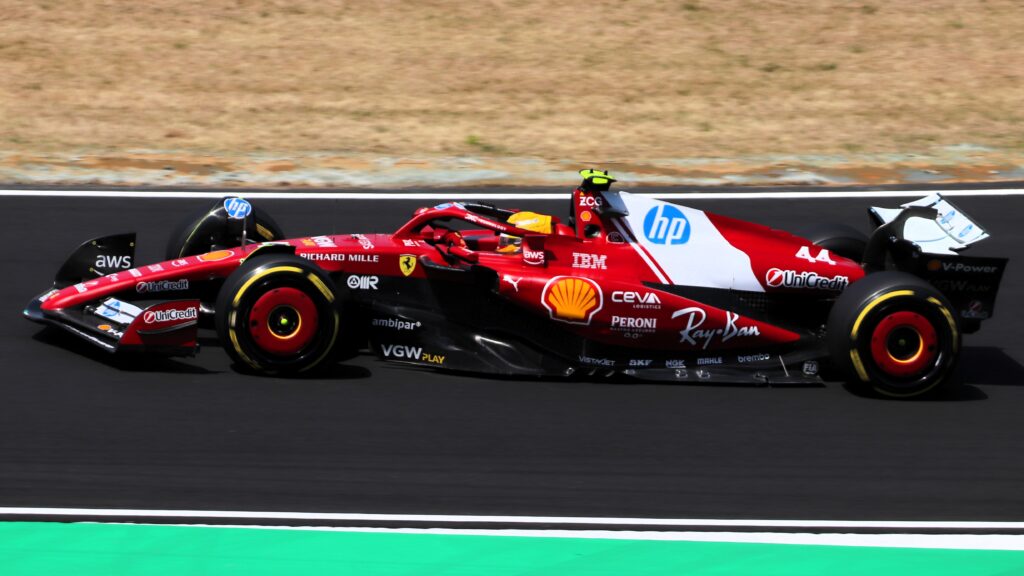
    “I’m useless, absolutely useless. (…) The team (…) probably need to change driver.” (…) Ferrari driver Lewis Hamilton’s post-qualifying words with Sky, alongside his “I drove terribly” comment to F1 TV, have accelerated the rumours of a 2025 retirement, especially after another poor result (12th) in Sunday’s race. And top journalist Antonio Lobato, who has been narrating Formula 1 in Spain for almost two decades (2004-15, 2018-present), has recently declared that this “could happen”.


    In a video posted on news outlet Soymotor, the Asturian journalist theorized about a near F1 future without the seven-time world-champion: “Imagine Hamilton, after this year, says ‘goodbye’. (…) This could happen, he could think “yes, yes, I am useless, I don’t want to continue with this, I don’t want to keep suffering’”.


    Despite an early success with a win in the Chinese GP sprint, Lewis Hamilton has struggled this season. As of Sunday, the Brit stands more than 40 points behind team-mate Charles Leclerc, and the Monegasque has not been the only team-mate that has outpaced him in the last few years. George Russell has proved more than competitive despite the odds, outperforming Hamilton in two of his three seasons together at Mercedes.


    Lobato also made a prediction about the future of another multiple world-champion depending on Hamilton and/or Ferrari’s decision:
    “The other option is that [Hamilton] stays for 2026, but Ferrari says ‘Verstappen is free to go’, and then, Toto [Wolff] has a problem because, depending on how the Mercedes performs next year and how Ferrari performs, Verstappen could make a choice.”


    The Dutchman recently confirmed to F1 that he is not leaving to Mercedes despite the rumours: “For me it’s always been quite clear that I was staying anyway.” However, his commitment to Red Bull seems to not be confirmed beyond the first season of the new regulations, and the performance of the Austrian team in 2026 could change his destiny. It has been widely reported, including by beIN’s Júlia Cabral, that the Belgian-born driver has a performance-based clause allowing him to leave every year.


    Whether Hamilton chooses fulfill his 2027 contract with Ferrari or not, it seems like the silly season rumours for that season are already underway.